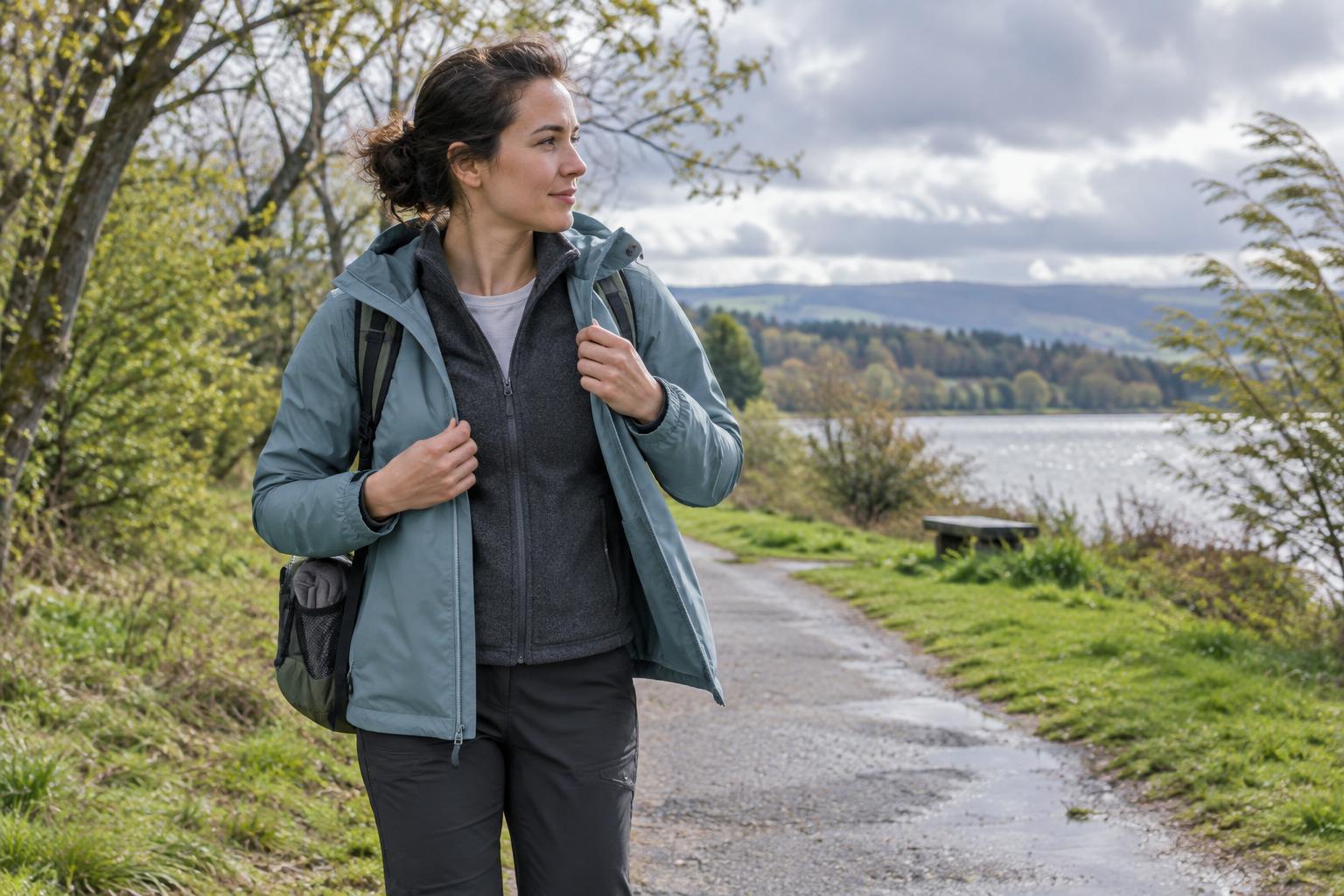
Start with the day you have planned
Layering is less about wearing a lot of clothes than about having options you can adjust. A short walk to a café, an afternoon outdoors and a day moving between heated rooms and chilly streets call for different combinations. Before getting dressed, think about how long you will be outside, whether you will be moving or sitting still, and what you can comfortably carry if you take a layer off.
You do not need a wardrobe of specialist gear. Most everyday outfits can follow a simple pattern: a comfortable layer next to your skin, a warmer layer you can remove, and an outer layer that deals with wind or rain when needed. The aim is to stay comfortable across the likely range of conditions, rather than to dress for only the coldest moment of the day.
Choose a comfortable base layer
The base layer is the shirt or top you expect to keep on. Choose one that feels comfortable on its own if the day warms up or you go indoors. A lightweight T-shirt, long-sleeved top or thin knit can all work. Fit matters: a top that bunches beneath other clothes can make a practical outfit irritating to wear.
If you expect to walk briskly or otherwise work up a sweat, consider how the fabric feels when damp. Some synthetic or wool-blend tops tend to dry more readily than a heavy cotton shirt. For a relaxed outing with plenty of indoor stops, the difference may matter less. Use what you already own and notice which tops remain comfortable when your plans change.
Add warmth you can easily remove
Your middle layer provides adjustable warmth. A cardigan, sweatshirt, fleece or light sweater is often enough for an ordinary changeable day. Pick something that fits over your base layer without feeling tight at the shoulders, and beneath your coat if you plan to wear one. A zip or buttons make small adjustments easier than pulling a sweater over your head every time you enter a warm room.
Match the thickness to your activity. If you are walking steadily, a lighter middle layer may be more useful than a bulky one that makes you overheat. If you will spend time sitting outside, you may appreciate more insulation. It helps to choose a layer you can tie around your waist or fit into your bag; a removable layer is only useful if you can bring it along.
Let the outer layer handle wind and rain
Wind can make a mild day feel much cooler, especially when you stop moving. A light jacket that blocks the breeze may be more useful than another thick sweater. If showers are possible, choose an outer layer that can cope with the amount of rain you expect. A compact rain jacket is handy for a brief outing, while a longer spell outdoors may call for better coverage and a hood.
Pay attention to how the pieces work together. A rain jacket that is comfortable over a T-shirt but too snug over a sweater leaves you with fewer choices. Similarly, a very warm coat may be awkward if the afternoon turns mild. Try the full combination at home, move your arms, and check whether you can open or remove a layer without unpacking everything.
Make small adjustments as you go
Change layers before you become uncomfortably hot or cold. Open a jacket when you start walking, then close it when you pause in the wind. Remove a sweater in a warm building rather than waiting until you feel sweaty. Small changes are often enough, and they help keep your other clothes comfortable for the rest of the outing.
Accessories offer flexibility without taking much space. A hat, scarf or spare pair of socks can make a cool wait more pleasant, while a small bag gives removed layers somewhere to go. If your plans include rain, think about your feet too: shoes that stay comfortable on damp ground may matter more than an extra top.
After a few outings, you will have a better sense of which combinations suit you. Notice what you never wore, what you wished you had brought, and what was inconvenient to carry. Keep the useful pieces together for the next changeable day. The best layering system is one you can put on, adjust and carry without letting the weather take over your plans.