Pick a meeting point, not just a destination
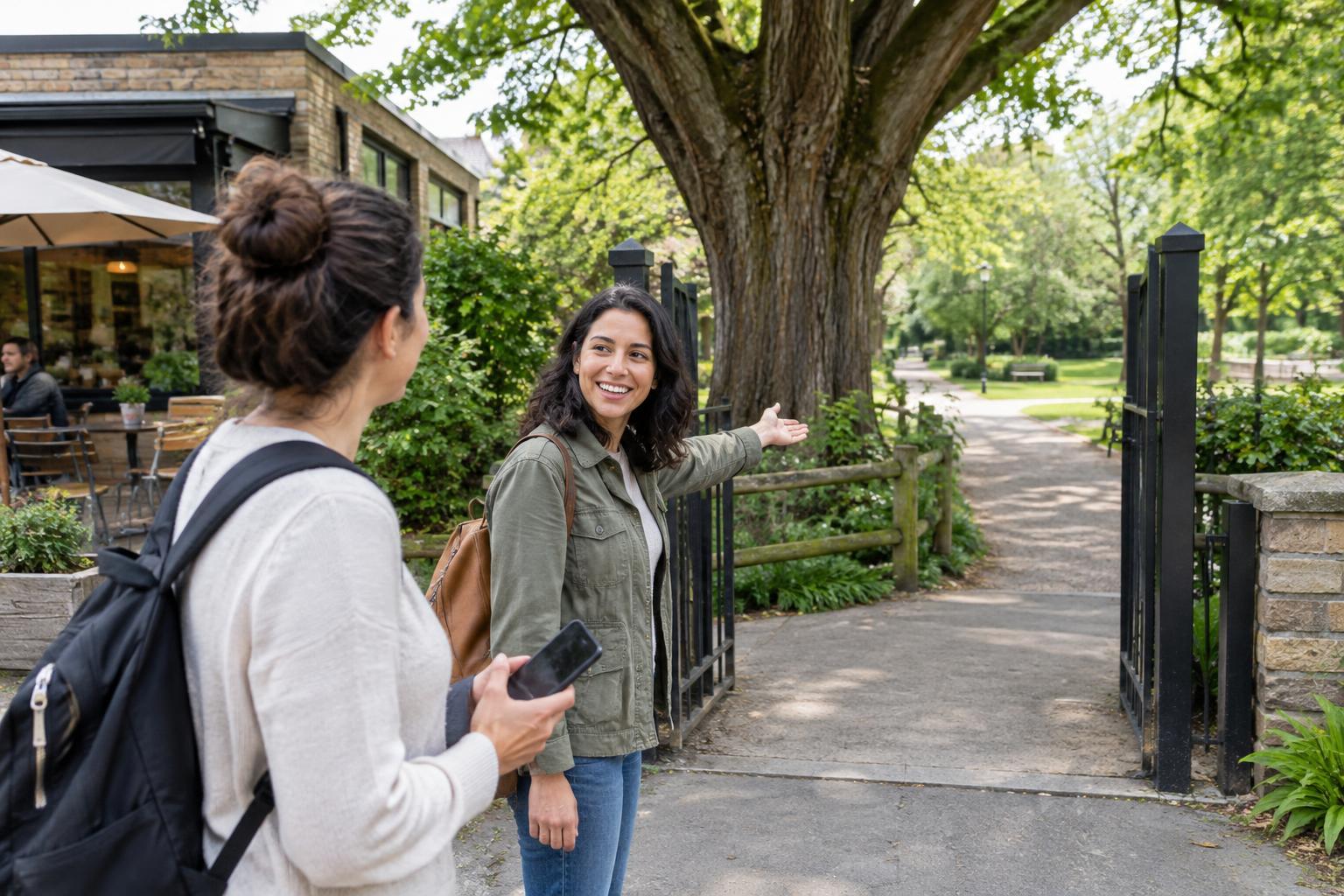
“Let’s meet at the park” leaves plenty of room for confusion. A park may have several gates, paths, and places to sit. The same is true of a café with more than one entrance or a station with multiple exits. Before sending directions, choose one spot where people can reasonably stop and recognize that they have arrived.
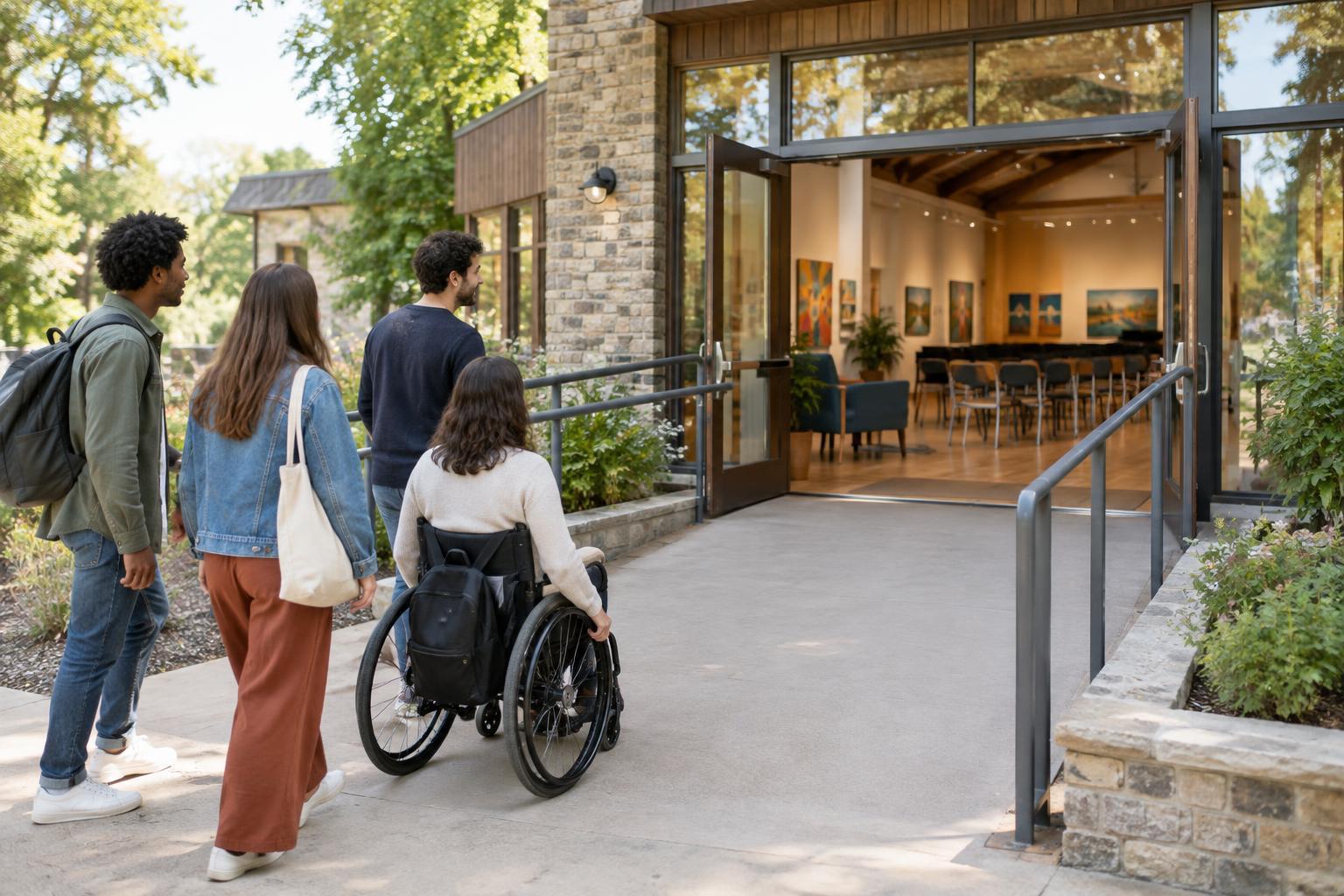
Describe the point in layers: the venue, the correct entrance, and the exact place to wait. For example, “Meet at the café on Oak Street, just inside the front door, beside the menu board” gives someone a clearer target than the café name alone. If you are meeting outside, pick a spot that does not block a doorway, queue, or busy path. Check that the place will be accessible to everyone in your group; a convenient staircase for one person may not work for another.
Build directions around decisions
Think about the moments when a visitor has to choose: Which side of the street? Which gate? Left or right after entering? Clear directions answer those questions in the order a person will encounter them. Start with a recognizable approach point, then give only the turns needed to reach the meeting spot. Avoid a long description of the surrounding area if it does not help someone make a decision.
Names can help, but they may not be enough on their own. If you mention an entrance, add a visible detail that distinguishes it: “Use the entrance facing the library, not the one by the parking lot.” For indoor locations, say whether the group will be on the ground floor, upstairs, or outside. For an event or large venue, mention the particular hall or section if you know it. If you are unsure of an exit number or building label, leave it out rather than guessing.
Use landmarks that are easy to recognize
A useful landmark is visible from the route someone is likely to take and distinct from nearby features. A large sign, a fountain, or a named building may work better than “the big tree,” especially where several trees look alike. Choose details that are likely to remain in place; a parked vehicle or a temporary stall could disappear before your friends arrive.
Directions also depend on perspective. “To the left of the entrance” can mean different things to someone facing the building and someone walking out of it. Say “As you face the main entrance, the meeting spot is on your right” when orientation matters. If your group may arrive by different routes, a short description of the final spot is often more helpful than one set of turn-by-turn instructions intended for everyone.
Send one message people can use on the way
Keep the essential details together so nobody has to search through a conversation. Include the meeting time, place name, exact waiting spot, and any entrance distinction. A map pin can be a helpful addition, but do not rely on it alone: it may point to the middle of a building or a different entrance from the one you intend. A written description gives people a way to check that they are in the right place.
You might write: “Saturday at 2:00, outside the community center’s Maple Street entrance. I’ll wait by the notice board immediately to the right as you face the doors. Please don’t use the rear entrance by the lot.” This is brief enough to glance at while walking, yet it answers the most likely questions. If the venue has changed since your last visit, check the entrance and waiting spot before sharing them.
Plan for the last few minutes
Even good directions cannot prevent every wrong turn. Agree on a simple fallback: where to wait if someone is early, when to send a message if someone cannot find the spot, and whether the group will move inside at a particular time. If phone reception may be unreliable, settle those details before everyone leaves.
When someone says they are lost, ask what they can see rather than repeating the same instructions. Their nearest sign, entrance, or street corner can give you a shared starting point. Then offer one step at a time. The goal is not to write the most detailed route possible; it is to give everyone a clear destination and enough information to recover if they take a different path.