Start with a theme that makes choosing easy
A double feature feels more like an occasion when the films have a reason to sit together. The connection does not need to be clever or obscure. Try two stories set in the same kind of place, a pair of films about unlikely friendships, or one older and one newer take on a similar idea. A broad theme gives guests something to notice and talk about without turning the evening into homework.
Choose the films before sending invitations, and check their running times. Two long films can make a casual gathering feel like an endurance test, especially if you also want time to chat. Pairing a longer film with a shorter one often works well. If guests have different tastes, ask for a few suggestions, then make the final choice early enough that everyone knows what to expect. Share any content concerns you know about so people can decide whether the lineup is right for them.
Give the evening a simple shape
Work backward from the time you would like to finish. Allow for arrivals, a brief welcome, both films, and an intermission long enough for people to stretch and refill a drink. You do not need a strict schedule, but a rough plan helps you avoid starting the second film when everyone is ready to head home. Tell guests when the first film will begin; anyone who wants a longer catch-up can arrive a little earlier.
Decide which film goes first based on the mood you want. An energetic opener can draw people in, while a quieter second film may suit a winding-down evening. Alternatively, put the less familiar choice first, when attention is freshest. Before guests arrive, confirm that both films are available through a viewing option you can use, and test the sound, subtitles and playback. A quick check is less frustrating than troubleshooting with a room full of people waiting.
Make the room comfortable, not elaborate
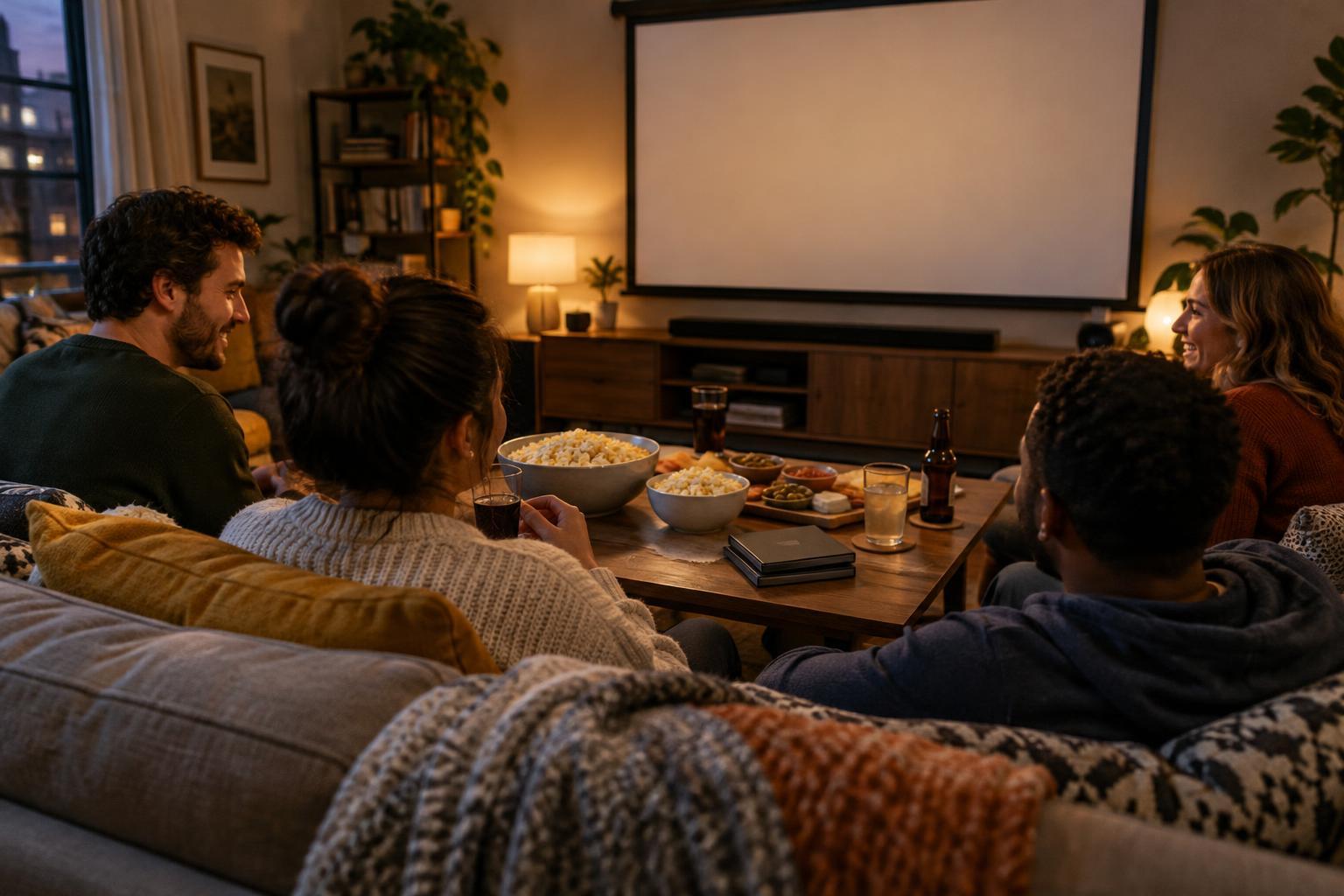
Arrange seats so people can see the screen without craning their necks. Bring in cushions or a spare chair if needed, but leave a clear path to the door and refreshments. Soft lighting is useful for the intermission and for anyone who needs to get up during a film. Keep a lamp within reach rather than making guests navigate a completely dark room.
Think about sound and temperature before adding decorations. Dialogue should be clear at a volume that is comfortable for the room. If you are using subtitles, check that they are readable from the back seats. A blanket or two and a place to set down drinks can do more for the experience than a themed centerpiece. Decorations are optional; a small sign naming the two films is plenty if you want the night to feel planned.
Use the intermission as a genuine break
Pause between films for about as long as it takes everyone to use the bathroom, move around, and get fresh snacks without rushing. Announce when the second film will start so the break does not drift indefinitely. You might put on music at a low volume and invite people to share one thing they noticed about the first film, but keep the conversation optional. Some guests will welcome a quiet moment instead.
Serve food that is easy to prepare ahead and easy to eat from a seat. Popcorn, fruit, cut vegetables, or small sandwiches are simpler than a meal that needs constant attention. Put water where guests can help themselves, and label any snacks if ingredients may matter to your group. If you want a themed touch, name a snack after a setting or color from the films rather than building an entire menu. The goal is to spend the break with your guests, not in the kitchen.
Leave room for conversation and flexibility
When the second film ends, give people a few minutes to react before switching on every light and clearing the room. An easy question such as “Which film would you watch again?” can open a conversation without asking anyone to deliver a review. Guests may enjoy comparing the films, or they may simply want to talk about something else. Either response is fine.
A good double feature is not measured by whether everyone stays silent through the credits or agrees about the lineup. If the group needs a longer break, take one. If it is getting late, it is fine to save the second film for another night, provided guests are happy with the change. A clear theme, a workable schedule and a comfortable room give the evening its shape; the pleasure comes from sharing it.