Gather the supplies and choose a format
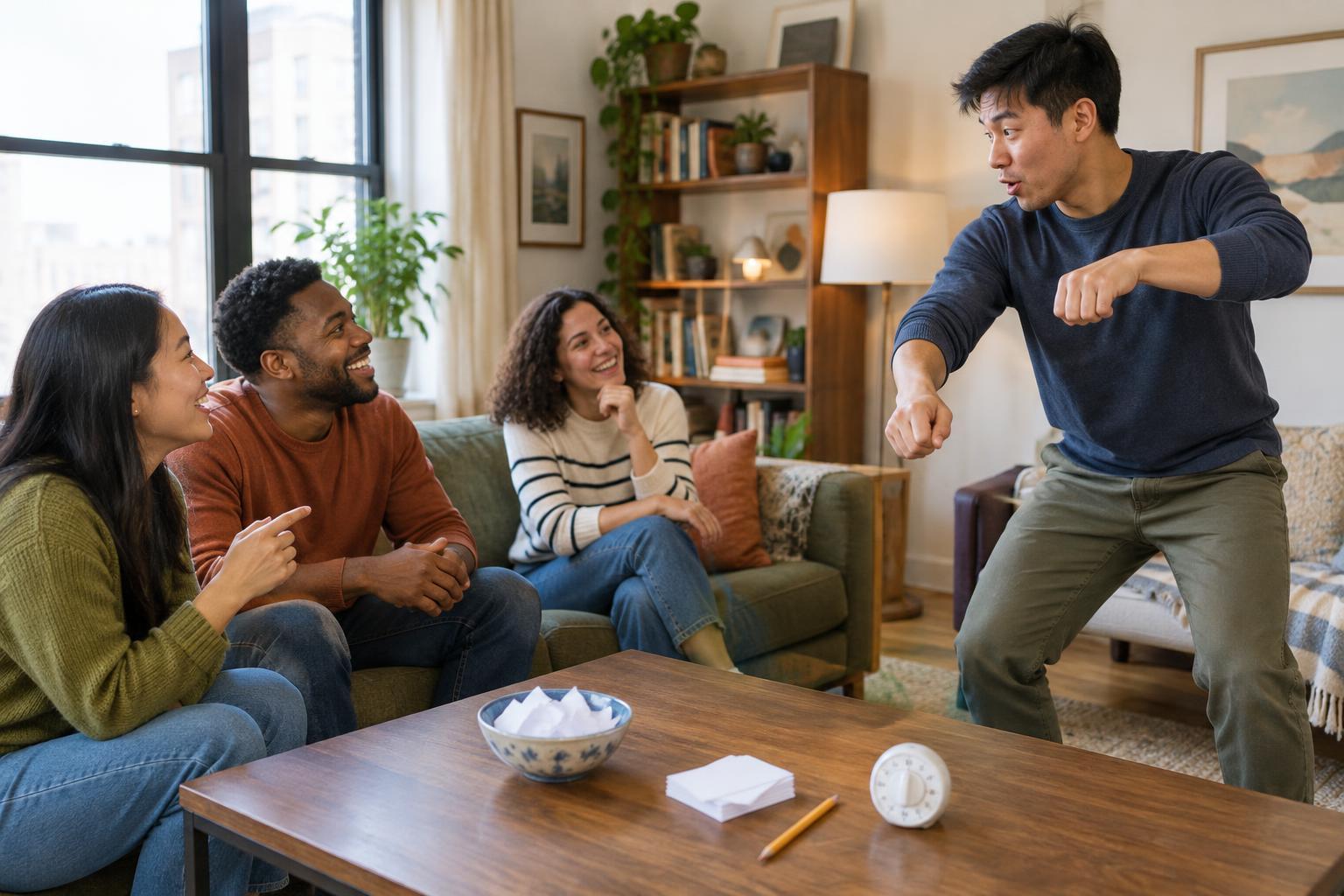
Charades works well as a low-cost indoor game because the essentials are simple: small pieces of paper, a pen, a bowl and a timer. Ask one person to keep time and another to track points, or rotate those jobs between rounds. Clear a little space where the actor can move without bumping into furniture, and place the prompt bowl where players can reach it between turns.
For a group, divide into two teams and alternate actors. Each actor tries to help their own team guess a prompt before time runs out. For a smaller or more casual gathering, skip teams: one person acts while everyone else guesses, then the next person takes a turn. Decide on the format before writing prompts so everyone knows whether they are playing for points or simply sharing the spotlight.
Write prompts people can actually act out
Have each player write a few prompts on separate slips, fold them and mix them in the bowl. Everyday actions such as “watering a plant” or “looking for lost keys” make good starting points. You can add familiar activities, animals, places or fictional characters if the group is likely to recognize them. Keep most prompts short and specific; a phrase with a clear action often gives the actor more to work with than a vague idea.
Agree on boundaries before anyone starts writing. Avoid private jokes that only one or two people will understand, and steer clear of prompts that require someone to imitate a fellow guest. If ages, interests or language comfort levels vary, invite players to write prompts that would make sense to the whole room. A host can quietly check the slips and replace anything confusing, too personal or especially difficult.
To give the bowl some variety, try three loose categories: easy actions, recognizable things and trickier phrases. You do not need equal numbers of each. The aim is to give players a mix of quick wins and amusing challenges without turning every turn into a puzzle that cannot be solved.
Explain the rules before the first turn
A straightforward round uses a one-minute timer. The actor draws one slip, reads it silently and begins acting when the timer starts. They may gesture and move, but they may not speak, make sound effects, mouth words, spell letters in the air or point to objects in the room. Teammates can call out as many guesses as they like. A correct guess earns one point, and the slip stays out of the bowl.
Decide together whether an actor may pass on a prompt. Allowing one pass per turn can prevent a single unfamiliar phrase from stalling the game. Put passed slips aside until the next round rather than returning them immediately to the bowl. If time expires without a correct guess, set that slip aside too. Give every player the same number of acting turns, then total the points if you are keeping score.
Demonstrate a quick practice turn before points count. It gives everyone a chance to ask whether a gesture is allowed and helps avoid mid-game arguments. If a call is close but not exact, the host or timekeeper can judge it consistently: accept guesses that clearly identify the intended prompt, rather than insisting on identical wording.
Keep turns moving and everyone involved
Charades is most enjoyable when waiting players have something to do and actors do not feel put on the spot for too long. Keep the prompt bowl nearby, announce whose turn is next and avoid long debates over a missed answer. If one team has more players, rotate turns so everyone gets a comparable chance to act. A short break after each full rotation gives people time to refill drinks or add fresh prompts.
Players can participate without large movements. Seated gestures, facial expressions and small hand motions can be just as effective; make room for whichever style feels comfortable. If someone would rather not act, offer them a timekeeping or scorekeeping role and let them join the guessing. For a group with different hearing or language needs, agree on the rules together and allow a little extra time to read prompts before the clock starts.
Change the next round without adding complexity
Once the basic game feels familiar, refresh it with a themed bowl. Household chores, weekend outings or imaginary adventures can each produce plenty of prompts. Tell players the theme before they write, and keep the same acting rules so no one has to learn a new game. Another option is to reuse the prompts from the first round: players may remember some answers, but acting them differently can still be funny.
End while the group is still enjoying itself rather than waiting for every slip to be used. Count the points if you kept them, thank the actors for their efforts and save any unused prompts for another day. A homemade charades round does not need elaborate preparation; a fair set of rules and prompts your group understands are enough to get it going.