Start with a deck everyone can use
Fair dealing begins before the first shuffle. Check that the deck has the cards your game needs, remove jokers if the rules do not use them, and replace cards that are bent or noticeably marked. A damaged card may be recognizable from the back even when nobody intends to use that information. If you are playing several rounds, agree on the rules and who deals first before any hands are drawn.
A clear table helps, too. Leave enough room for the dealer to handle the deck without exposing card faces or dropping cards into someone’s hand by accident. If a card does flip face up during setup, put it back in the deck and shuffle again rather than guessing whether anyone saw it.
Mix the cards thoroughly, not theatrically
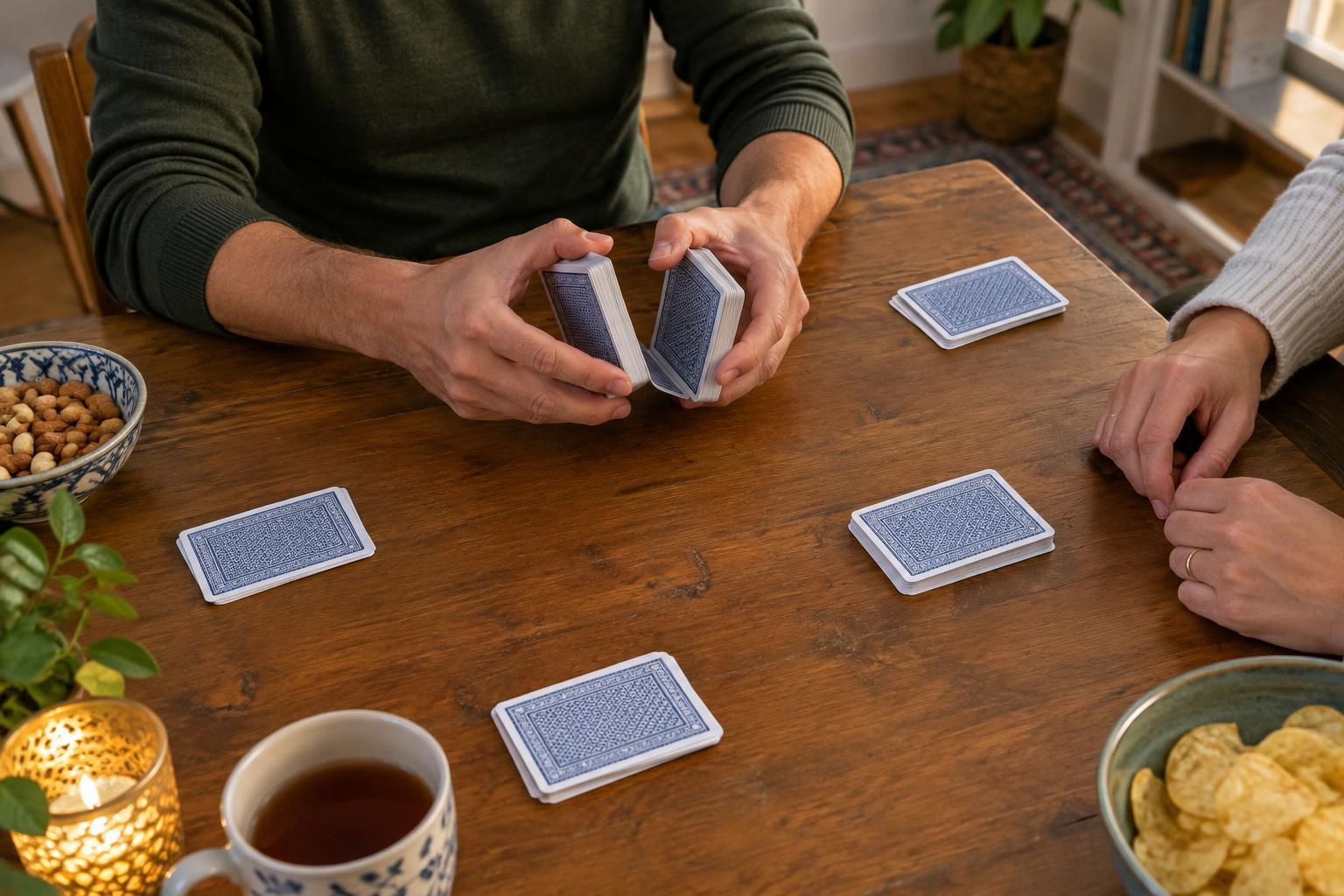
You do not need a flashy shuffle to run a friendly game. What matters is mixing cards from different parts of the deck. An overhand shuffle is an accessible starting point: hold the deck in one hand and use the other to pull off small, uneven packets, letting them fall together in a new order. Repeat several times, changing the packet sizes rather than moving the same large blocks each time.
If you are comfortable with a riffle shuffle, split the deck into two roughly equal halves and release cards from each half so they interleave. Bring the halves together, then repeat. A gentle table riffle can be easier on the cards than bending them into a bridge. Neither method is automatically fair if you do it only once or handle the deck in a way that preserves familiar groups of cards.
For a new deck or one sorted after a previous game, you can first spread the cards face down and gently move them around the table with both hands. Gather them into a stack, then shuffle normally. This is often called washing the cards. Keep the faces down throughout, and take care not to scrape or bend them.
Offer a cut and keep the deck visible
After shuffling, set the deck face down and offer it to another player to cut. They lift a portion from the top and place it beside the remainder; the dealer then puts the bottom portion on top. The cut changes where the deal begins and gives everyone a simple role in preparing the deck. It does not replace shuffling, but it can make the routine feel more transparent.
Try to keep the deck in view from shuffle to deal. Avoid looking at the bottom card or turning the deck so a face is visible. If someone else is shuffling for accessibility or because the dealer is learning, that is fine: agree on the routine and use it consistently. In a casual game, a calm, repeatable process matters more than elaborate handling.
Deal in a steady, agreed order
Confirm how many cards each player receives and whether the game calls for a stock pile, shared cards or a discard pile. Choose a starting player and direction of play, then deal one card at a time to each player in that order until the hands are complete. This is easier to follow than giving one person their entire hand before moving to the next. Keep cards face down unless the rules call for them to be face up.
Deal from the top of the deck without selecting or peeking at cards. Place each card where its recipient can reach it without revealing it to a neighbor. If your game uses communal cards or later draws, leave the remaining deck in a clear spot. Some games have special dealing steps, so follow those rules when they differ from this basic routine.
Handle mistakes openly
Dropped cards and uneven hands happen. Pause as soon as anyone notices a problem and say what happened. If the fix is obvious and everyone agrees, correct it; otherwise, collect the cards and redeal. It helps to decide before play what you will do if a card is exposed or dealt to the wrong person, especially in games where seeing one card could affect a decision.
Rotate the dealer between rounds if that suits the game. It shares the work and gives everyone a chance to practice. You can also let a beginner deal more slowly while another player counts the cards aloud. Fair home play is less about perfect technique than about mixing the deck, following the same dealing rules for everyone and resolving surprises together.