Learn the game before you explain it
Reading rules aloud can feel thorough, but listeners must remember unfamiliar terms before they have seen those terms in action. A more useful goal is to help everyone understand what they are trying to do and what choices they can make on their first turn. The rulebook still matters; it becomes your reference rather than your script.
Before game night, read the full rules yourself, including setup and the end of the game. Lay out the components and walk through a pretend round if you can. Make a short note of the goal, the usual turn sequence, how the game ends and any rule that would make an early choice hard to undo. If you cannot explain one of those points simply, check it before inviting everyone to start.
Start with the goal and the table
Give players a brief orientation before explaining individual actions. Tell them what they are working toward, how they generally make progress and when the game stops. For example: “We are collecting sets of cards. On a turn, you take one card and play one card. The game ends when this deck runs out, and completed sets are worth points.” Use the game’s actual rules, of course, but aim for that level of clarity.
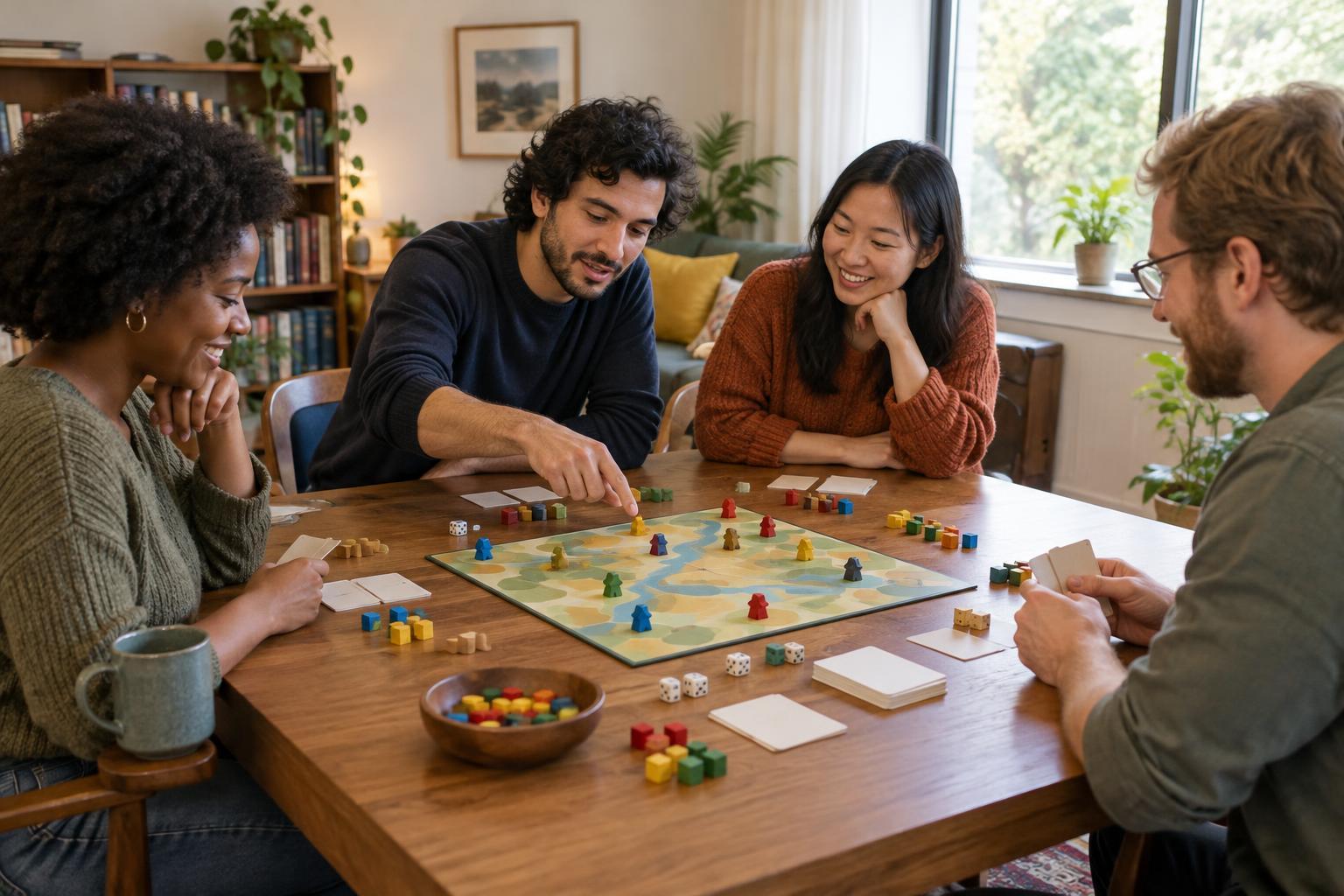
Then point to the physical areas players will use: their own pieces, shared supplies, discard piles and any track that shows progress. Place an example piece where it belongs as you describe it. Seeing a card move from a hand to the table is easier to follow than hearing a long description of where cards may go.
Demonstrate one ordinary turn
Walk through a typical turn using visible pieces. Name each step as you take it, and say what decision the active player makes at that point. If a turn has several options, show the most common one first. You can mention that other options exist without explaining every variation immediately: “You could trade here instead; I’ll explain that when someone wants to try it.”
After the demonstration, invite the next player to take a turn and offer prompts only when needed. Keep the rules visible and check them rather than guessing. If an exception affects a decision someone is about to make, pause and explain it before they commit. If it has no bearing on the current turn, let it wait. Teaching in small pieces is not the same as hiding important rules.
Make the first round a supported practice round
At the start, people may know how a turn works but not yet recognize a useful move. Give them time to look at their options. Neutral prompts such as “You can take a card or trade one” are usually more helpful than telling them which move is best. If they ask for advice, explain what a choice does and let them decide.
Agree in advance how forgiving the first round will be. For a casual game, the group might allow a move to be taken back if no new information has been revealed. For a game where choices quickly expose hidden cards, that may be impractical. Stating the approach up front keeps corrections from feeling personal. It also gives everyone permission to ask questions, including the person teaching.
Use the rulebook when it is most useful
Keep the rulebook within reach for unusual situations, scoring details and questions nobody can settle confidently. When you look something up, identify the question first: “Can this card be played after a trade?” That helps the group focus on the relevant answer instead of listening to an entire page. If a quick lookup does not resolve a minor dispute, the group can agree on a temporary ruling and verify it after the game, as long as everyone understands the ruling being used.
Once play is moving, offer short reminders at natural moments: before a player’s first trade, when a scoring opportunity appears or as the end of the game approaches. Afterward, ask what felt confusing. That feedback can help you teach the next group more clearly. A successful explanation does not cover every sentence in the rulebook at once; it gets people playing with confidence and makes it easy to find answers along the way.