Why visit an open studio?
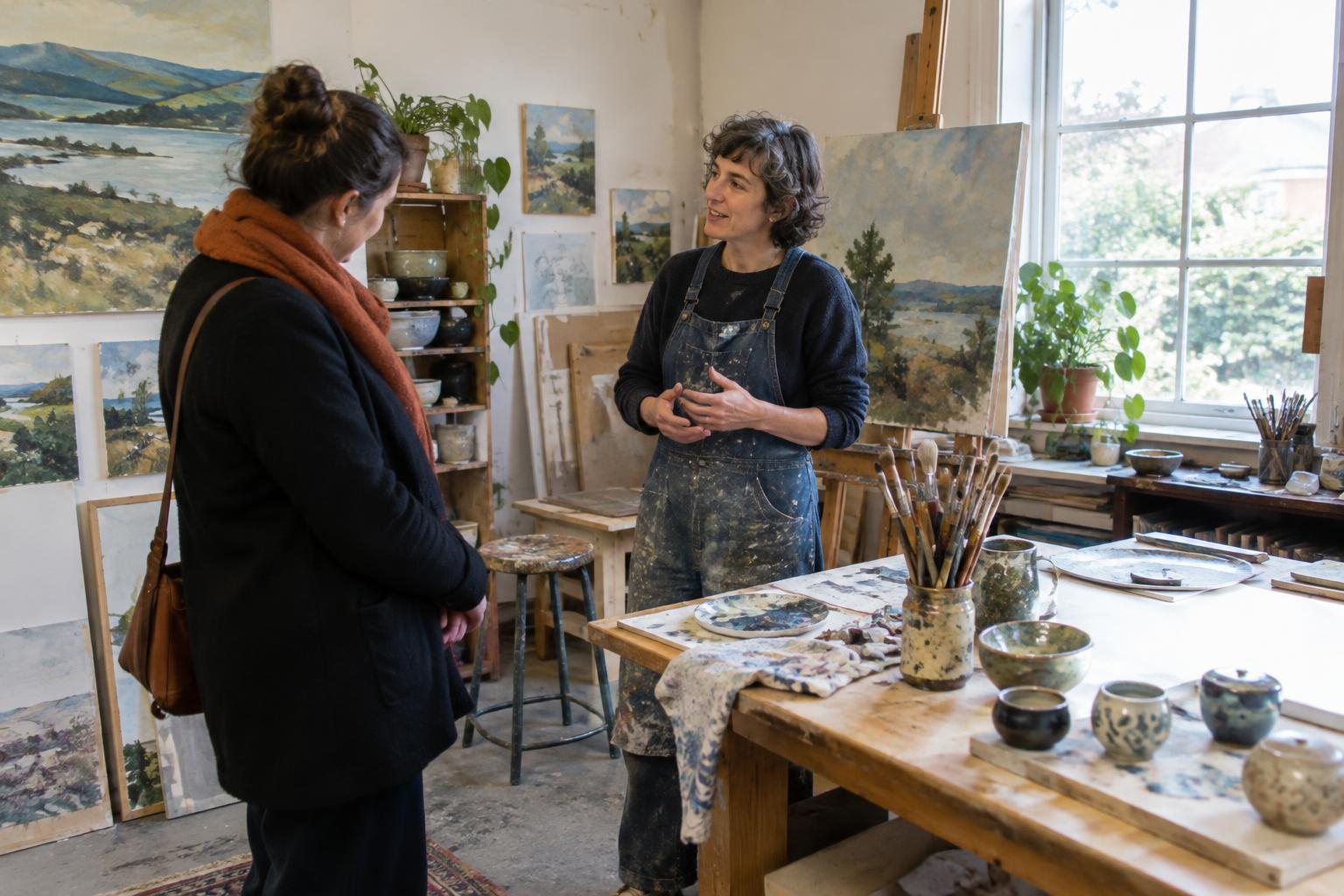
An artist open studio is an invitation to see creative work in the place where at least some of it happens. Depending on the event, you might find finished pieces on display, works in progress, tools, sketches or materials. Some visits feel like a small exhibition; others feel more like a glimpse into a busy workspace. You do not need to know much about art to enjoy either one.
It can be an easy weekend outing to do alone or with a friend. You can take your time, notice what catches your eye and learn a little about how someone makes things. There is usually no need to arrive with a plan to buy. Looking carefully and having a respectful conversation are worthwhile reasons to visit.
Make a simple plan before you go
Check the event details for opening hours, the address, any admission requirements and whether you need to book. An open studio may be one artist’s space or part of a route with several stops. If you are visiting more than one, choose a manageable number rather than trying to see everything. Leave room for a longer conversation or an unexpected discovery.
Studios can be in buildings with stairs, narrow entrances or limited seating. If access matters to you, look for information from the organizer or contact them before setting out. It is also worth checking whether children or pets are welcome instead of assuming that every space has room for them. Wear comfortable shoes, bring water if you expect to walk between venues and keep any bag small enough to carry close to you.
Settle in and look around
When you arrive, a friendly hello is enough. Take a moment to notice signs, roped-off areas or any directions from the artist or host. Some work may be for sale, while other pieces are unfinished or simply part of the studio. Unless you are invited to handle something, treat artwork, tools and materials as hands-off. This matters especially around fragile pieces, wet surfaces and equipment that may not be obvious at first glance.
You can browse quietly without needing to comment on every piece. If the space is crowded, step aside so others can see the work or move through a doorway. Keep drinks away from displays and be mindful of where you stand when someone is working or speaking with another visitor. If you want a photo, ask first; an artist may be happy for you to take one, or may prefer that certain work and parts of the studio stay private.
Have a conversation that works for both of you
Artists may enjoy talking about their work, but an open day can also be tiring or busy. Start with a specific, open question: “How did you choose this material?” or “What part of making this piece took the most experimenting?” Those questions are easier to answer than a demand for the meaning of everything in the room. Listening and asking a follow-up can make the exchange more interesting than trying to sound knowledgeable.
Notice whether the artist is greeting new arrivals or answering someone else. If so, keep your question brief or come back later. It is fine to ask whether work is available and what it costs, but avoid bargaining unless the artist has invited that kind of discussion. If you are not buying, a simple “Thank you for showing your work” is a complete and gracious way to leave.
Leave with something more than a purchase
You can give the outing a loose theme if that makes it more fun: notice one material you have never used, a color combination you like or a question you would ask at the next studio. Afterward, talk with your companion about the pieces that stayed with you. You may find that you noticed entirely different things.
If you want to keep up with an artist’s work, ask whether they have a card, mailing list or public page. Take those details only if you are interested, and respect any preference not to be photographed or tagged. An open studio is a chance to enjoy art at a human pace. Showing up with curiosity, following the space’s boundaries and thanking your host are enough to make you a welcome guest.