Start with the kind of painting you want to make
Both acrylic and gouache are water-based paints that you can use at a table with a modest set of supplies. The better choice depends less on which paint is “easier” and more on what you want your first project to feel like. Acrylic is a good fit for a small canvas, a painted box or a bold decorative piece. Traditional gouache suits a paper illustration, a greeting card or a compact scene with flat areas of color.
If you are undecided, picture where the finished piece will go. A painting meant to stand on a shelf or hang without a frame may point you toward acrylic on a suitable rigid surface or canvas. A piece you want to keep in a sketchbook or give as a card may point you toward gouache and sturdy paper. Either way, keep the first image simple: a few shapes, a limited palette and no pressure to make a masterpiece.
How they behave while you paint
Acrylic typically dries into a water-resistant layer. You can paint over a dry area without easily lifting the color beneath it, which makes covering a change of mind fairly straightforward. The trade-off is that paint left on a palette or brush can dry before you are ready. Work with small amounts, keep brushes from sitting out loaded with paint and rinse them promptly.
Traditional gouache dries to a matte finish and can usually be reactivated with water. That gives you time to soften an edge or reuse paint that has dried on your palette. It also means a damp brush can disturb a layer you thought was finished. If you like making careful shapes on paper and do not mind letting layers dry before adding more, that can be a pleasant way to work. If you would rather cover an area decisively and move on, acrylic may feel more forgiving.
Check the label when shopping: acrylic gouache is a separate product. Despite its name and matte appearance, it generally dries more like acrylic and does not reactivate the way traditional gouache does. Knowing which type you have will save confusion when you try to adjust a dry passage.
Surfaces, supplies and cleanup
For a first acrylic project, choose a small primed canvas board or paper intended for acrylic paint. For gouache, choose heavier paper made for wet media; thin printer paper may buckle when you add water. You do not need a large paint set for either medium. A few colors, a couple of brushes, a water cup, a mixing surface and a cloth or paper towel are enough to begin.
Acrylic asks for a little more attention to your workspace. Cover the table, wear clothes you do not mind marking and wash brushes before paint dries in them. Gouache is often simpler to remove from a palette because it can be rewetted, though it can still stain fabrics or other surfaces. With either paint, use only as much as you need and follow the product label for cleanup and disposal rather than pouring large amounts of leftover paint down the sink.
If cost is the deciding factor, compare the price of a complete small project, not just a tube or set. Include the surface and any brushes you actually need. You can also avoid buying specialty extras until you know whether you enjoy the process. A small, manageable setup is more useful for a first afternoon than a crowded collection of colors.
Try one low-pressure project
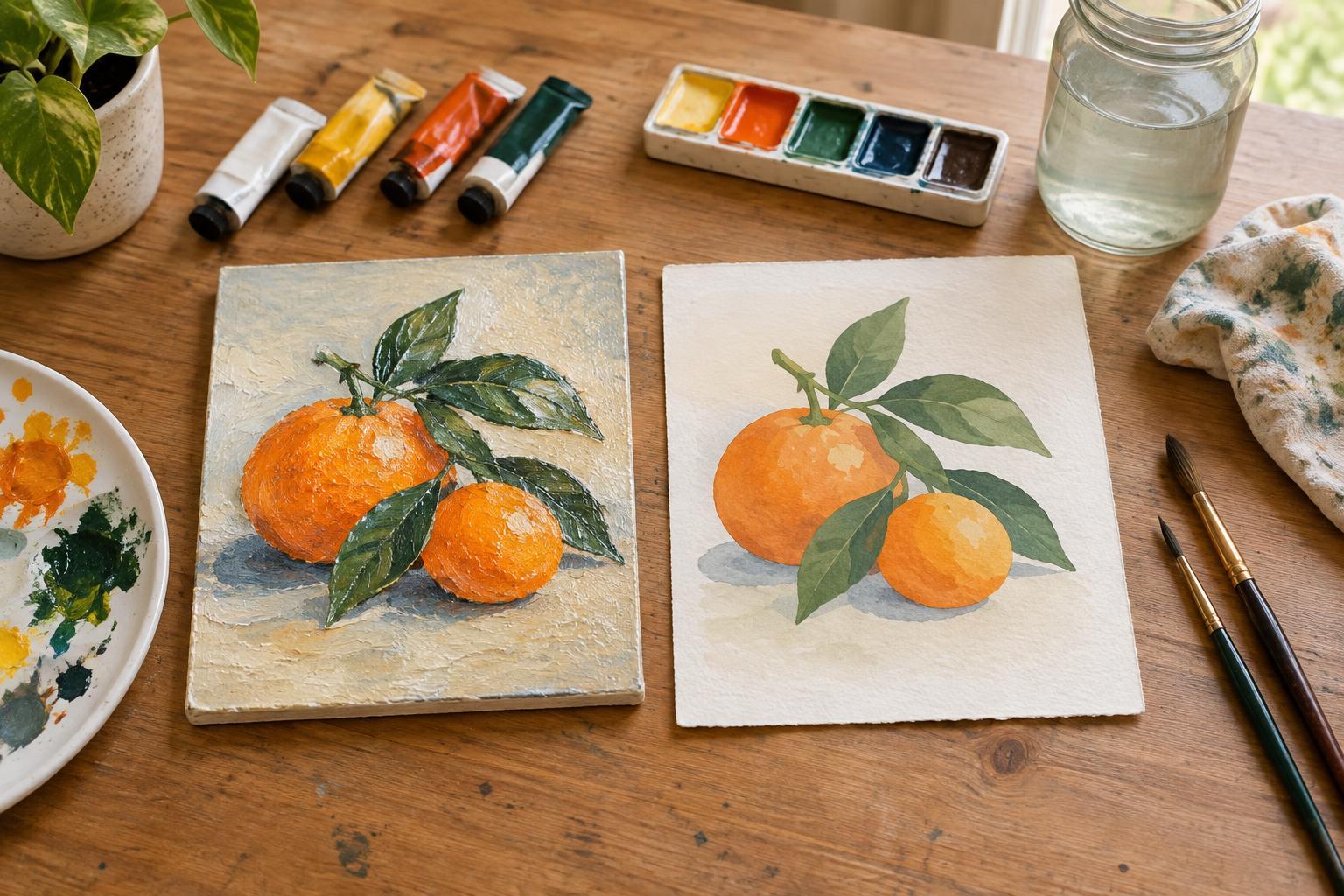
For acrylic, paint a simple set of three fruit shapes on a small canvas board. Sketch their positions lightly, block in the background, then add the fruit as broad shapes. Once a layer is dry, add shadows or details on top. This project makes use of acrylic’s ability to build new layers over old ones. If a shape looks off, let it dry and adjust its outline with another layer.
For traditional gouache, make a postcard-sized illustration of a plant, mug or familiar view. Start with a few large areas of color, allow them to dry, then add smaller shapes with a brush that is damp rather than dripping. Test a stroke in a corner or on scrap paper before painting over a finished area. That small pause helps you see whether the layer below will lift.
Make the choice that gets you started
Choose acrylic if you want to paint on canvas or a sturdy object, build up layers and keep changes from rewetting easily. Choose traditional gouache if you want to work mainly on paper, enjoy a soft matte look and like the option to reuse paint on your palette. Neither medium removes the need to practice, and neither requires an ambitious first subject.
The most useful test is a small one. Pick a project you can finish in a sitting or two, buy only the supplies it calls for and notice which parts you enjoy. Your first painting does not have to prove you chose the perfect medium; it only has to help you discover what you would like to paint next.