Start with a reason to look around
A neighborhood photo walk is a small outing with a purpose: you go for a stroll and look for pictures along the way. You do not need special equipment or a particularly scenic destination. A phone, a familiar route and a few ideas for what to notice are enough to make an ordinary weekend walk feel different.
The shot list is the useful part. Rather than deciding in advance exactly where every photo will happen, choose a handful of prompts that can be answered in many ways. “Something reflected,” for example, could lead you to a shop window, a puddle or a shiny bicycle bell. The list gives you a starting point without turning the walk into a hunt for one perfect image.
Pick a loose theme if it helps: signs of the season, interesting shapes, favorite colors or the places that make your area feel like home. You can walk alone for a quiet activity or invite a friend and compare what each of you notices.
Write a shot list you can actually finish
Aim for a short list that offers variety without demanding a long detour. Mix broad prompts, such as “a repeating pattern,” with more specific ones, such as “a doorway with an interesting detail.” If every item depends on finding a rare subject, the walk may feel frustrating. If every item can be photographed from your front step, it may not encourage you to explore.
A starter list could include a strong shadow, a bright color against a quieter background, something handmade, a view framed by branches or buildings, a texture you would normally pass by, and a small sign of daily life. Treat these as invitations, not requirements. Cross out an item that does not suit your neighborhood, and leave space to add an unexpected find.
If you are walking with others, give everyone the same list but welcome different interpretations. One person might photograph the shape of a stair railing while another finds that shape in a garden fence. Seeing those choices afterward is often as enjoyable as completing the list.
Choose a comfortable loop
Build your route around places where you already feel comfortable walking. A loop from home, a library or another familiar starting point makes it easy to finish without arranging a ride back. Consider sidewalks, crossings, weather, daylight and the walking pace of anyone joining you. A shorter route with places to pause is usually more useful than a long route you have to rush through.
You can mark two or three possible stops, such as a public square, a row of storefronts or a street with trees, without assigning a shot to each one. That leaves room to follow what catches your eye. If you plan to stop for a drink or sit on a bench, make it part of the outing rather than a reward for finishing every prompt.
Before you leave, charge your device and make sure it has space for photos. Wear comfortable shoes and bring what you would normally need for a walk in the expected conditions. Keep the plan light enough that getting ready does not become the hardest part.
Photograph thoughtfully as you go
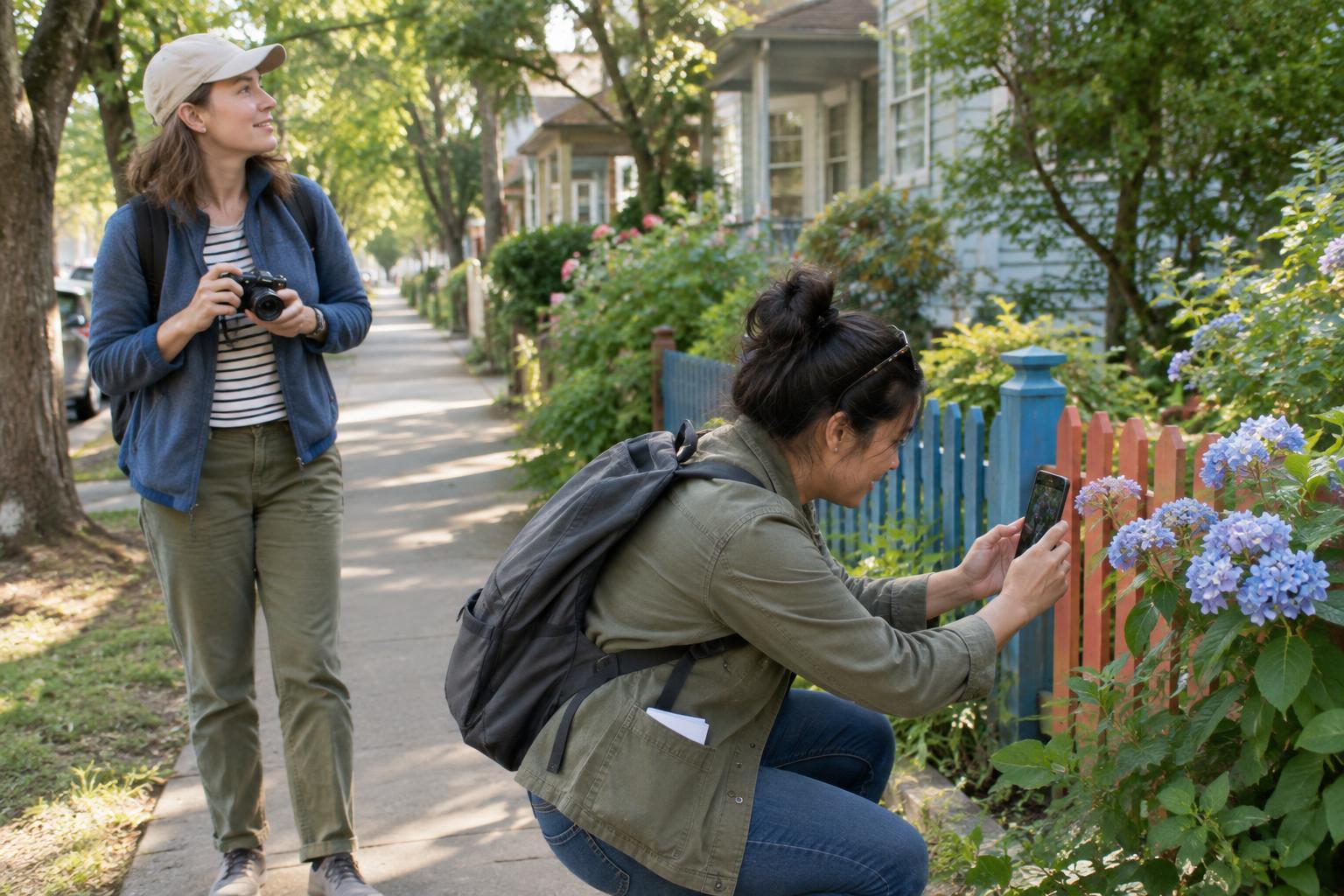
At each stop, take a moment to look before raising the camera. Try photographing a subject from where you stand, then move a little closer or change your angle if it is safe to do so. A shift in position can simplify a busy background or reveal a detail you had not noticed. You can also take a wide view and a close-up of the same subject to see which tells the better story.
Stay aware of your surroundings, especially near roads and entrances, and avoid blocking other people’s paths while you compose a shot. Respect private property and posted rules. If someone is clearly the subject of a photo, ask first; when that is not practical, choose a different frame. It is easy to build a satisfying collection from objects, places and details without making strangers part of the project.
Let the list guide you, but do not let it make you miss the walk. If a prompt proves awkward, skip it. If an unlisted scene interests you, photograph it. The point is to pay closer attention to a place you might otherwise move through on autopilot.
Give the photos a simple ending
When you get home, choose a small set of favorites rather than sorting every image at once. Look for photos that show different sides of the walk: a wider scene, a close detail and perhaps a surprise that was not on your list. You can place them in a phone album, send a few to a friend or use them as references for a drawing or another creative project.
If you went with others, compare how each person answered the prompts. There is no need to rank the results; the interesting part is discovering what someone else saw in the same streets. Keep any prompts you enjoyed, replace the ones that fell flat and save the revised list for another weekend. A familiar route can become a new outing simply by changing what you set out to notice.