Set the limit before you leave
A thrift-store outfit challenge gives an ordinary shopping trip a playful goal: build an outfit from secondhand finds without going over a set amount. You can try it alone, with a friend, or as a small group weekend outing. The challenge works best when the spending limit is firm enough to make choices interesting but comfortable enough that nobody feels pressured to spend money they need for something else.
Decide what counts toward the limit before anyone starts browsing. Is the goal to buy a complete outfit, or can you use shoes and basics you already own? Will sales tax count? A simple rule is to set one total for purchases, including tax, and allow clothes you already own only if everyone has the same option. Keep the number in your phone or on a slip of paper so it stays visible while you shop.
You can also make this a no-purchase challenge. Assemble outfits from the racks, take photos only where the store permits them, and put every item back neatly. That version keeps the creative game while removing the cost and the need to bring anything home.
Pick a prompt that leaves room to play
An outfit prompt makes the challenge more fun than simply hunting for the cheapest pieces. Try “a colorful weekend walk,” “dinner with friends,” or “an outfit inspired by your favorite season.” A broad prompt gives everyone a direction without requiring a rare or impractical item. If you are shopping with others, agree on the same prompt or let each person draw one from a short list.
Keep the rules light. You might give yourselves an hour to browse, require one piece you would not usually try, or award informal titles such as “most wearable” and “best use of color.” Avoid making size, body shape, or how much someone spent into the joke. The aim is to notice new possibilities, not to judge how another person looks.
Choose a store that has enough variety for the people taking part, if you can. If the selection is limited, adjust the prompt rather than forcing a purchase. A challenge is still successful when someone finds one useful piece—or decides that nothing on the rack is right for them.
Shop for an outfit, not just a bargain
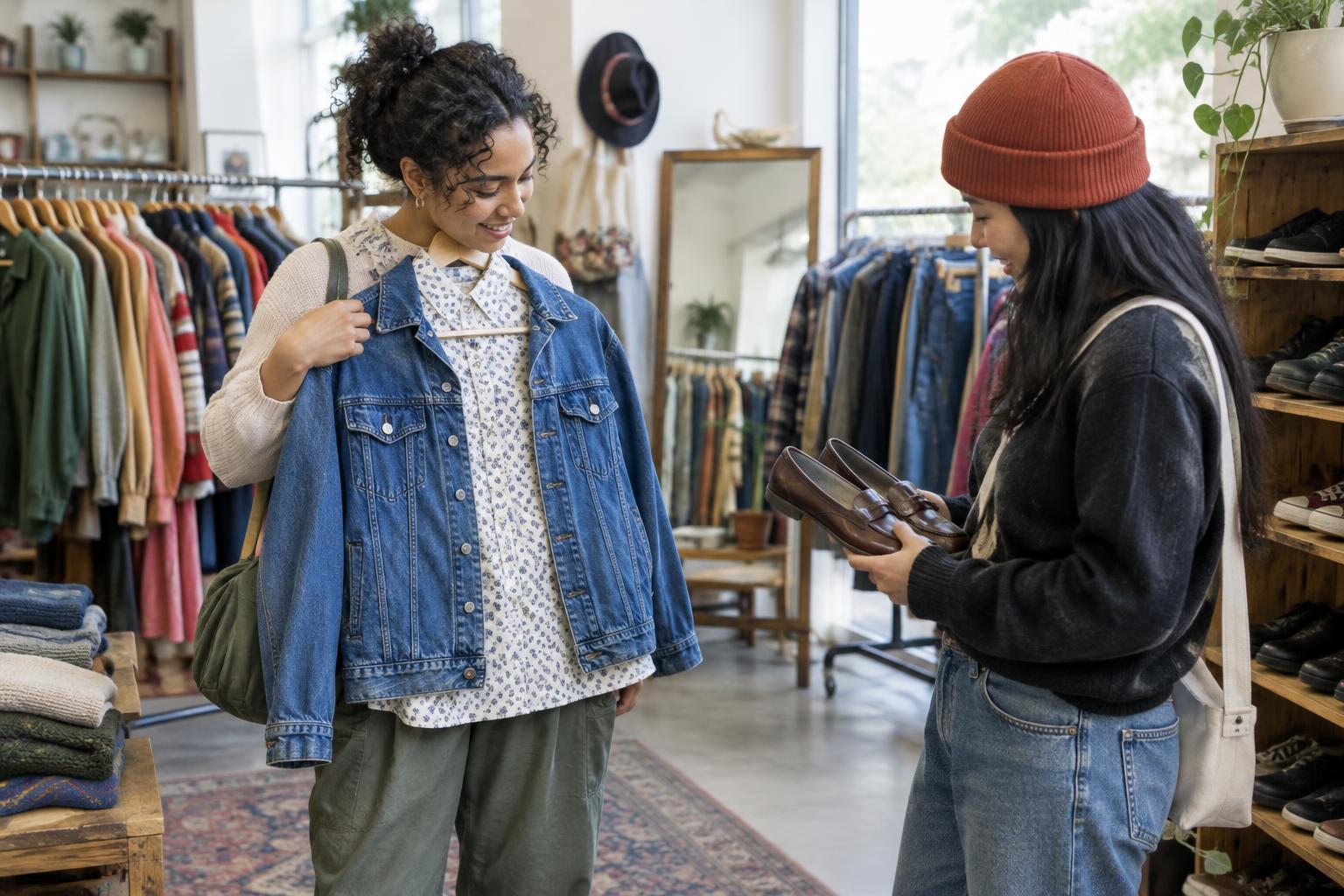
Start with the piece most likely to define the outfit, such as a jacket, dress, patterned shirt, or pair of trousers. Then look for items that work with it in color, shape, and purpose. Before adding anything to your basket, ask whether you could wear it comfortably for the occasion in your prompt. A low price does not make an awkward fit or an unwanted item a good buy.
Check condition while you browse. Look at seams, closures, hems, underarms, and any areas that receive frequent wear. Read care labels if upkeep matters to you, and inspect shoes for uneven wear or damage. Some flaws are easy to live with; others may turn a cheap find into a project you never finish. If you plan to alter something, be honest about whether you have the time and supplies to do it.
Keep a running total rather than waiting until checkout. If you find a stronger option late in the trip, compare it with what is already in your basket and put the weaker choice back. The spending limit is there to help you edit, not to encourage you to use every last bit of it.
Make the reveal relaxed and useful
After shopping, try on the outfits at home or gather somewhere comfortable for a quick reveal. Let each person explain the prompt, the piece that started the look, and one choice they made to stay under budget. If you want photos, ask before taking or sharing anyone’s picture. A private group chat or an in-person show-and-tell can be just as enjoyable as posting online.
The most interesting result may be a styling idea rather than a full outfit. Perhaps a familiar shirt looks different with an unexpected color, or a secondhand layer works with clothes already in your closet. Trade observations and encouragement, but let each person decide what feels like them. There is no need to declare a single winner unless your group enjoys that part of the game.
Keep what works and let the rest go
Once the challenge is over, clean purchased items according to their care instructions before wearing them. Try each piece with clothes you already own and notice whether it fills a real gap. If an item does not work after all, consider passing it along through an appropriate donation or resale option rather than storing it indefinitely.
For another weekend, change just one rule: use a different prompt, shop for one standout accessory, or build an outfit around a color you rarely wear. A firm limit keeps the outing manageable; a fresh prompt keeps it creative. The best outcome is not a perfect bargain haul, but an enjoyable afternoon and a clearer sense of what you like to wear.