Start with a small area and a simple question
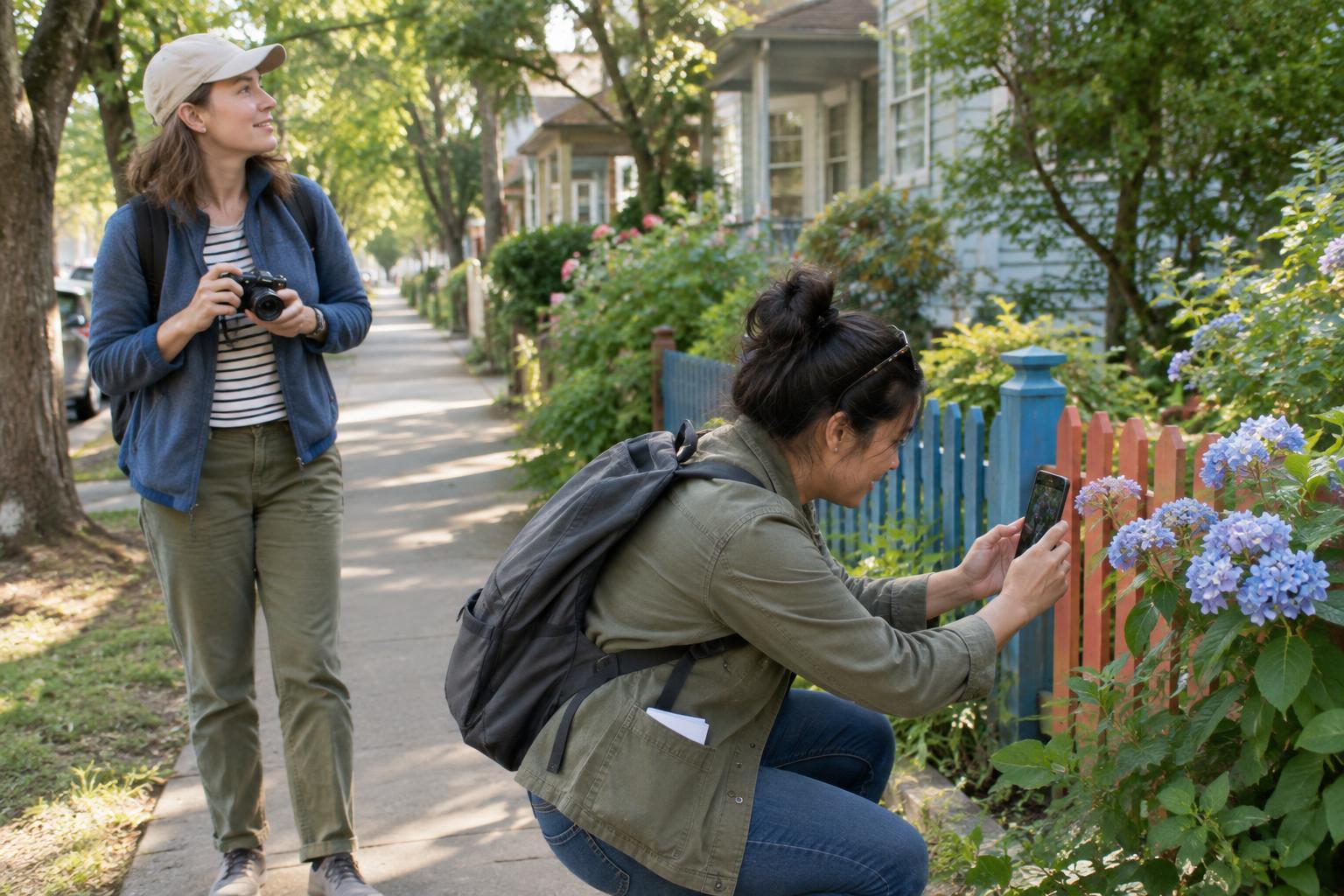
A local history walk works best when it has a modest scope. Choose a neighborhood, town center, waterfront, park, or short stretch of main street that you can comfortably cover on foot. Then give the walk a loose theme: How has this street changed? Which buildings have had different uses? What traces of older transport routes remain? A question gives you something to look for without turning your weekend into a research assignment.
Set a rough time limit before choosing stops. An hour or two, including reading and breaks, may be more enjoyable than an ambitious route across town. Think about who is coming with you, whether they would prefer a loop, and where you could pause for water or a snack. If walking is difficult, the same approach can work as a shorter route with fewer stops or as a mostly at-home exploration of one familiar place.
Collect stops from plaques and everyday landmarks
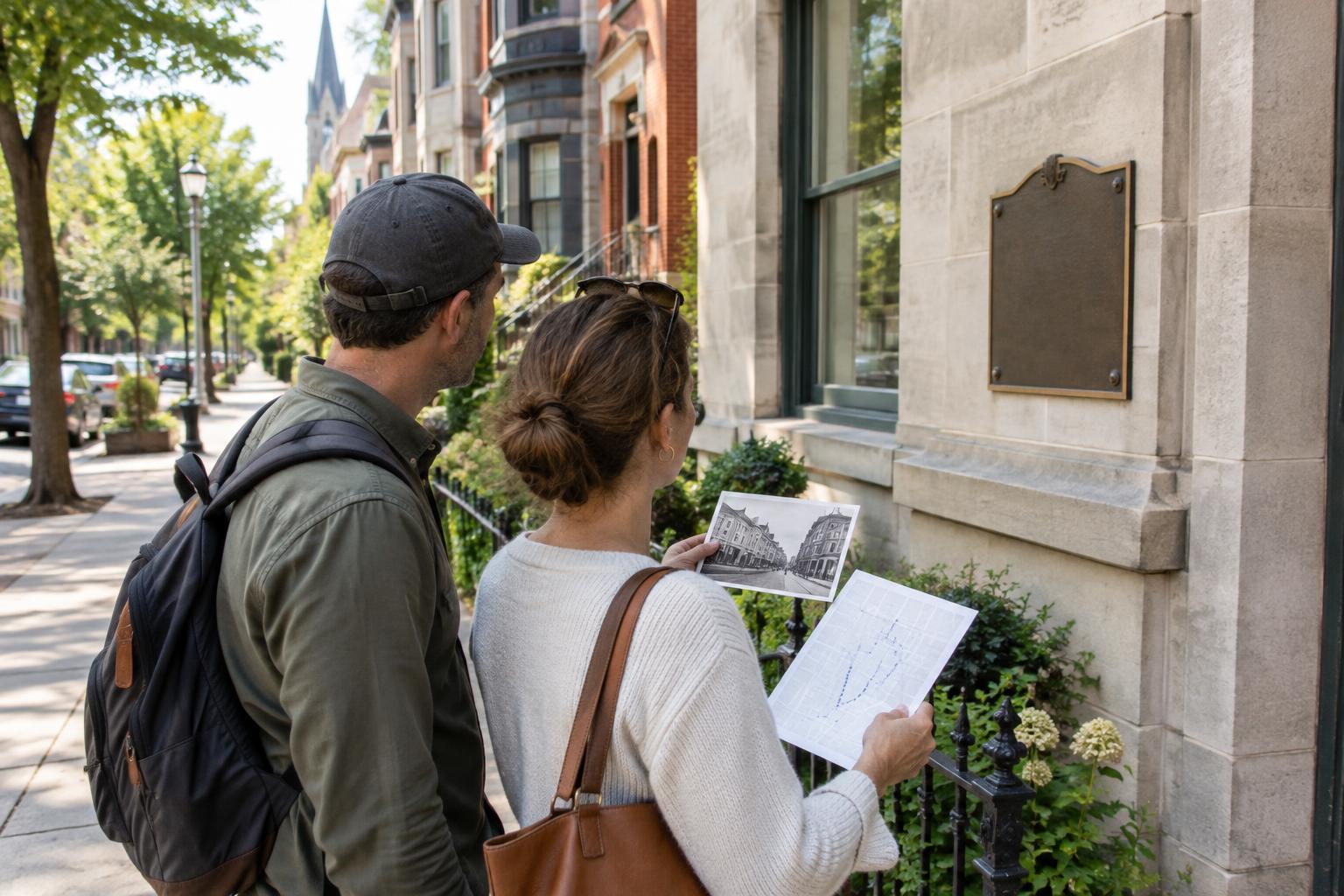
Begin with what is visible in public space. Historical plaques, building inscriptions, memorials, old street names, and interpretive signs in parks can all suggest stops. If you do not already know where to find them, try a walk through your chosen area or look for a plaque list maintained by a local library, museum, or civic group. Check any location details before setting out; signs can be moved, obscured, or temporarily inaccessible.
Choose three to six stops that form a sensible route, rather than including every marker you find. Variety helps: a former shop, a bridge, a public building, and a park may prompt different kinds of questions. You can also include an unmarked place if an archive item helps you notice something there. Keep the route on public paths, and treat plaques on private buildings as things to view from the sidewalk, not invitations to enter or peer through windows.
Use public archives to add context
A plaque is a starting point, not the whole story. Search your local library’s digital collections, municipal archive, historical society catalog, or museum website for the street names and places on your route. Old maps can show earlier street layouts; photographs may reveal changes to a building or intersection; directories and local publications may offer clues about how a space was used. Collections vary, and some materials may require a visit or may not be available online.
For each stop, save one or two useful details in your notes. Record the item’s title or description and where you found it so you can return to it later. Pay attention to uncertainty: a photograph labeled with an approximate location may not prove exactly what stood on a particular corner. It is also worth asking whose experiences appear in the records and whose do not. Official markers often highlight particular people or events, while ordinary work, migration, leisure, and community life can be harder to see.
Turn your research into a walkable guide
Put your stops in walking order and make a short note for each one: where to stand, what to look at, one piece of historical context, and a question to consider. A note might invite you to compare an old map with today’s crossing or look for signs that a building has been adapted. Keep the writing brief enough to read outdoors. A phone note works well, but a printed page lets you put the screen away between stops.
Before you go, review the route for crossings, opening hours if you plan to enter a public building, and any sections that may be uncomfortable or difficult to navigate. Bring water, dress for the conditions, and choose daylight if it makes signs and streets easier to see. You do not need to complete the route exactly as planned. A closed path, missing plaque, or inviting side street can be a reason to adjust, not a failure of the walk.
Leave room for observation and conversation
At each stop, read your note, then spend a minute looking around. Which older features are still visible? What has changed since the archive image or map was made? What can you not tell from the material you found? If you are walking with friends, let everyone choose one detail they noticed before sharing the research. That keeps the outing conversational rather than making one person the tour guide.
Afterward, jot down any questions worth following up. You might discover that a date needs checking, that an unfamiliar place name appears on several maps, or that a nearby street deserves its own route. Save your notes and the archive item details together. The result is a repeatable weekend activity: a short walk that makes a familiar place feel more interesting without requiring a ticket, specialist knowledge, or a perfect account of its past.