Start with the amount your group needs
Before comparing prices, make a rough plan for what you are serving and how many people will eat. A pasta dinner for eight calls for different quantities than a snack table for eight. Note which foods are the main event, which are sides, and whether guests are bringing anything. This gives you a target quantity to shop toward instead of letting a sale sign decide the menu.
Build in a little flexibility for appetites, but think about leftovers too. If your group can take extras home or you can use them later, a larger package may be convenient. If not, its lower unit price may simply buy food that goes uneaten. When you share the shopping cost, you can also agree ahead of time on whether leftovers belong to the host or will be divided among the group.
Compare the same unit, not just the package price
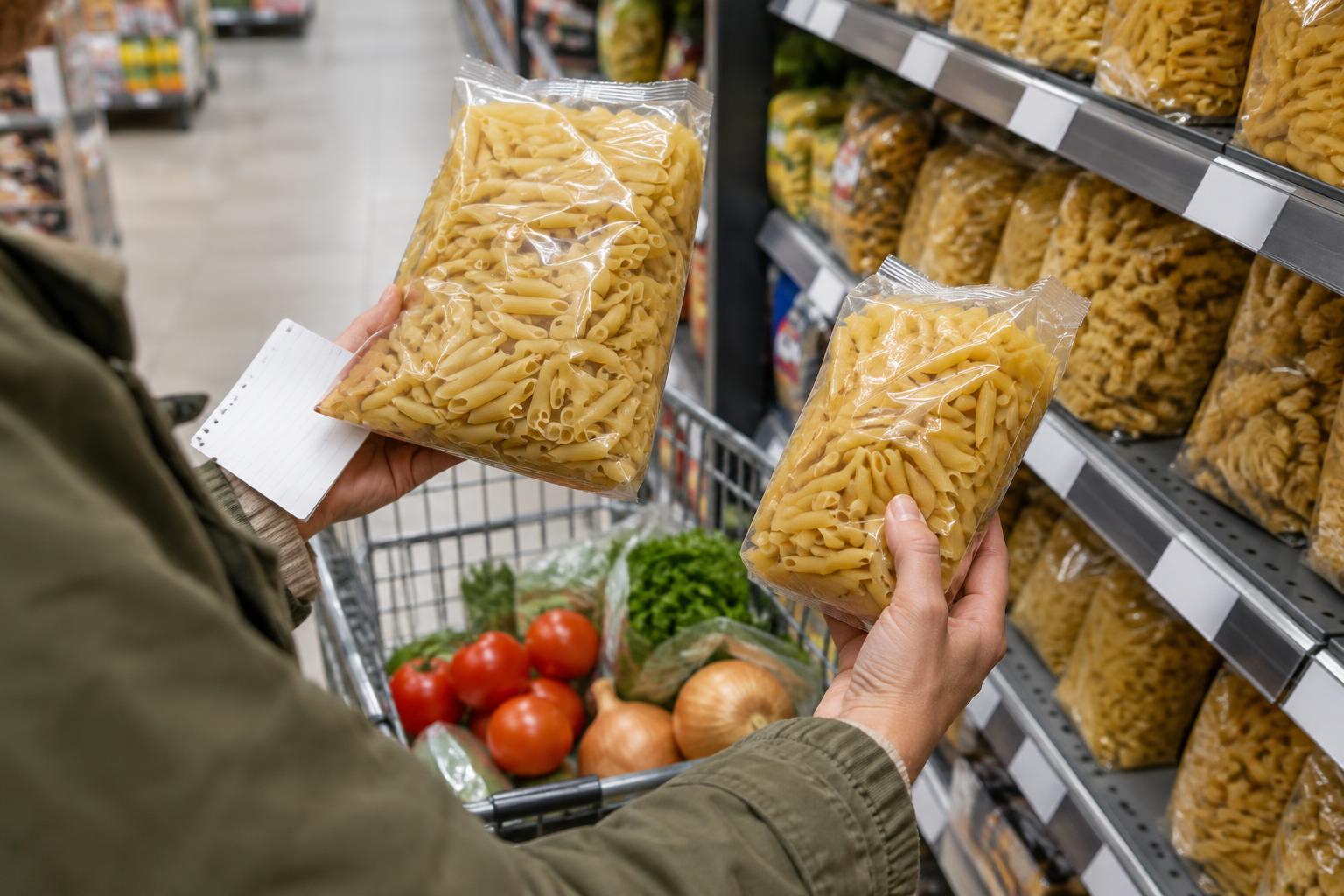
A unit price shows what an item costs per ounce, pound, liter, or individual piece. Shelf labels often provide one, but check that competing labels use the same unit. A price per pound cannot be compared directly with a price per ounce. To work out a unit price yourself, divide the package price by the amount it contains: a 24-ounce bag costing $3.60 is $0.15 per ounce.
Use the unit your group actually cares about. For canned drinks, cost per can may be clearer than cost per fluid ounce if you plan to offer one to each person. A 12-pack for $6 costs $0.50 per can; an eight-pack for $4.40 costs $0.55 per can. The larger pack is cheaper per can, but the smaller one could still be the better purchase if eight drinks are enough and extra cans would not be used.
For items sold in different measures, convert before choosing. A five-pound bag costing $8 is $1.60 per pound, while a three-pound bag costing $5.40 is $1.80 per pound. A phone calculator is useful, but you do not need to calculate every item in the store. Focus on the ingredients that take up the largest share of your budget or come in several package sizes.
Check how much of the package is usable
Two packages can have the same weight but provide different amounts for your meal. A can packed in liquid, produce with peels or stems, and meat with bones may leave less usable food than the front label suggests. For canned ingredients, check whether the stated weight includes liquid and look for a drained weight when it matters to your recipe. For produce, consider whether you will serve the whole item or trim part of it.
Portion size matters as much as weight. If you need sandwich rolls for ten people, count the rolls rather than comparing package weights alone. If you are serving a dip, think about how much each guest is likely to use alongside other snacks. These estimates need not be exact; their purpose is to prevent a seemingly cheap package from leaving you short or creating a large surplus.
Read the conditions behind a tempting deal
A promotion can change the math, but only if you can use it as advertised. Check whether the displayed price requires buying several packages, choosing a particular size, or using a store account. Then calculate the total amount you would have to buy. A lower price per unit is less helpful if meeting the deal requires far more food than your group needs.
Compare items that will do the same job on the menu. Plain yogurt and a prepared dip may both work with vegetables, but they are not interchangeable without extra ingredients and preparation. Likewise, the cheapest package of an unfamiliar ingredient may not be a bargain if no one wants to eat it. Include any necessary add-ins when judging the total cost of an option.
Make the final choice around the whole gathering
Unit price is a tool for comparing value, not a rule to buy the biggest size. Once you have identified the cheaper option per unit, ask three final questions: Will it provide enough for the group? Can we store or use the remainder? Does it fit the money available today? The best choice may be one large package, several smaller ones, or a mix that reaches your target quantity with little waste.
Keep a short list of the quantities you decided on, especially if you are shopping for several dishes. If friends are splitting costs, save the receipt and separate shared groceries from personal purchases. Clear quantities and a clear total make the gathering easier to organize—and let you spend less time doing math in the aisle and more time enjoying the meal together.