Start with the meal, not the sign-up sheet
Before asking anyone to bring food, decide what kind of gathering you are hosting. A sit-down dinner needs a different mix from an afternoon open house where people will graze. Estimate how many guests are likely to eat, whether children are included, and what you can provide yourself. Plates, utensils, water, and a place to set food down are less exciting than a homemade dish, but they make the meal work.
Sketch out broad needs rather than a strict menu: a few filling dishes, vegetables or fruit, lighter sides, dessert, and drinks. If the event has a theme, say so, but leave guests several ways to participate. The goal is not to eliminate every repeated ingredient. It is to avoid ending up with plenty of one course and almost nothing else.
Give guests clear choices and one place to claim them
Use a shared list or a message thread that everyone can check. Divide the list into practical categories such as main dishes, substantial sides, fresh sides, desserts, and drinks. Add a limited number of spaces in each category, then invite guests to write down a specific dish when they choose one. “Pasta salad” is more helpful than “side,” and “lemon bars” tells others that dessert is already taking shape.
Keep the process easy for guests who do not want to use a shared document. They can message you their choice, and you can add it for them. Ask people to claim a category before they shop, but do not make the system feel like an assignment. Someone who loves baking may prefer to bring dessert even if another baker has signed up. In that case, steer a flexible guest toward a gap rather than demanding that everyone change plans.
Ask the questions that prevent surprises
When guests sign up, ask for an approximate number of servings and whether the dish needs an oven, refrigerator, outlet, or serving utensil. A large casserole that needs reheating and a slow cooker that needs a plug can compete for limited space. Knowing this ahead of time lets you suggest room-temperature dishes or arrange a serving order. It also helps you spot a menu that looks balanced on paper but may not feed the group.
Invite guests to mention ingredients that other people may need to know about, and share any dietary needs guests have chosen to tell you. Do not promise that a shared kitchen or buffet will be free of allergens. Instead, ask contributors to label their dishes with a name and key ingredients, and let guests make their own choices. If you know someone needs a particular option, check with them directly rather than assuming a dish will suit them.
Fill gaps without micromanaging
Check the list a few days before the gathering. If it is heavy on chips and sweets, send a friendly, specific request: “We have desserts covered; could someone bring a filling side or a vegetable dish?” People respond more easily to a clear gap than to a vague call for more food. You can also offer low-effort choices, such as cut fruit, bread, or a store-bought salad, so nobody feels that joining the meal requires cooking.
As host, consider covering one dependable staple yourself. A pot of rice, a tray of roasted vegetables, or another simple dish suited to your menu can make small portions stretch further. Keep it manageable; hosting is already a contribution. If two guests still bring similar dishes, put both out. A potluck does not fail because there are two versions of a favorite food.
Make serving and leftovers easy
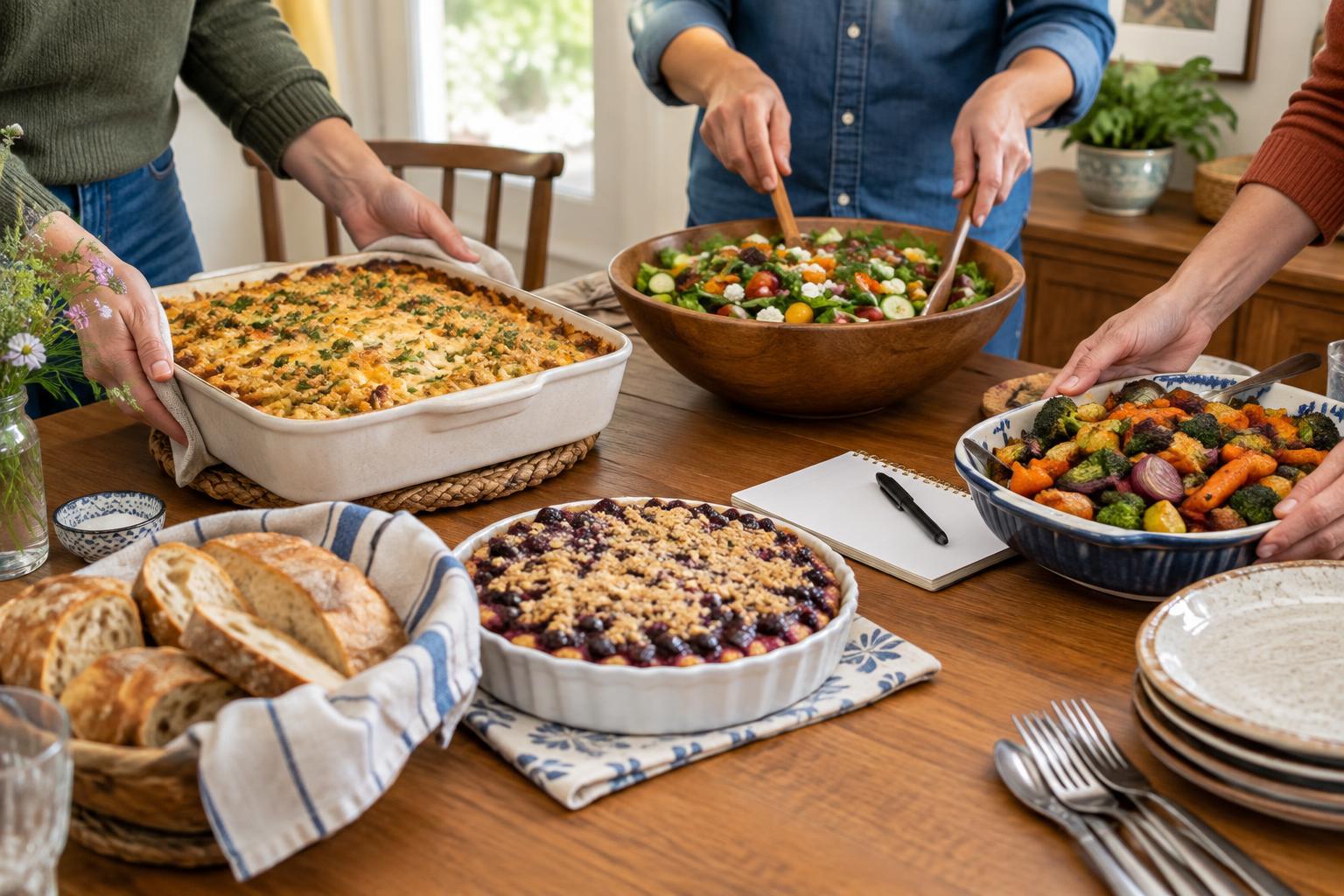
Send a short reminder before the event with the time, address, what each person signed up for, and any practical notes about parking or kitchen space. Ask guests to bring their dish ready to serve when possible, along with a utensil if it needs one. Leave room on the table for arrivals and keep labels or scrap paper nearby for dishes that come in unmarked.
At the end, invite people to take their own containers home and offer leftovers only when the cook is happy to share them. Have a few spare containers or bags available, but do not rely on them for every dish. The best potluck plan is light enough to adapt: a visible menu prevents most duplicates, while a relaxed host makes guests feel welcome even when the plan changes.