Start with an amount you can enjoy spending
A leisure budget is not a test of how little fun you can have. It is a way to decide, ahead of time, what you can comfortably spend on hobbies, outings, games, and treats. Start by looking at your usual monthly expenses and any money you have already committed to other goals. Then choose an amount for leisure that fits your circumstances. If your income or expenses vary, a modest amount you can adjust may be easier to use than a rigid target.
Include the ordinary costs that come with having fun, not just the main event. A craft night might involve supplies and a snack. A walk with friends might include a bus fare or coffee afterward. Leaving these details out can make an affordable plan feel unexpectedly expensive. You do not need a perfect forecast; you need a useful starting point.
Give planned activities and small extras separate space
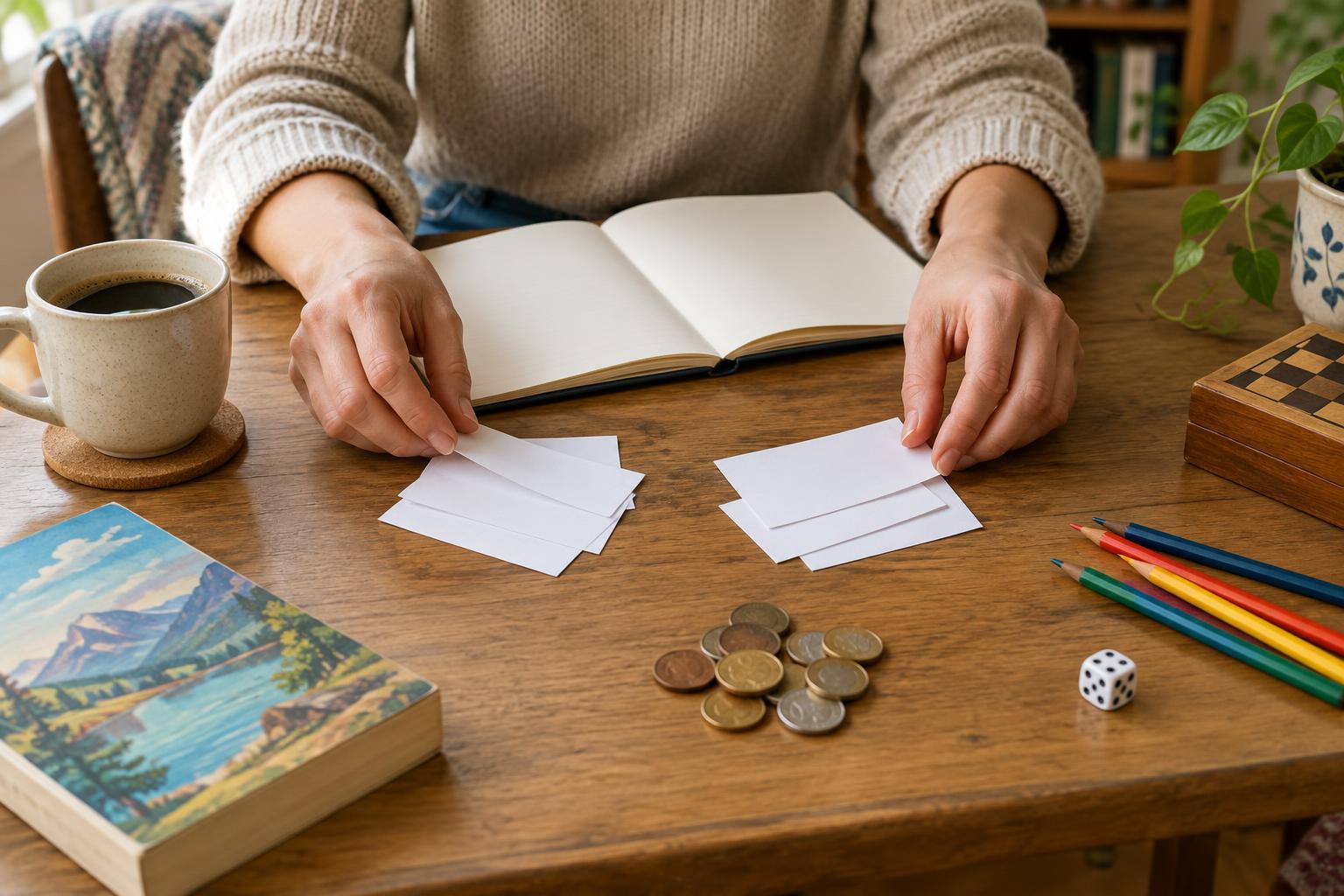
Divide your leisure amount into two simple parts: planned activities and small extras. Planned activities are things you can anticipate, such as a board-game café visit, materials for a project, or a weekend outing. Small extras are the optional purchases that pop up along the way: a drink after a free event, a new puzzle, or an entry fee you had not expected.
The split can change each month. If you already have several invitations, put more toward planned activities. If the calendar is open, reserve a little more for spontaneous choices. Having an extras allowance means you can say yes to something small without treating it as a mistake. It also gives you a clear point at which to pause and consider a no-cost alternative.
Make a short menu of options at different prices
Write down a few things you would actually like to do this month, including free, low-cost, and higher-cost options. The free list might include a library visit, a game night using what you own, or a self-guided walk. Low-cost ideas could be a shared baking project or a secondhand book. A higher-cost option might be a class or a ticketed activity.
This menu helps when plans change. If a paid outing no longer fits, you can choose something else without giving up on leisure altogether. It also helps you notice whether a purchase will get repeated use. Supplies for a hobby you enjoy weekly may feel more worthwhile to you than a one-off activity; another month, the experience may be the better choice.
Keep tracking light and practical
Pick a tracking method you will use: a note on your phone, a page in a notebook, or a separate spending category in an app you already have. Record leisure spending soon after it happens, including small extras. A quick entry such as “movie night: ticket and snack” is enough. The aim is to see what remains, not to produce a flawless account of every moment.
Check the total before making a new plan and once near the end of the month. If you have spent more quickly than expected, look for activities already available to you: borrow a game, revisit unfinished craft supplies, or invite friends over for a bring-your-own-snack evening. If money remains, you can use it for a final outing or set it aside for a future activity.
Adjust the plan without judging the month
At the end of the month, ask two questions: Which activities were worth the cost to me, and which extras did I barely notice? Your answers are more useful than an ideal rule about what leisure should cost. You may discover that one planned event gives you more enjoyment than several impulse purchases, or that small, casual meetups are what you value most.
Use what you learn to shape next month’s budget. You might set aside a little more for supplies, plan fewer paid outings, or keep the same amount for small extras because it made the month easier to enjoy. A good leisure budget leaves room for real life. It helps you choose how to spend your time and money while still allowing for an occasional pleasant surprise.