Start with one simple version
Rummy is a card game about turning the cards in your hand into matching groups called melds. There are many versions, so agree on the rules before dealing. The version below works well for a first game with two to four players, one standard 52-card deck, and no jokers.
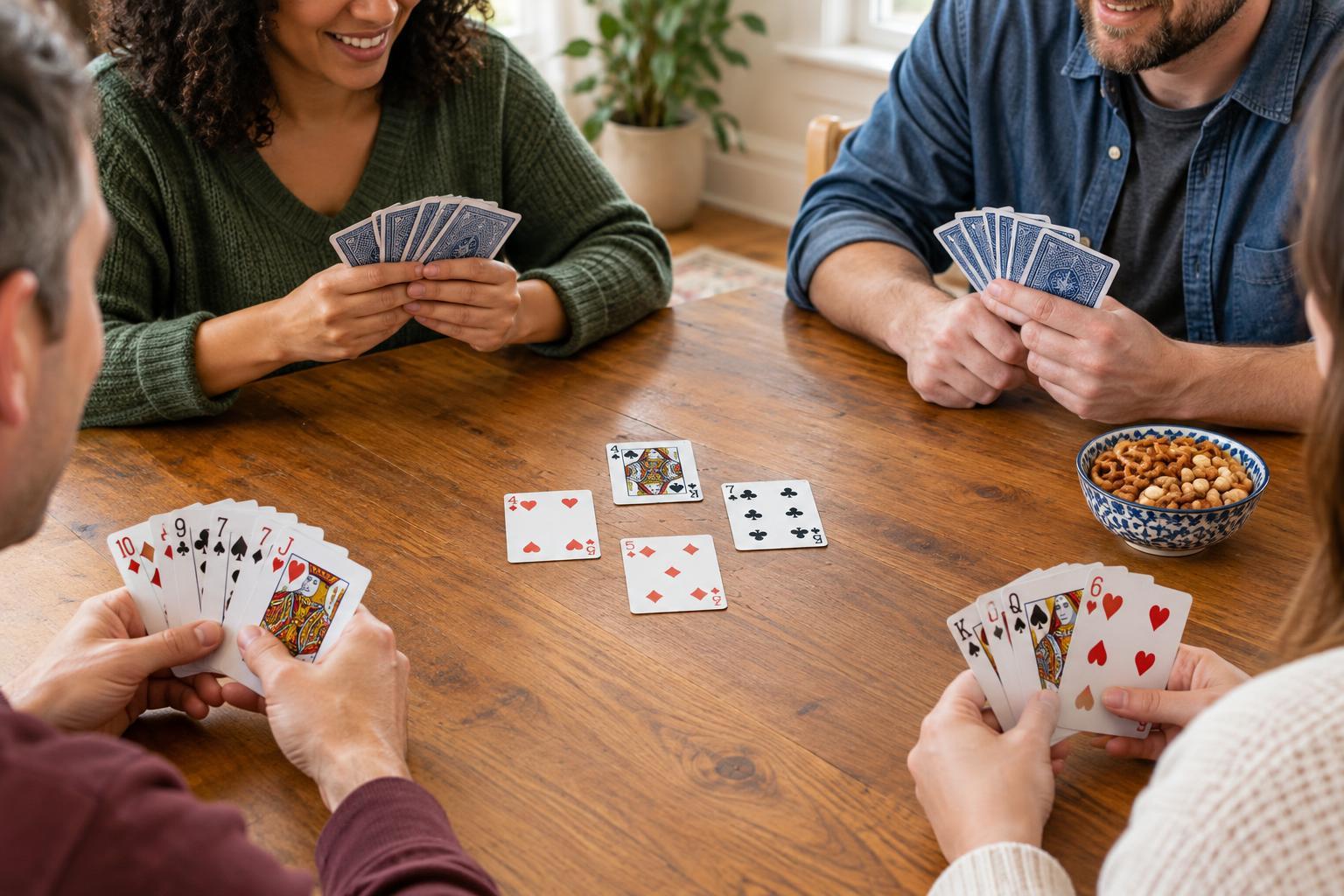
Deal 10 cards to each player in a two-player game, or seven cards each with three or four players. Put the remaining cards face down in the middle as the stock. Turn its top card face up beside it to start the discard pile. Keep your hand hidden from the other players. The player to the dealer’s left takes the first turn, and play continues clockwise.
For an easy first round, skip point scoring. The goal is simply to be the first player to put all your cards into valid melds and discard your final card. You can add scoring once everyone is comfortable with the turns.
Know what counts as a meld
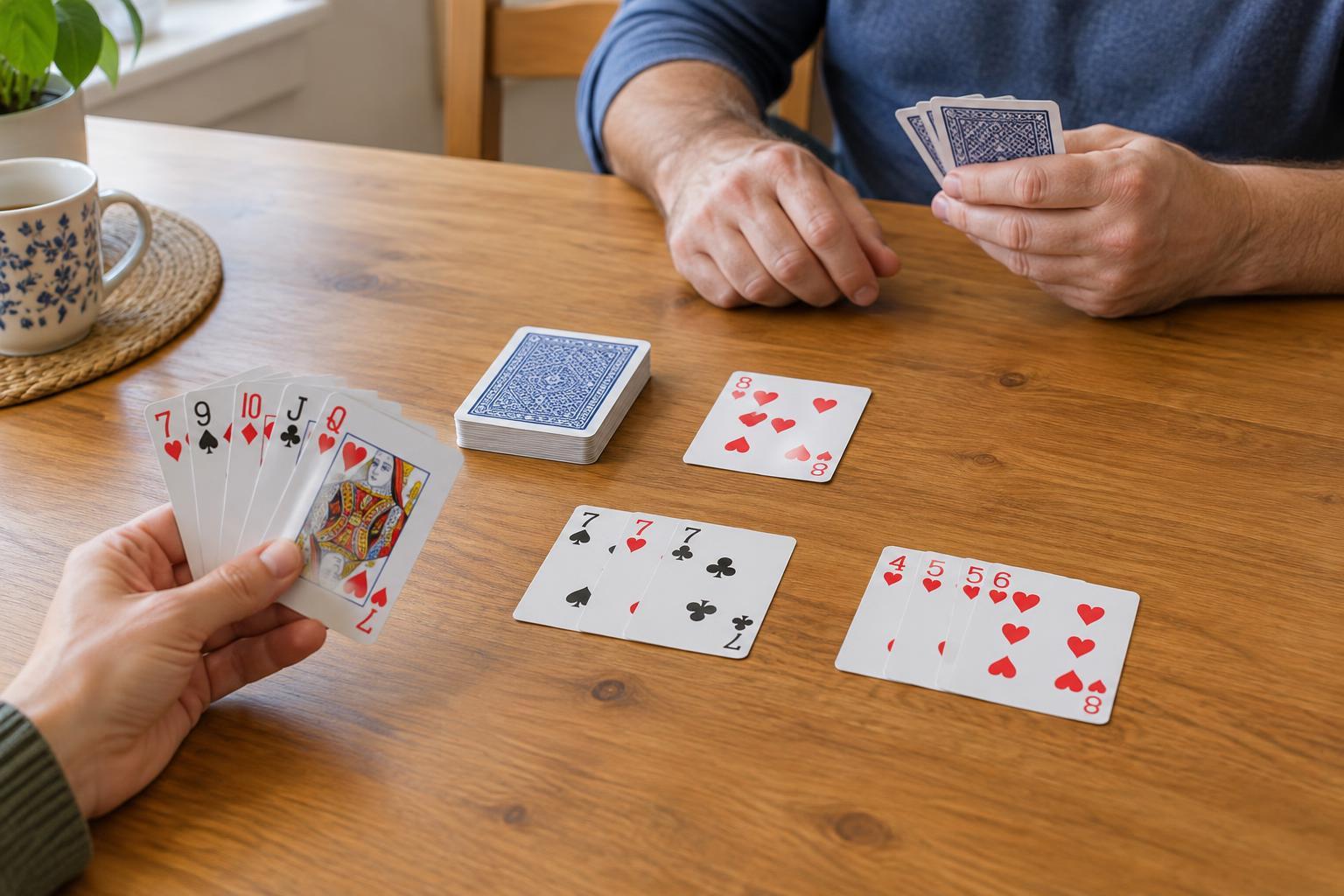
A meld contains at least three cards. A set is three or four cards of the same rank, such as three sevens. A run is three or more cards in consecutive order and in the same suit, such as the four, five, and six of hearts. In this version, an ace is low: ace, two, and three can make a run, but queen, king, and ace cannot. Runs do not wrap around from king to ace.
Each card can belong to only one meld at a time. If the seven of hearts would complete both a set of sevens and a heart run, you must choose where to use it. You may rearrange the cards in your hand while deciding, but once you place a meld face up on the table, leave those cards there. For this beginner version, do not add cards to melds already on the table; make new melds from the cards in your hand instead.
Draw, consider, discard
Every turn has the same shape. First, draw one card: take either the top face-down card from the stock or the top face-up card from the discard pile. You cannot search through either pile. Add the card to your hand and look for sets or runs you can make.
Next, you may place any complete melds from your hand face up in front of you. You can place one, several, or none. Holding a meld for a later turn is allowed, though doing so leaves more cards in your hand. Finally, put one card face up on the discard pile. Your turn is over, and the next player draws.
The discard is a small but interesting choice. A card that seems unhelpful to you might complete another player’s meld, while a card you keep could become useful after your next draw. You cannot know every card the others hold, so aim for a sensible choice rather than a perfect one. For example, if you hold the four and five of clubs, a three or six of clubs could extend your potential run. Keeping both cards gives you options, but not at the expense of ignoring a meld you can already make.
Finish the round and handle an empty stock
To win a round in this version, play any remaining melds from your hand, then discard your last card so that you have no cards left. This means you need a card to discard even if every other card fits into melds. If you are close to going out, count your cards before placing anything on the table. After someone goes out, collect and shuffle the cards to start another round.
If the stock runs out before anyone wins, leave the top card of the discard pile face up. Shuffle the rest of that pile and place it face down as a new stock. This keeps the round moving without introducing another rule to remember.
Make the first game easy to follow
Before the deal, tell everyone the agreed rules: sets and runs need at least three cards, aces are low, played melds cannot be extended, and a player goes out by discarding their last card. Saying these aloud matters because someone may have learned a different kind of rummy.
During the first round, let players take time to sort their hands by rank or suit. Grouping cards by rank makes possible sets easier to spot; grouping them by suit reveals possible runs. After each draw, check both arrangements before discarding. If a rule question comes up, pause and agree on an answer for the rest of that round. Once the draw–meld–discard rhythm feels natural, you can try other rummy variations without losing the simple idea at the heart of the game.