Start with the value of each tile
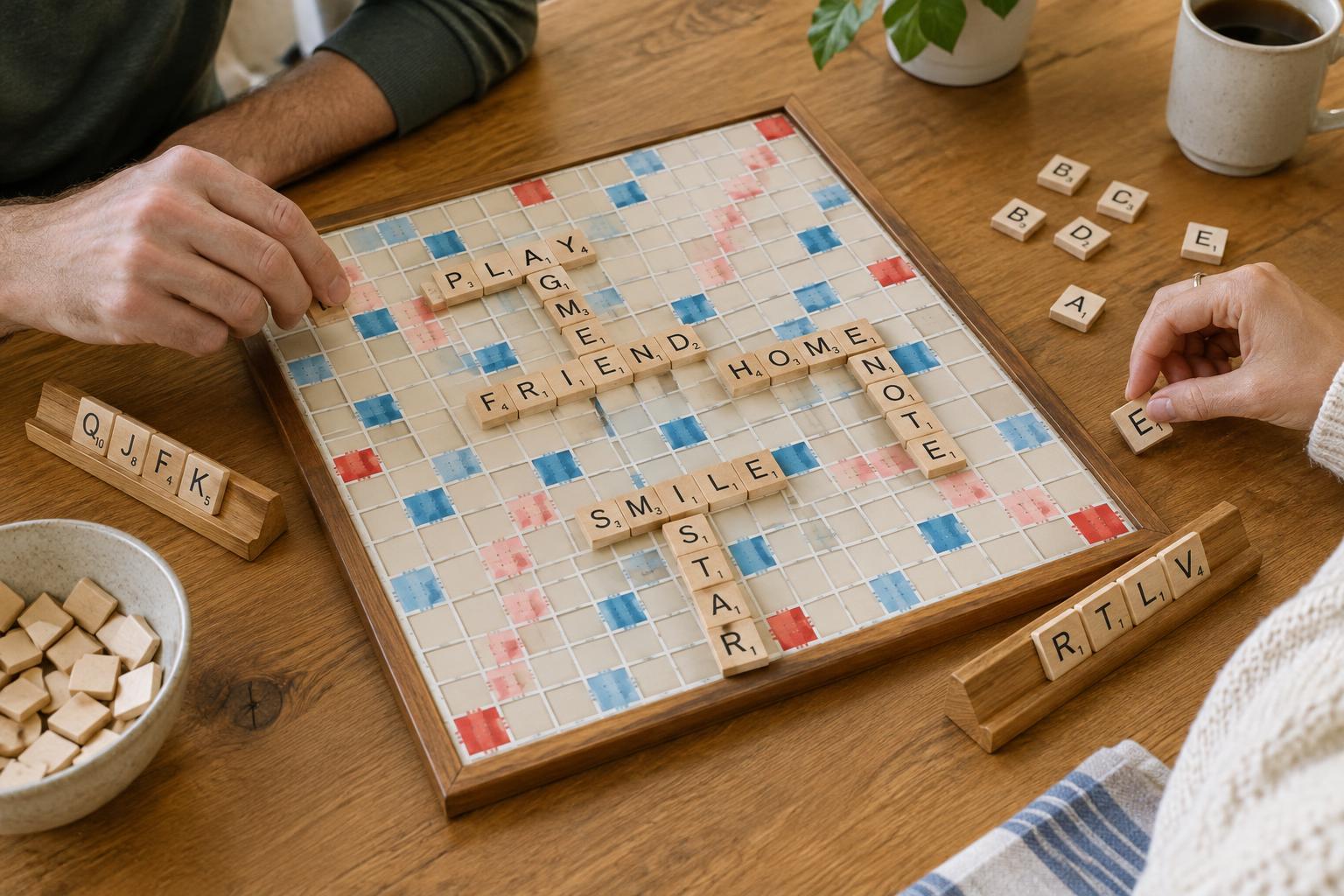
In standard English-language Scrabble, every letter tile has a printed point value. The common letters A, E, I, O, U, L, N, S, T, and R are worth 1 point each. D and G are worth 2; B, C, M, and P are worth 3; F, H, V, W, and Y are worth 4. K is worth 5, J and X are worth 8, and Q and Z are worth 10. These values differ in versions made for other languages, so use the numbers on the tiles in your set.
To score a word without any bonuses, add the values of all its letters, including tiles already on the board. CAT, for example, scores 5 points: 3 for C, 1 for A, and 1 for T. A blank tile can stand for a chosen letter, but it is always worth 0 points. Once placed, it continues to represent that same letter for the rest of the game.
Apply premium squares in the right order
The colored squares on a standard board offer four kinds of bonuses: double letter, triple letter, double word, and triple word. A letter premium changes the value of the tile placed on that square. A word premium changes the total value of the completed word. Add up the letters, applying any letter premiums first, and then apply any word multiplier.
A premium square works only when a tile is placed on it. An older tile still contributes its normal value to a new word, but its square does not pay a second bonus. The center star is a double-word square, so an opening CAT placed across the center with one of its tiles on the star scores 10 rather than 5. If a play reaches two word-premium squares, apply both multipliers to that word; two double-word squares, for instance, make its letter total worth four times as much.
A blank placed on a letter-premium square still scores 0 for that letter. It can, however, help form a word that receives a double-word or triple-word bonus.
Count every word your turn creates
Many turns make more than one word. You might extend a word already on the board, or place tiles alongside existing letters so that one or more short words form at right angles. Score the main word and each new crossing word separately, then add those scores together for your turn. Count a tile in every new word it belongs to; that is not double-counting the turn, because each word has its own score.
A newly placed tile on a premium square can earn that bonus in both the main word and a crossing word formed on the same turn. Work through each word on its own: apply letter premiums to its new tiles, add its letter values, and then apply any word premiums covered by those new tiles. If you use all seven tiles from your rack in one turn, add the standard 50-point bonus after scoring the words. A blank counts as one of those seven tiles, even though it contributes no letter points.
When a move makes several words, write down or say each word’s score before totaling the turn. This makes it easier to spot a missed crossing word or a premium square that was used on an earlier turn.
Check that the placement is valid
A standard play puts one or more tiles in a single horizontal or vertical line, not diagonally. The tiles must form a continuous word, although letters already on the board can fill gaps between newly placed tiles. The first play must make a word of at least two letters and cover the center square. After that, each play must connect to the words already on the board.
Every word newly formed by the play must be acceptable under the dictionary or word list your group agreed to use. That includes small words made alongside the main word. Inflected forms, such as plurals, may be playable when they appear in the agreed word source. Proper nouns, abbreviations, and hyphenated words are generally excluded under standard rules, but settle which reference and challenge rules you are using before the game begins.
Make scoring a shared routine
Before drawing replacement tiles, pause and check three things: which words were formed, which premium squares received new tiles, and whether the player used all seven tiles. Then total the turn and record it. This short routine is especially useful for plays that run beside another word, where a two-letter crossing word is easy to overlook.
If a score looks surprising, retrace it word by word rather than trying to recalculate the whole turn at once. Tile values provide the starting point; new premium squares change the relevant letters or words; and any seven-tile bonus comes last. Once everyone follows the same order, scoring becomes less of an interruption and more of a natural part of the game.