Start with a small, simple setup
A flat wash is an area of watercolor that stays roughly the same color and strength from top to bottom. It makes a useful beginner exercise because every brushstroke teaches you something about water: how much is on the brush, how quickly the paper dries, and when to leave a painted area alone. Start with a rectangle about the size of a postcard rather than trying to cover a whole sheet.
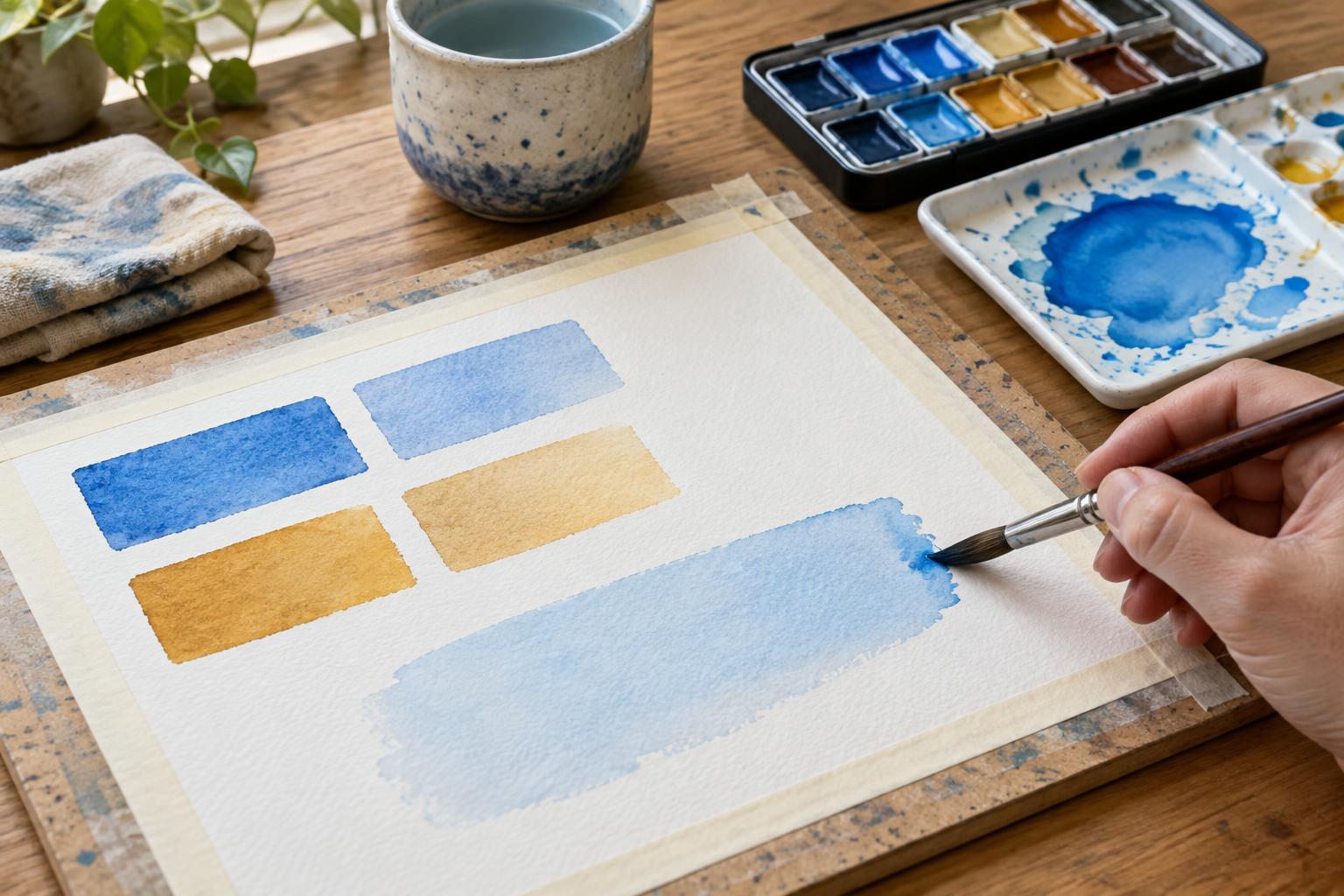
You need watercolor paper, a medium or large brush that holds a good amount of water, paint, two containers of water, and a cloth or paper towel. Paper made for watercolor is easier to work with than ordinary printer paper, which may buckle and absorb water unevenly. Put the sheet on a firm board or table. Tape around the rectangle if you want a neat practice area, and tilt the board slightly so excess paint can move toward the lower edge.
Keep one water container for rinsing paint from the brush and the other for adding clean water to mixes. This small habit helps when you switch colors: water that looks only faintly tinted in a jar can still dull a light yellow or blue.
Mix enough paint before the first stroke
For a flat wash, the paint mixture should be ready before the brush touches the page. Make a small pool in a palette well or on a plate, adding water until it flows easily from the brush. Mix more than you think you will need for your rectangle. Stopping halfway to recreate a color can leave a visible band where the first strokes have begun to dry.
Test a stroke on a scrap of the same paper. If it looks pale and watery, add paint; if it sits in a thick line that is hard to spread, add a little water. There is no single correct ratio. The goal is a mixture you can pick up repeatedly without changing its strength. Give it a quick stir each time you reload so pigment that has settled in the pool does not make later strokes darker.
Move steadily and keep a wet edge
Load the brush, then paint one horizontal stroke across the top of the rectangle. The wet paint gathering along the bottom of that stroke is often called the bead. Reload the brush and make the next stroke just below it, overlapping enough to pull that bead downward. Continue across and down in the same pattern. Work at a comfortable pace: rushing makes it harder to guide the brush, but long pauses allow the previous stroke to dry.
Use a brush wide enough to cover a useful portion of the rectangle. A tiny brush can leave narrow bands simply because it takes too many passes. Let the brush glide with light, even pressure instead of scrubbing. At the bottom, touch the corner of a clean, slightly damp brush or towel to any large puddle. Then set the sheet aside to dry without prodding the surface.
If you see a pale streak while the wash is still shiny, you can sometimes bridge it with the next stroke. Once an area has started to lose its shine, resist the urge to patch it. Fresh water on partly dry paint can push pigment aside and create a bloom or hard-edged mark. It is usually more useful to finish the exercise and note where the timing changed.
Troubleshoot streaks and muddy color
Streaks can come from an uneven mixture, a brush that runs dry, or a wet edge that disappears before the next stroke arrives. Try changing one thing at a time: mix a larger pool, reload before the brush feels empty, or practice on a smaller rectangle. Paper that dries quickly may give you less working time, so keep your tools close and your strokes continuous.
Muddy color is a different problem. It often appears when many colors are stirred together without a plan, a dirty brush enters a fresh mix, or wet layers are worked repeatedly. Begin with one color for your flat-wash practice. When you are ready to mix, try two colors at a time and make the mixture in the palette rather than blending it through repeated strokes on the paper. To place a second color over a finished wash, let the first layer dry fully and use gentle strokes.
Try a ten-minute practice page
Divide a sheet into three small rectangles. Paint the first with one color, concentrating on a continuous bead. In the second, use the same color and mixture but pay attention to loading the brush consistently. For the third, mix two colors in the palette before you begin and see whether you can carry that mixture across the whole shape without changing it.
Let the page dry before judging the results; watercolor often looks different when wet. Look for the point where a band, pale gap, or unexpected edge began, and connect it to what you did with the brush. An imperfect wash is still a useful record. Repeat the exercise with one adjustment, and even a small sheet of practice can show you what helps your color stay smooth.