Make the walk the main event
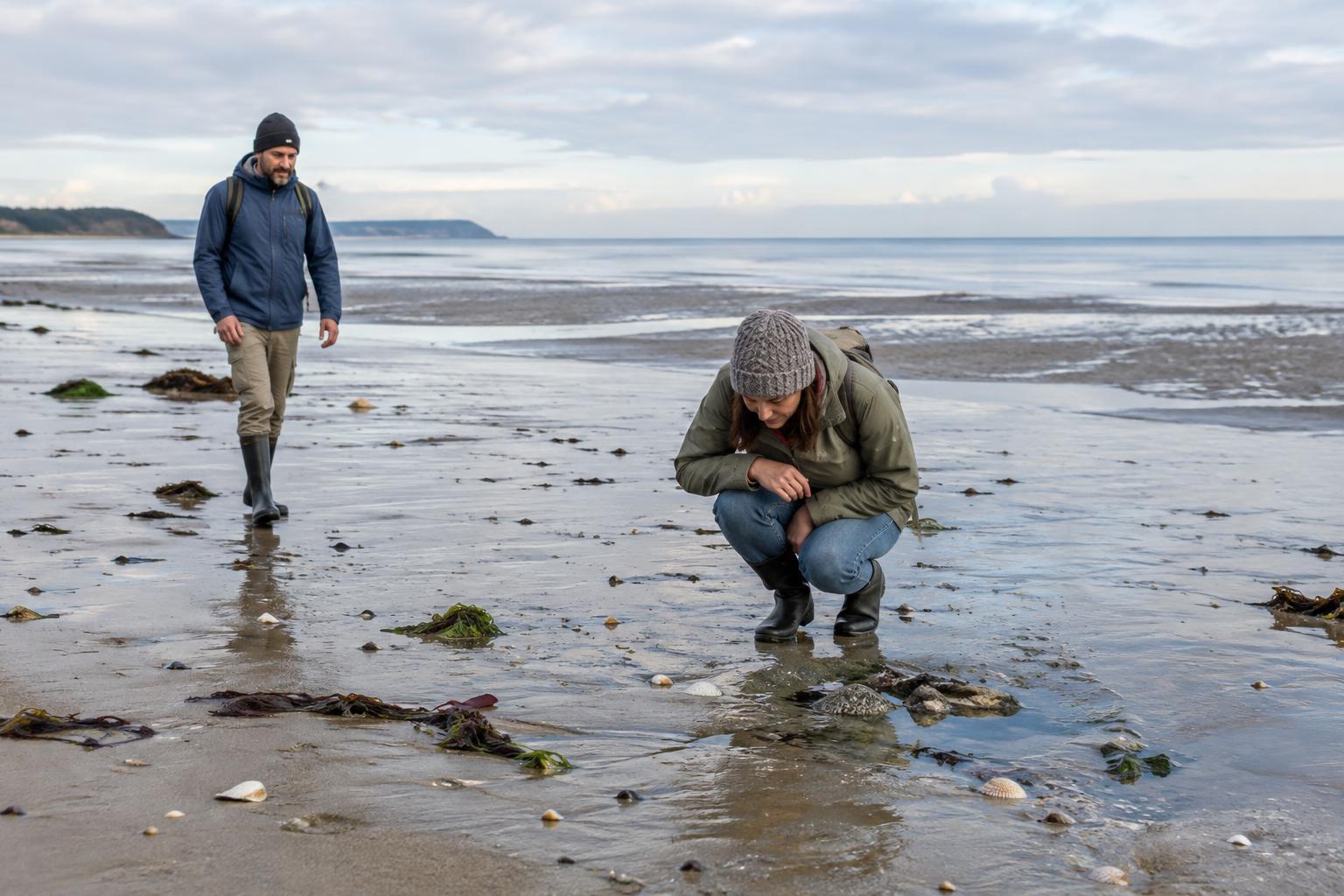
Beachcombing needs little equipment: comfortable footwear, a bag for your own rubbish, and enough time to look closely. The most enjoyable finds may be patterns rather than souvenirs: lines of seaweed left by the water, stones sorted by size, or the different shapes of empty shells. Treating the outing as a chance to observe takes the pressure off bringing something home.
Before you go, look up the rules for the particular beach. Protected areas and managed shorelines may restrict collecting, access, or dogs, and rules can differ between neighboring beaches. If you cannot confirm that taking an item is allowed, enjoy it where you found it. A photograph or a quick sketch can preserve the memory without removing anything.
Check the tide before choosing a route
Find tide times for the specific stretch of coast you plan to visit, using a reliable local tide forecast or information from the site manager. Note when the tide is expected to rise, not just when low tide occurs. A broad patch of sand at low water can become a narrow strip later, and a headland, creek, or rocky outcrop may cut off the way back before the whole beach looks flooded.
Tide times alone do not guarantee safe conditions. Wind, waves, and local geography can change how much usable shore you have. Choose an easy exit, keep track of how you will return, and turn around well before water threatens that route. If you are unfamiliar with the area, stay on an open beach rather than exploring coves or rock platforms with limited exits. Never rely on a phone map as your only way to judge whether a shoreline passage is safe.
Look closely, but disturb lightly
Walk with an eye on where you place your feet, especially around tide pools, seaweed, and patches of shore plants. Rocks and seaweed can shelter small animals. If you move something to look underneath, put it back gently in the same position; better still, leave fragile habitats undisturbed. Watch shorebirds from a distance, particularly if they seem to be feeding, resting, or protecting young.
Leave living creatures where they are. A shell that looks empty may still house an animal, including a hermit crab. Rather than prying shells open or carrying unfamiliar creatures away for a closer look, observe them in place. Keep pets under control and follow any posted restrictions so wildlife has room to move and rest.
Decide what belongs on the beach
If collecting is permitted, consider taking only a few clearly empty, common-looking items that you can use or display. Shells, stones, and driftwood can provide shelter or become part of the shoreline over time, so leaving most finds behind is a useful habit. Avoid taking anything attached to a living organism, and leave bones, nests, and other signs of wildlife undisturbed.
Old-looking objects deserve caution too. Pieces of pottery, worked stone, or other possible historical finds may be protected or meaningful in their original location. Leave them in place and follow local guidance on reporting discoveries. Do not handle sealed containers, sharp metal, needles, or anything you cannot identify safely. Taking a photo from a sensible distance is enough.
Bring home a record, not a problem
A small notebook can turn a familiar walk into a repeatable hobby. Record the beach, weather, tide stage, colors you noticed, and questions you want to look into later. Try making a photo collection of shapes or textures, or sketching one object from several angles. These projects give you something to share with a friend without needing a bag full of finds.
You can pick up ordinary litter if it is safe to do so, but do not put yourself at risk for a cleanup. Wear suitable protection, leave hazardous items alone, and use any local reporting system for dangerous waste. Before leaving, check that you have all your belongings and that your route remains clear. The best beachcombing trip ends with a safe walk home and plenty left for the next visitor to discover.