Start with the idea of shared space
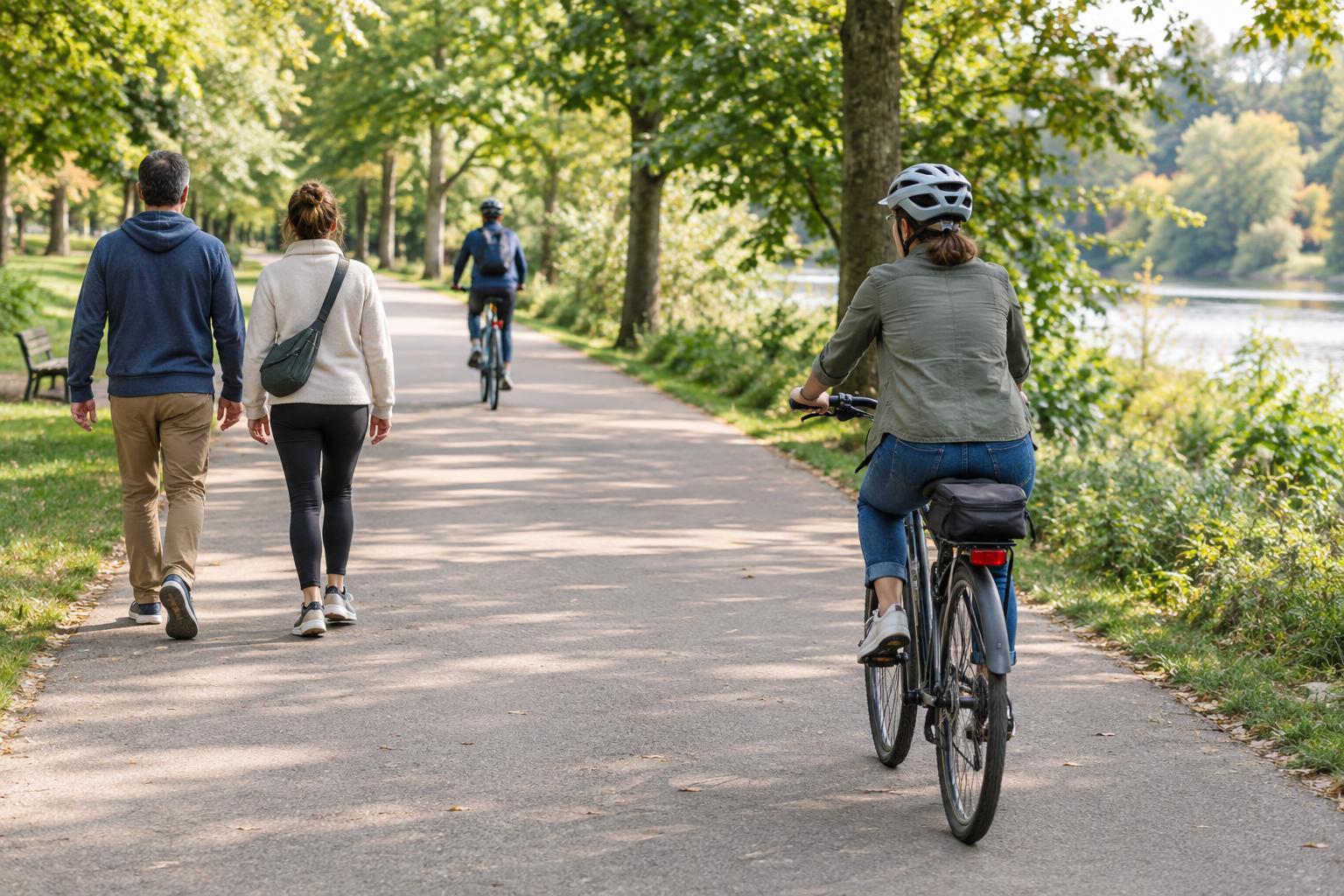
A shared-use path can bring together people walking, running, cycling or using mobility aids, often at very different speeds. Some are commuting; others are enjoying an unhurried outing. Treating the path as a place to cooperate, rather than a lane to claim, makes it easier to ride without startling anyone.
Before setting off, look for posted signs and markings. Local rules may specify where to ride, whether bells are required or how to use a particular crossing. When the path is narrow or busy, the useful question is not “How fast can I go?” but “Can I react comfortably to what might happen ahead?”
Choose a speed that leaves options
Ride at a pace that lets you slow down smoothly for a child changing direction, a dog crossing the path or someone stepping around a puddle. Leave more space and reduce speed near blind bends, entrances, benches, crossings and groups of people. A quiet, open stretch may allow a steadier pace, but visibility matters as much as the number of people you can see.
If you find yourself braking sharply or weaving to maintain momentum, ease off. In a crowded area, moving at a walking pace for a short distance can be simpler than attempting a series of close passes. If a path is consistently too busy for the ride you want, choose a quieter time or another route rather than asking everyone else to make room.
Make passing predictable
Before passing, look ahead for oncoming traffic and check that there is enough width to give the other person comfortable space. Slow down early. A brief, friendly “Passing on your left” or a gentle bell ring can let someone know you are there; give them time to register it before moving alongside. Follow the local convention for which side to pass, and do not squeeze through a gap simply because your handlebars fit.
An alert is information, not a demand to move. Someone may not hear it, may need extra time to respond or may move unpredictably when surprised. If there is no clear opening, wait behind at a respectful distance. Once you pass, continue straight before returning to your usual position so that you do not cut across the person you have just passed.
Pay attention at the awkward spots
Intersections deserve a fresh look even when you have ridden the route many times. Slow down at road crossings, path junctions and driveways, watch for traffic from every direction and follow the signs or signals provided. Do not assume another person has seen you or knows which way you plan to go. A clear hand signal can help when you can give one without losing control of the bike.
Extra patience also helps around dogs, children and anyone using a mobility aid. Give leashes room, avoid passing between people who appear to be together and be prepared to stop. On a path with poor sightlines, keep a pace that allows you to stay on your side of the path rather than swinging around a corner into someone approaching.
Be easy to share a path with
When riding with friends, travel single file where space is limited and agree to slow or stop together rather than spreading across the path. If you stop to check directions, pull fully clear of the travel area when possible. Before setting off again, look behind you and merge back in when there is room.
A comfortable ride does not require perfect etiquette from everyone you meet. Give others the benefit of the doubt, thank people who make space and let minor delays pass. Keeping your bike under control, communicating early and being willing to wait a few seconds will do more for the outing than trying to preserve an exact pace.