Start with a place you can revisit
Birdwatching can begin on a balcony, in a park, along a walking path, or wherever you can pause comfortably outdoors. A familiar place is useful because you can notice what changes from one visit to the next. You do not need to identify every bird. For your first outing, try spending ten or fifteen minutes watching one tree, patch of grass, or stretch of water.
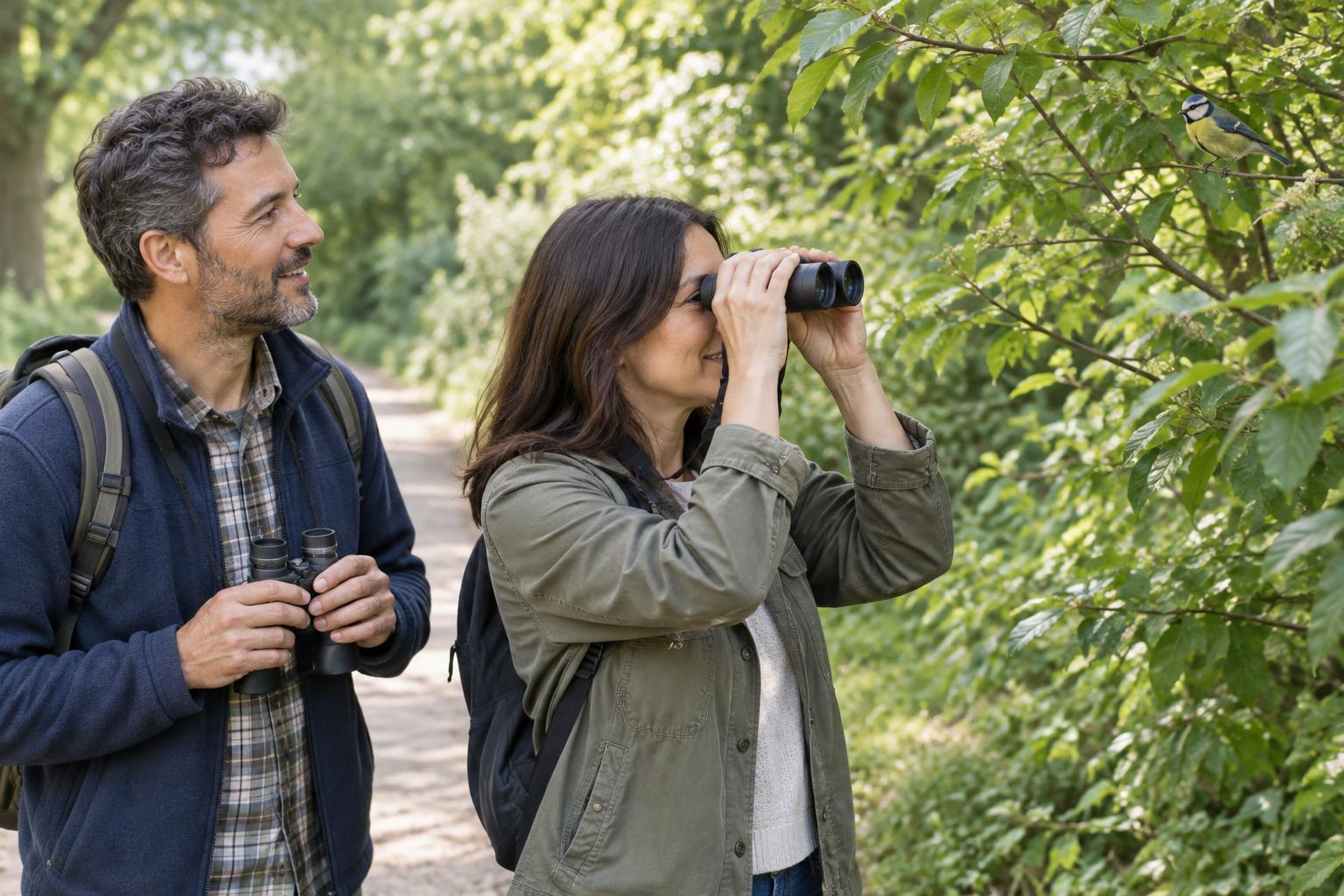
Bring a small notebook or use a notes app. Binoculars can help, but they are optional; start by watching birds you can see easily without them. Move slowly, pause often, and let birds carry on with their usual activities. If you go with a friend, take turns describing what you notice before either of you looks up a name. Observation is part of the fun, not just a step toward an answer.
Look at shape before color
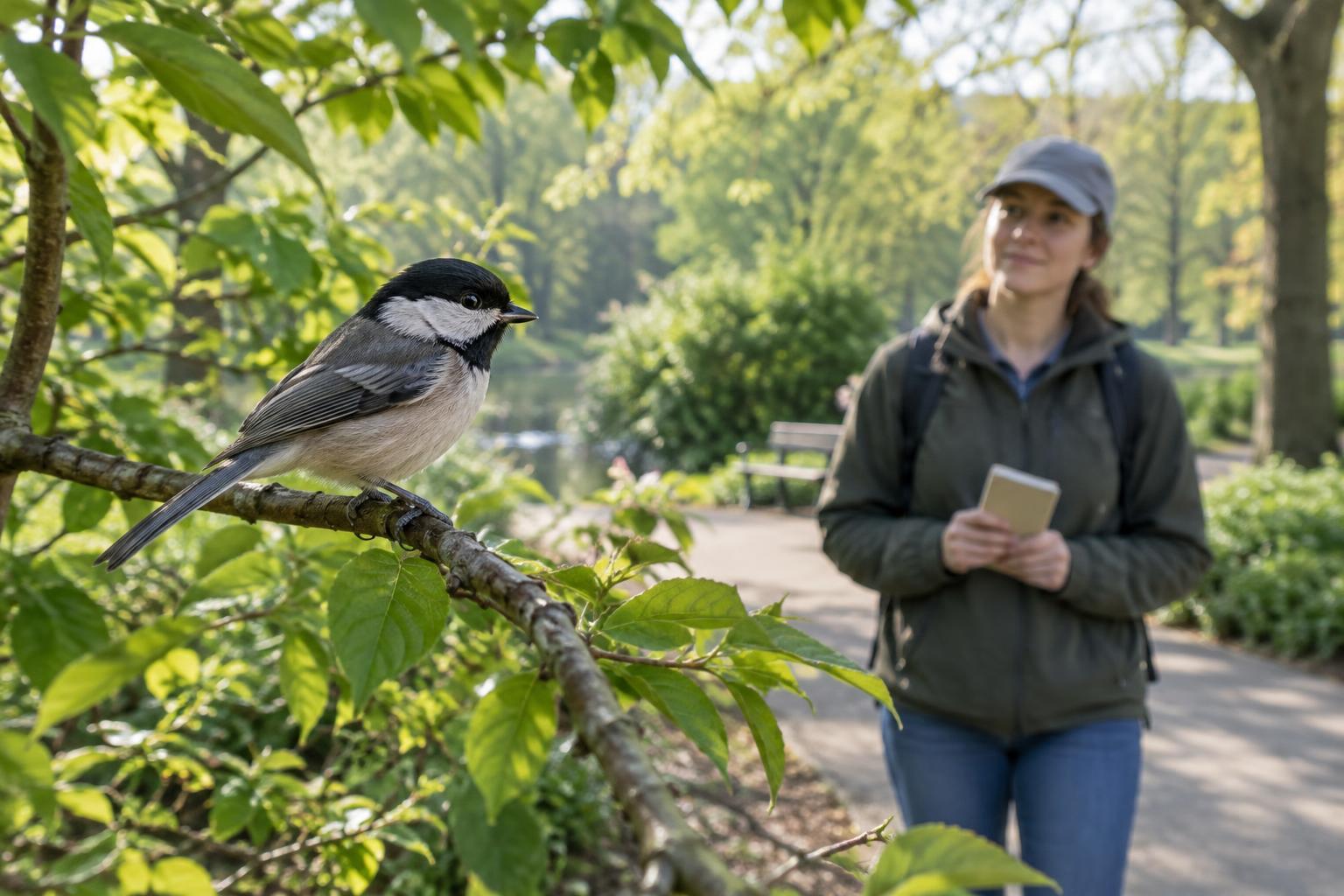
Color may catch your eye first, but distance, shade, and quick movement can make it hard to judge. Shape often gives you a steadier starting point. Is the bird round and compact or long and slender? Does it have a short tail or one that seems to trail behind it? Notice whether the beak looks fine and pointed, thick and stubby, or long and narrow. You can describe these features without knowing any bird terminology.
Compare the bird with something nearby: is it smaller than a pigeon, or about the same size? Watch its outline when it sits and when it flies. A few quick notes, such as “small, upright, short tail,” are more useful than trying to remember the whole scene later. If you use a field guide or identification app, these details can help you narrow down possibilities after the bird has gone.
Let behavior add clues
What a bird does can be as memorable as what it looks like. Some spend time on the ground, stepping through grass or turning over leaves. Others cling to branches, perch in the open, or move repeatedly between a lookout spot and a feeding area. Watch long enough to see whether it walks, hops, glides, or makes short flights. Even a common bird can be absorbing when you pay attention to its routine.
Try asking yourself one question at a time: Where does it spend most of its time? How does it search for food? Does it stay alone or near other birds? Record what you actually saw rather than guessing why it happened. For example, “returned to the same branch three times” is a clearer note than “guarding its territory.” That distinction keeps your observations useful while leaving room to learn more later.
Listen for a pattern, not a perfect imitation
You can enjoy bird sounds without being able to reproduce or name them. First, notice the basic pattern. Was the sound a single sharp note, a repeated pair, a long sequence, or a rough chatter? Was it high or low to your ear? Did you hear it from a tree, the ground, or somewhere you could not locate? The same place may sound different when you stop walking and listen for a minute.
If you want to keep a sound note, write a simple description such as “three clear notes, pause, repeat.” A short recording may help you revisit it later, provided making one is appropriate where you are. Avoid assuming that the loudest bird is the one you are looking at; sound can travel, and several birds may be nearby. Matching a voice to a bird is often easier when you can watch its beak move as the sound occurs.
Build a habit that stays enjoyable
After an outing, choose just one or two birds to investigate further. Compare your notes on shape, behavior, and sound with a guide suited to your area, and be comfortable leaving an identification uncertain. “Small dark bird in the hedge” is an honest entry. Over time, those entries can show you which details you tend to miss and give you a reason to look again.
Keep your presence low-impact. Stay on permitted paths, give nests and feeding birds plenty of space, and avoid playing bird calls to draw birds closer. If a bird changes its behavior because you have approached, step back. A good birdwatching session does not require a rare sighting or a confirmed name. It can simply be a few minutes spent noticing how much is happening around you.