Choose a route that leaves room for learning
For a first hike, the goal is not to cover as much ground as possible. It is to find out what walking on a trail feels like while still having energy for the trip back. Pick a clearly marked route that is shorter and less steep than you think you can manage. A loop can be satisfying, but an out-and-back route makes it especially easy to shorten the walk when you want to.
Check the route description for distance, hills, surface, and places where the path meets other trails. A short rocky climb may feel harder than a longer walk on a smooth path. Before leaving, look at the weather, note when you expect to return, and tell someone where you plan to walk. Bring water, a snack, suitable footwear, and a way to navigate that does not depend entirely on a phone signal.
Start at a pace you can keep
The opening stretch can tempt you to walk quickly, especially if you are excited or following someone with more experience. Instead, begin at a pace that lets you speak in full sentences without struggling. Let your steps become steady before deciding whether to go faster. On a hill, shorten your stride and slow down rather than trying to maintain your speed from level ground.
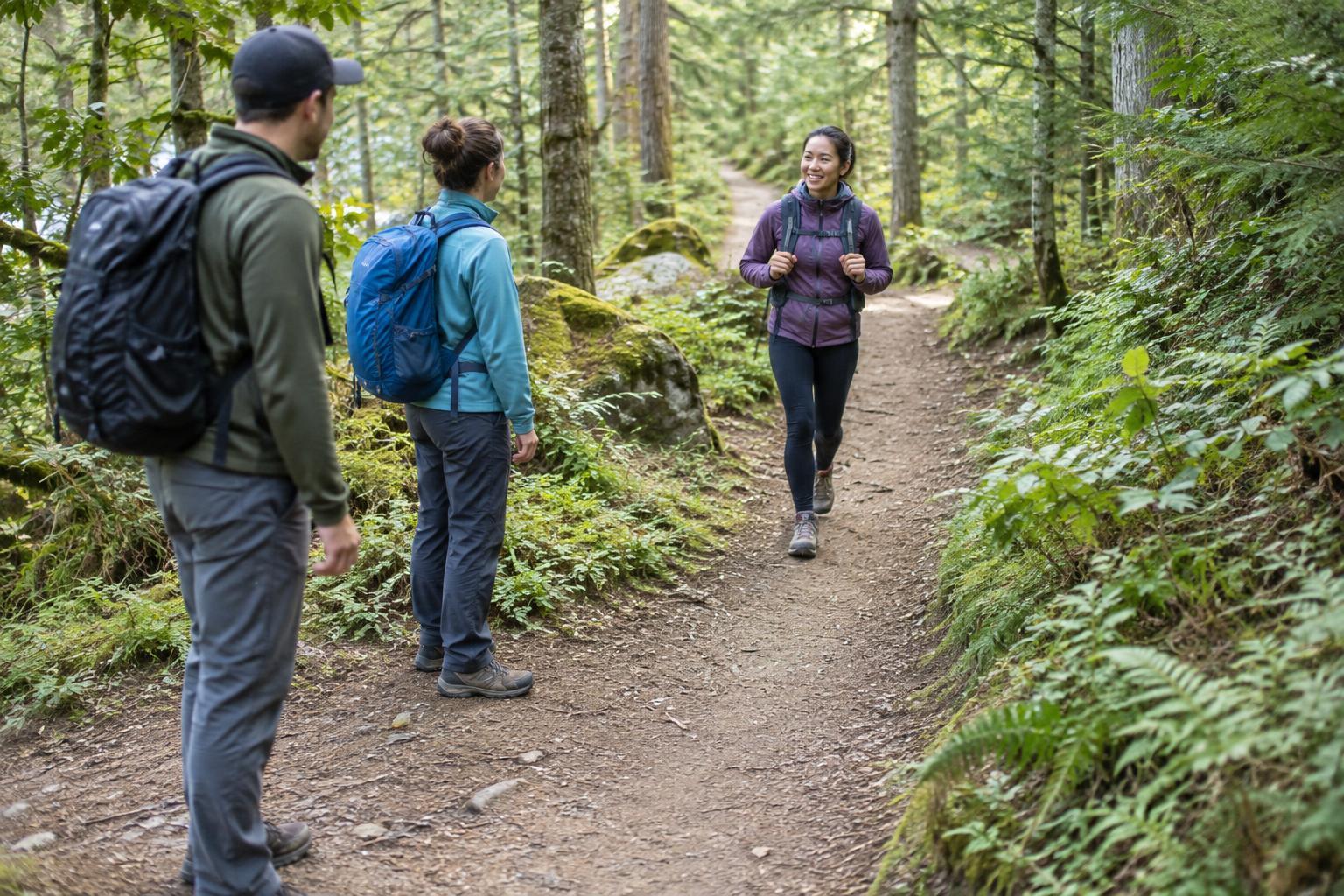
If you are hiking with friends, agree that the group will match a comfortable pace for everyone. The person at the front can pause at junctions so nobody feels pressured to hurry or choose a direction alone. A hike is not a race: slowing down for a view, an uneven patch, or a conversation is part of enjoying it.
Take breaks before you feel spent
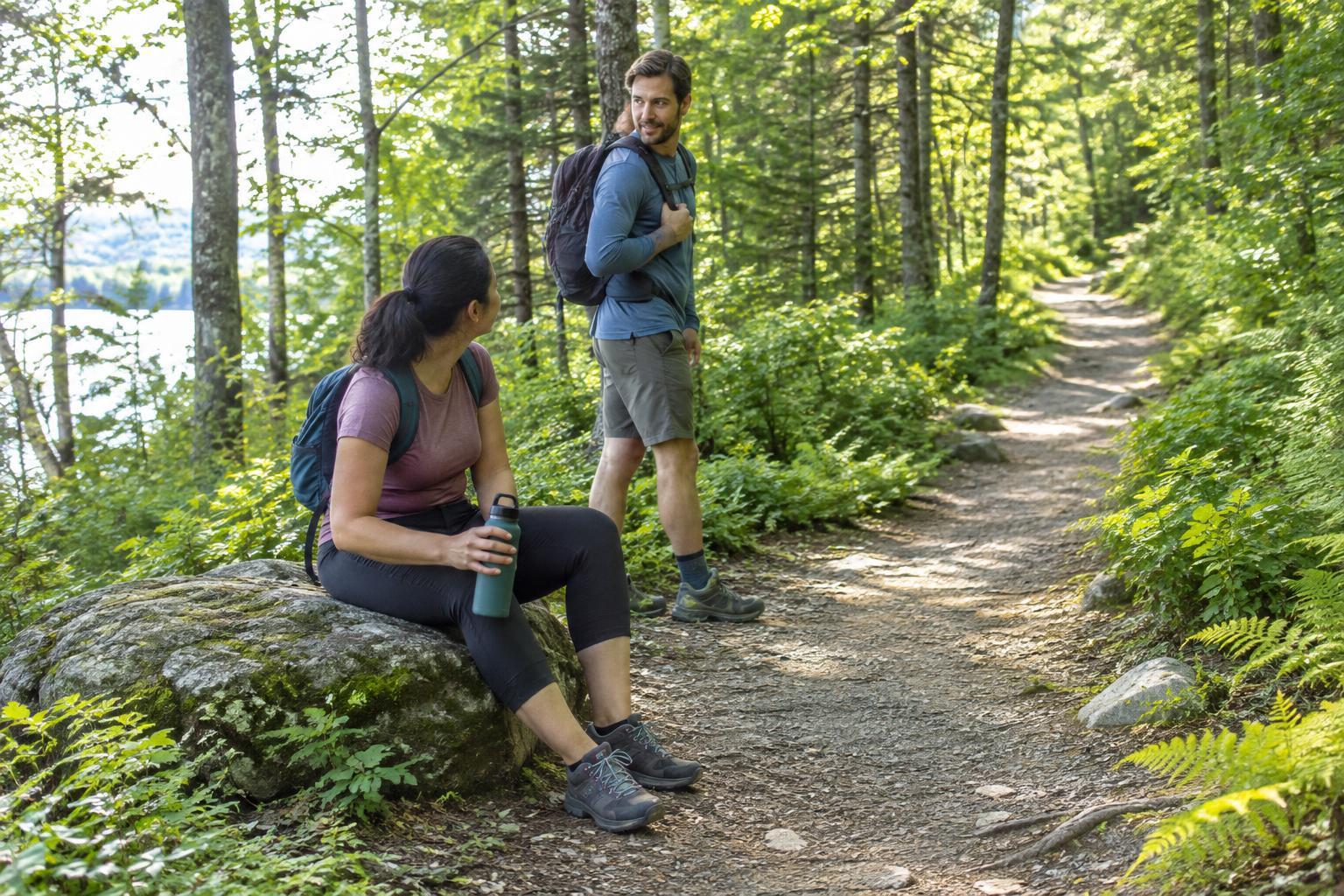
A break is useful when it helps you stay comfortable, not only when you cannot go farther. Pause at a viewpoint, after a climb, or whenever you notice that your breathing feels harder to settle, your steps are getting less sure, or you have stopped enjoying the walk. Take a drink, have a small snack if you want one, and check the route before setting off again.
Choose a place where you can stand or sit safely without blocking the trail. If the weather is cool or windy, you may find a brief pause more comfortable than sitting still for a long time. There is no required break schedule. Frequent short pauses may suit one walker; someone else may prefer to keep an easy pace and stop less often.
Pay attention to the return trip
On an out-and-back hike, reaching a landmark is only the halfway point if you still need to walk back. Ask yourself how your legs feel, how much water you have, and whether the remaining daylight and weather leave a comfortable margin. Turning around earlier than planned is a sensible choice, not a failed hike.
Downhill walking can also take concentration, particularly on loose or wet ground. Give yourself time to place your feet rather than rushing because the trail looks easier in that direction. If you lose the route, stop and work out where you are instead of continuing in the hope that the path will become familiar.
Know when a pause is not enough
Ordinary effort and a need for water or rest may ease when you slow down. Persistent dizziness, confusion, chest pain, severe shortness of breath, or trouble walking safely are different: stop, seek help, and do not push on to meet a distance goal. If you are unsure whether you can return safely, use the help options available for that trail or area.
After the hike, think about what felt comfortable and what did not. Was the climb steeper than expected? Did you wish you had turned back sooner or taken another snack? Use those observations to choose your next route. A well-paced first hike is one that makes you interested in going again.