Start with a simple trail mindset
Trail etiquette is less about memorizing a long list of rules than noticing who needs space. A narrow path may be shared by walkers moving at different speeds, families taking breaks, cyclists and people with animals. Looking ahead, slowing down when visibility is poor and leaving room for others will solve many small problems before they become awkward.
Check signs at the trailhead and junctions before relying on a general rule. A particular route may be one-way, closed to certain users or marked with its own right-of-way instructions. When there is no sign and you are unsure what to do, pause in a safe spot and communicate. A friendly “Would you like to come through?” is often more useful than trying to guess what someone expects.
Pass without surprising anyone
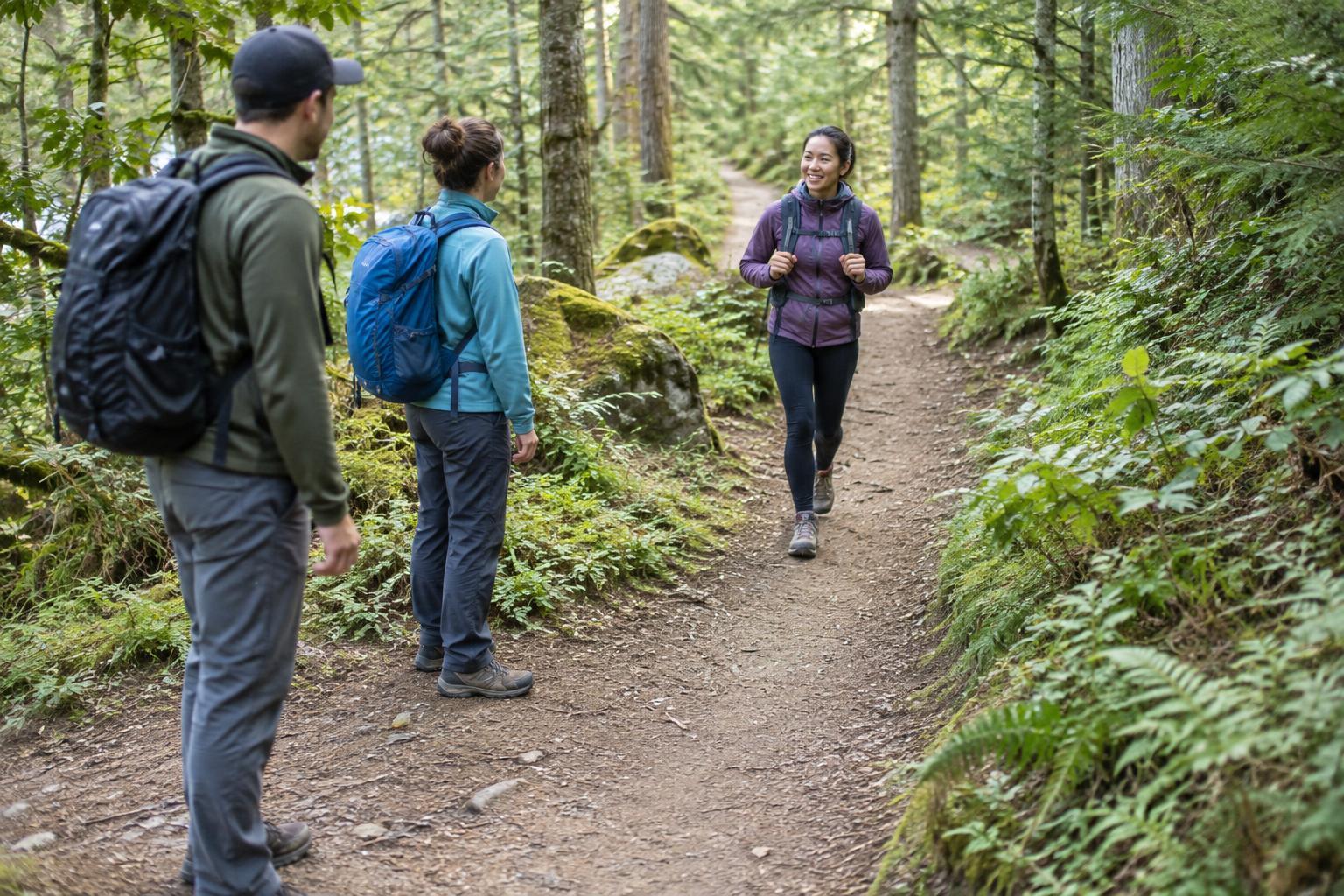
If you are moving faster than the person ahead, wait until there is enough room to pass without pushing them toward the edge of the trail. From a comfortable distance, say a calm “Hello” or “May I pass on your left?” Give them time to hear you and choose a stable place to step aside. Avoid rushing past at a tight bend, near a drop-off or where roots and rocks make footing difficult.
If someone approaches from behind and you want to let them by, look for a wider, durable spot where you can stop securely. You do not need to step into fragile plants or balance on a steep bank just to be polite. On a wider trail, keep your group together on one side while others pass; on a narrow one, walking single file usually makes sharing easier.
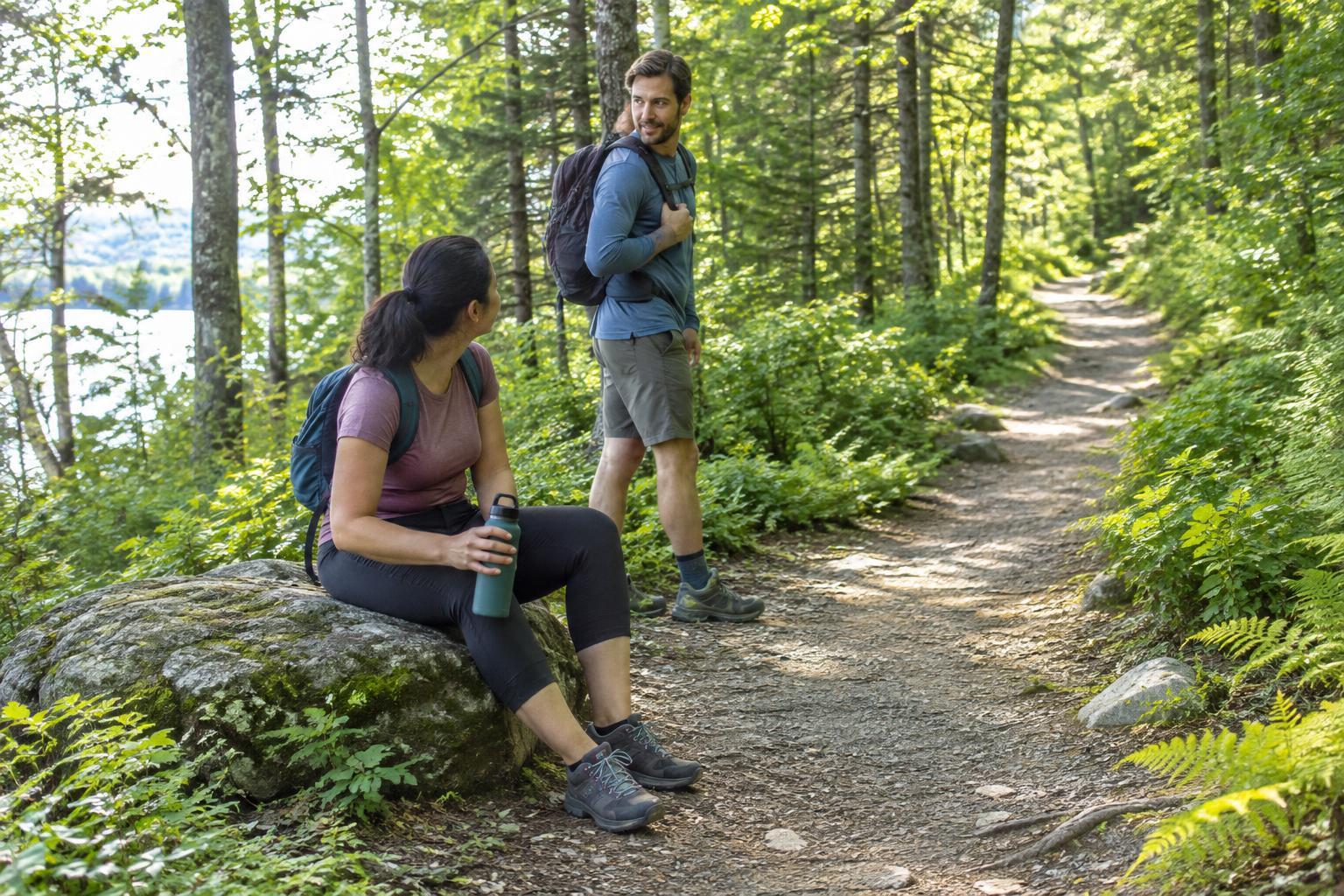
Take the same care around people who appear to be resting or looking at a view. They may not have heard you approach. A brief greeting makes your presence clear without demanding a conversation. Once the way is open, pass at a comfortable pace and give them room before resuming your own.
Handle yielding as a conversation, not a contest
On steep, narrow hiking trails, a common convention is for downhill hikers to yield to those climbing. Uphill hikers may be working to keep a steady rhythm, while downhill hikers can sometimes spot a place to stop. That is a starting point, not a reason to insist on going first: an uphill hiker may welcome a rest and wave you through. Let the person who needs the safer stopping place guide the exchange.
Other trail users call for extra attention. Follow posted right-of-way signs; where no local rule is shown, hikers commonly make room for horses, and cyclists commonly yield to hikers. Do not assume a rider or cyclist can stop instantly. Slow down, speak calmly and wait for a clear signal when the path is tight. With horses, give plenty of space and follow the handler’s directions rather than making a sudden move.
If a large group meets someone traveling alone, the group can often make passing easier by stopping together at a wide point. Whatever the situation, the safest choice matters more than proving who technically has priority. A quick exchange and a few seconds of patience keep everyone moving.
Stay on the path, even when it is inconvenient
A marked trail concentrates foot traffic in one place. Cutting across a switchback, walking around a puddle through vegetation or stepping off the path to get around others can widen the route and damage plants. Use the established tread whenever you can, even if that means moving slowly through a muddy patch. If an obstacle makes the trail impassable, choose the least disruptive safe option and follow any posted detour.
Plan stops with the same care. For a water break, photo or snack, move to an established pullout or a durable open area where you will not block the route. Avoid standing in the middle of a junction while deciding where to go. Before stepping back onto the trail, look both ways for people approaching quietly or moving faster than you.
Make courtesy part of the hike
Good trail manners are easiest to practice when you are not in a hurry. Leave enough time to pause, keep your voice at a level that lets others enjoy the surroundings and follow posted rules for pets, including leash requirements. If you bring a dog, keep it close when others pass and do not assume strangers want to greet it.
You will occasionally meet someone who handles a passing situation differently than you expected. There is usually no need to correct them on the spot. Give them space, choose a safe place to stand and continue when the path is clear. For a new hiker, that flexible approach is the most useful habit to take onto the trail: notice others, protect the path beneath your feet and make the next encounter easy.