Start with the space, not the exercises
A useful park circuit begins with a short walk around the area. Look for a level path, a patch of firm ground, and, if you want one, a sturdy bench. Notice where people tend to gather so you can keep paths, playground entrances, and seating clear. You do not need a dedicated exercise area: a small loop with room to pause is enough.
Choose a route that feels easy to navigate and gives you options to shorten the session. Smooth ground may be more comfortable than uneven grass, while shade and nearby water can make a longer outing more pleasant. If the park is busy, plan movements you can do in place without spreading out. The aim is to make the circuit fit the setting, rather than force a fixed routine into whatever space is available.
Pick a few low-impact movements
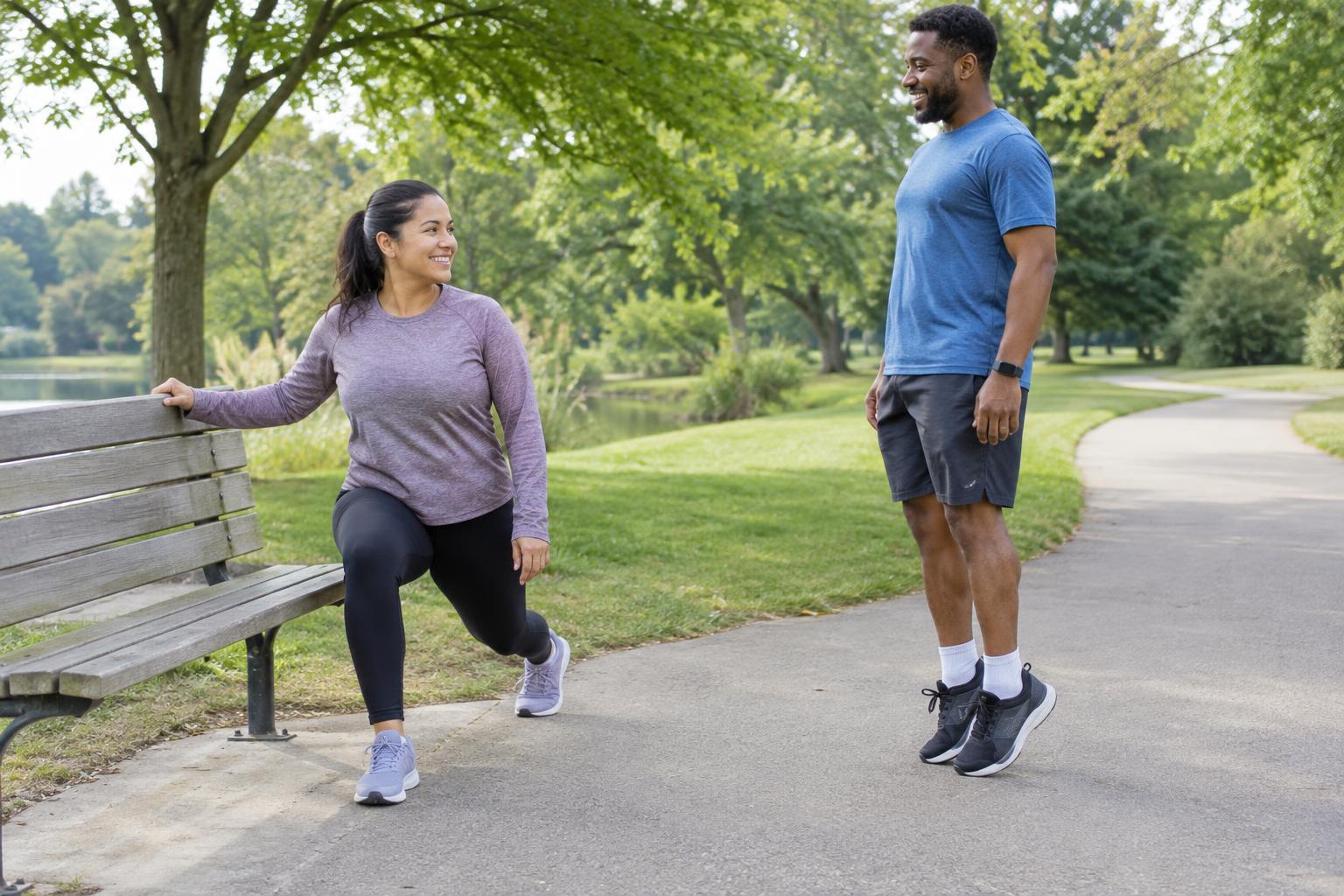
Build your circuit around walking and three or four exercises that do not require jumping. A simple mix might include comfortable-paced walking, shallow squats or sit-to-stands from a stable bench, standing calf raises, and wall or bench push-ups. For a little balance practice, add slow side steps or a brief single-leg stand while holding a secure support. Choose movements you can perform with control, without rushing to finish a set.
Think about variety rather than complexity. Walking keeps you moving between stops; a squat or sit-to-stand works the legs; an incline push-up adds an upper-body movement. If a bench is wet, unsteady, occupied, or too high for you, skip it. Standing exercises and walking can make a complete circuit on their own. Avoid using railings, play equipment, or other structures in ways that could damage them or interfere with other visitors.
Put the circuit together
Begin with an easy walk to settle into the route. Then choose an order you can remember, such as walk to a clear spot, do sit-to-stands, walk to the next spot, do calf raises, and finish the loop with incline push-ups or side steps. Repeat the loop if you feel like continuing. A circuit is simply a sequence of movements, so there is no need to make every stop the same length.
For each exercise, try a small number of comfortable repetitions, then pause or walk slowly before moving on. Leave enough time to keep your breathing steady and your movements deliberate. You could finish after one loop, add another, or spend the rest of your visit walking. An easy stroll at the end gives the outing a natural finish, especially if you have been moving more briskly during the circuit.
Adjust the effort as you go
Low impact describes how you move, not how hard you must work. To make the circuit gentler, shorten your walking stretches, use a smaller range of motion, or take longer pauses. To add variety without jumping, walk a little farther between stops or add another controlled round. Keep a stable stance for standing exercises, and use a secure support if balance feels uncertain.
Pay attention to how each movement feels. Muscle effort is one thing; pain, dizziness, or a feeling that you cannot move safely is a reason to stop. You can also swap an exercise without treating it as a setback. If squats are uncomfortable, continue walking. If a bench push-up does not suit you, try a push-up against a sturdy wall or leave upper-body work for another day. The best version is one you can do comfortably and confidently.
Make it an enjoyable park visit
A circuit is easier to return to when it feels like part of an outing rather than a test. Pick a route with something you enjoy seeing, invite a friend who is happy to move at a flexible pace, or use a quieter corner when you want fewer distractions. You can change the exercises from visit to visit while keeping the same familiar loop.
Be ready to share the space. Move aside when others need a path or bench, and leave the area as you found it. If the weather or ground conditions make your planned movements awkward, take a walk instead. A park circuit is useful because it is adaptable: a few straightforward exercises, a comfortable route, and permission to adjust are all you need to begin.