Start with your space, not a shopping list
You do not need a garden to grow herbs outdoors. A balcony, patio, or doorstep can hold a useful container, provided you can reach it easily to check the soil and pick leaves. Before buying plants, watch the spot over a typical day. Notice when it gets direct sun, whether nearby walls reflect heat, and whether an overhang keeps rain off the pot.
Many familiar culinary herbs, including rosemary, thyme, oregano, and basil, do best with plenty of direct light. Parsley, chives, and mint can be more forgiving where sun is limited, though they still need a bright place. If your outdoor area gets little direct sun, start with one or two herbs rather than filling a large planter. You can then see how they respond in your particular space.
Give roots room and water a way out
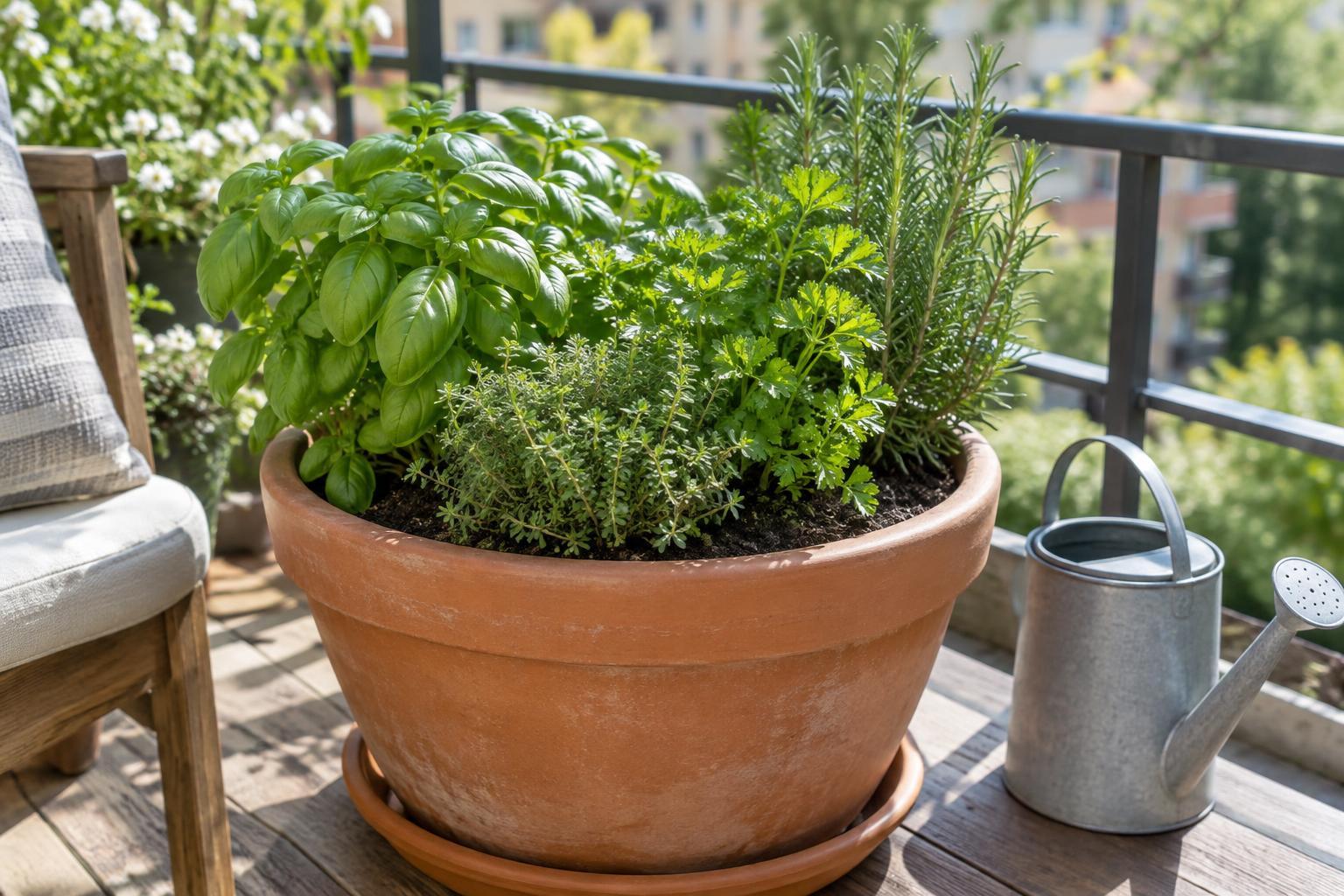
Choose a container with drainage holes in its base. Water should be able to pass through the pot rather than collect around the roots. If you use a saucer to protect a surface, empty it after watering or rain. A decorative pot without holes can work as an outer cover for a smaller nursery pot; take the inner pot out when watering and let it drain before putting it back.
Fill the container with potting mix intended for containers, not soil dug from the ground. Potting mix is generally easier to manage in a pot because it is made to hold some moisture while leaving space for air. You do not need a layer of stones at the bottom to create drainage. The important features are drainage holes, suitable mix, and a pot large enough that roots are not immediately crowded.
A larger pot usually dries more slowly than a tiny one, but it can be heavy when filled and watered. Pick a size you can safely move if you need to change its position. If you are combining herbs in one planter, leave space between the young plants so air can move around them and you can reach the soil to check its moisture.
Group herbs by the conditions they like
A mixed herb pot is appealing, but not every herb wants the same treatment. Rosemary, thyme, and oregano are sensible companions in a sunny spot where the mix can dry somewhat between waterings. Basil and parsley generally appreciate more consistent moisture. Separate pots make it easier to meet those different needs, especially while you are learning.
Mint is a good candidate for its own container. It can spread vigorously when planted alongside slower-growing herbs, making a shared pot harder to manage. Keeping it separate also lets you move it to a spot that suits it without moving the whole collection. For an inexpensive start, choose herbs you already use in cooking rather than buying a large assortment that may go unpicked.
Water the soil, then check before watering again
There is no reliable once-a-week rule for every outdoor herb pot. Temperature, wind, sun, rain, plant size, and container size all affect how quickly the mix dries. Push a finger a short way into the mix. If it feels dry where the roots are growing, water slowly until some water runs from the drainage holes. If it still feels damp, check again later instead of adding more.
Aim water at the soil rather than splashing the leaves, and give it time to soak in. Very dry potting mix may let water run down the sides at first; watering in two gentle passes can help moisten it more evenly. After heavy rain, check the pot before adding water. During hot or windy spells, check more often. These small observations are more useful than following the same schedule all season.
Wilting is a signal to investigate, not automatic proof that a plant needs water. Feel the mix first: dry soil may call for a thorough drink, while persistently soggy soil suggests a drainage or overwatering problem. If a plant repeatedly dries out before you can check it, consider a slightly larger pot or a position with less intense afternoon sun.
Keep the container useful
Once your herbs are growing, pick small amounts regularly rather than stripping a young plant bare. Snip leafy herbs above a pair of leaves when possible, leaving enough growth for the plant to continue. Remove dead leaves and watch for stems that crowd their neighbors. If a plant becomes root-bound or quickly exhausts the water in its pot, it may be time for a larger container.
Your first setup does not have to be permanent. Moving a pot a short distance can change how much light and wind it receives, and separate containers let you adjust one herb without disturbing the others. Start with good drainage, match plants to the light you have, and let the soil guide your watering. Those habits make a small outdoor herb project manageable and enjoyable.