Start with a disc and a course
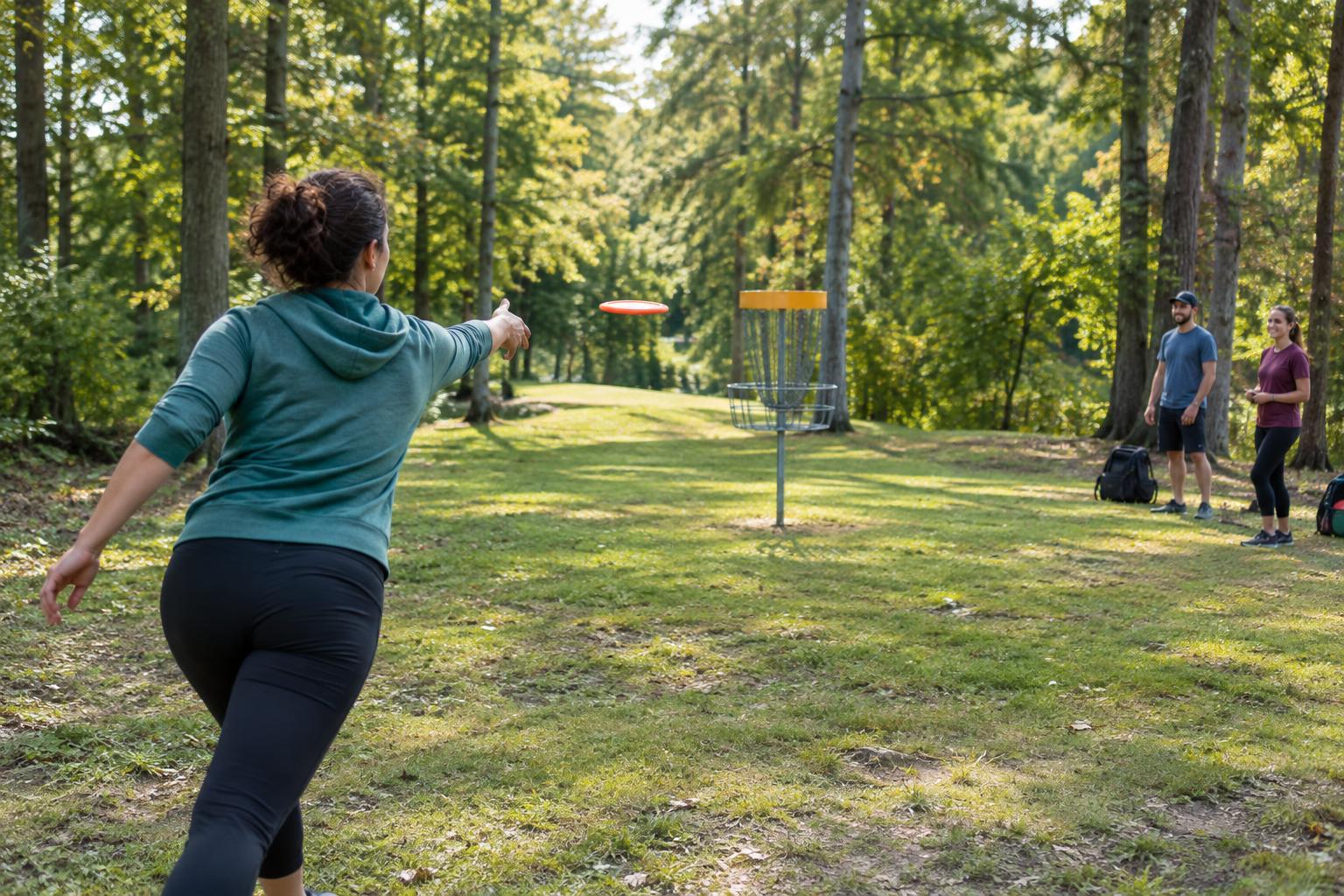
Disc golf has a simple aim: throw a disc from a marked starting area toward a basket, then finish the hole in as few throws as you can. A course usually has a sign at each tee showing the basket’s location and the intended route. You do not need a full bag of specialized discs to try it. One disc you can grip comfortably is enough for a first round.
If you have a choice, start with a putter or a slower-flying midrange disc rather than a fast driver. Slower discs can be easier to control while you learn. Wear shoes suited to walking on uneven ground, and bring water if you expect to be out for a while. Before starting, look for a course map or signs that explain local hazards and where each hole begins. Walking the route with friends is part of the outing, so there is no need to rush.
Make a controlled first throw
For a basic backhand throw, hold the disc with your fingers curled under its rim and your thumb resting on top. Face somewhat sideways to your target, bring the disc across your body, and swing it forward smoothly. Let it leave your hand toward an open, safe landing area. Aim for a level release at first; trying to throw as hard as possible often makes direction harder to manage.
A forehand throw is another option. Hold the disc at your side with one or two fingers against the inside of the rim, then lead with your elbow and flick your wrist toward the target. You can practice either style with gentle throws in an open space before playing a hole. Pay attention to where the disc lands rather than judging a throw only by its distance. A shorter throw that leaves you a clear next shot can be more useful than a long one that disappears into brush.
Near the basket, use a putting motion: stand balanced, focus on a link or small area of the chains, and push the disc forward with a controlled follow-through. Missing a few short putts is normal. Give yourself room to learn how much force you need at different distances.
Keep score without slowing the game
Count each throw as one stroke, including a throw that misses the basket. Once your disc comes to rest in the basket, your hole is complete. Add your strokes across the holes you play to get your total; the lower total wins if you are comparing scores. Tee signs often list a par, which is a reference number for the hole, but beginners can simply record their throw counts.
Usually, players tee off in turn, then the player whose disc is farthest from the basket throws next. Mark or remember where your disc landed, and make your next throw from that spot. Courses may have marked out-of-bounds areas or other local rules that affect scoring. Read the signs when available, and agree on a simple approach with your group before a casual round. If you are unsure of a rule, you can note the question and keep moving rather than hold up everyone behind you.
Share the course safely
Never throw while someone is within range of your disc or walking across your intended path. Check ahead for players, walkers, and pets, especially where trees or bends limit your view. If a throw unexpectedly heads toward a person, call out a clear warning. When searching for a lost disc, watch for groups behind you and let them play through if you will take a while.
Keep your group together enough that everyone knows whose turn it is, but stand well clear of the person throwing. Avoid talking during someone’s throw, and celebrate good shots without making the outing feel like a test. If a faster group catches up and there is space ahead, invite them to play through at a safe point. Take any litter with you and follow posted guidance about paths, plants, and course boundaries.
Make your first round enjoyable
For a first visit, choose a short course or play only a few holes. Give each player a moment to read the tee sign and pick a reachable landing area. If scoring adds pressure, skip it for a round and focus on learning the route. You can also set a small personal goal, such as making one controlled throw on each hole or finding a comfortable putting routine.
Afterward, think about which throws felt repeatable and which parts of the course were confusing. That gives you something specific to practice next time. Disc golf can be a quiet solo walk or a relaxed group activity; learning the basic throws, counting honestly, and giving others space are enough to get started.