Start with a tree-spotting routine
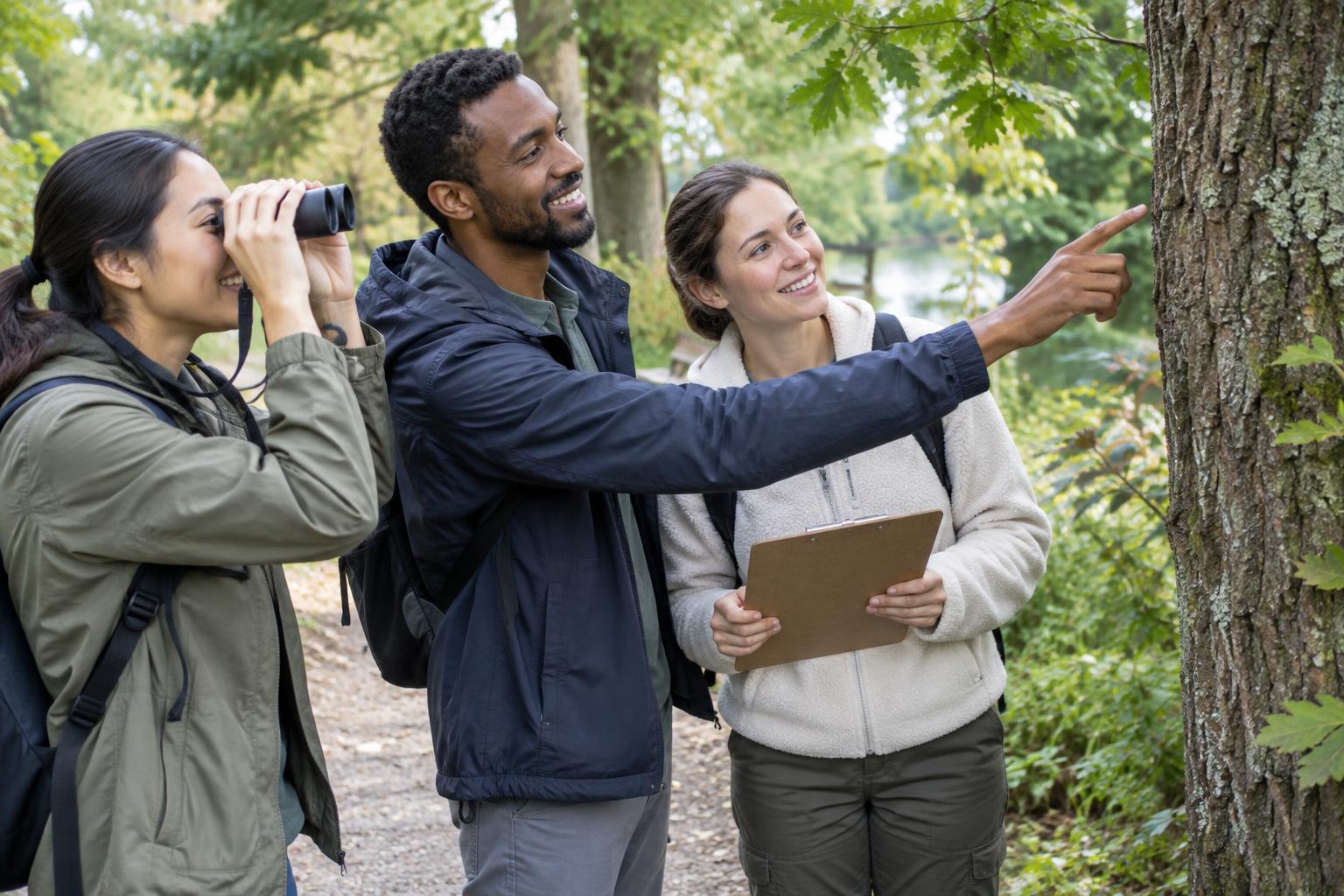
Tree identification is more enjoyable when it feels like a small puzzle rather than a test. Choose a nearby park, street or trail, and spend a few minutes with one tree before moving to the next. Look at its overall shape, then examine a leaf, a twig and the trunk. If you have a local field guide, use it to check your ideas after you have made your own observations.
Begin with broad questions: Does the tree have broad leaves or needles? Are leaves still attached, or can you find fallen ones directly beneath it? Is it growing alone or among similar trees? Location can help narrow your options, but planted trees may come from outside the area. Record what you can actually see rather than guessing a name too soon. A few notes or photos of the whole tree and its details will make comparisons easier later.
Read the leaves closely
For broadleaf trees, first check how leaves connect to a twig. A simple leaf has one blade on a stalk; a compound leaf has several leaflets attached to a shared stalk. To tell them apart, look for a bud where the stalk meets the twig: that point marks the base of a whole leaf. A fallen compound leaf can look like a small branch, so this check is worth the effort.
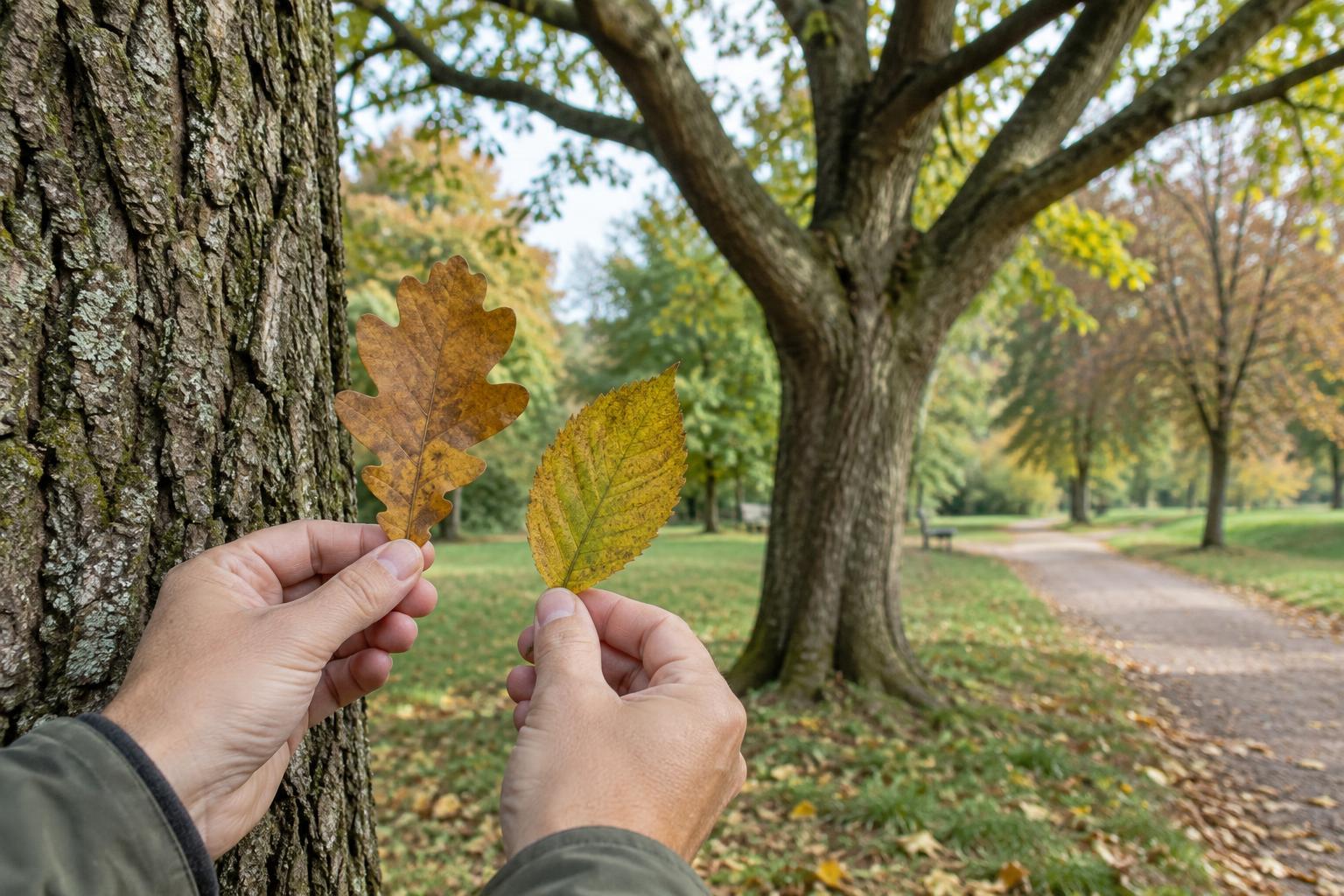
Next compare outlines and edges. Maple leaves are often lobed, with points radiating from near the stalk. Many oaks also have lobes, but their shapes vary considerably. Birch leaves are commonly small and toothed, while beech leaves tend to have a simpler oval outline. These are starting clues, not guarantees: species differ, and leaves on the same tree can vary in size and shape. Needled trees invite different questions. Notice whether needles grow singly, in bundles or in clusters, and whether they feel flat or more rounded.
Use branching to narrow the possibilities
Branch arrangement remains useful when leaves are high overhead or absent in winter. On a twig, look where leaves or buds attach. In opposite branching, pairs grow across from each other. In alternate branching, each grows at a different point along the twig. Some trees also have whorled arrangements, with several attachments at roughly the same level. Focus on a young twig rather than the silhouette of large branches, which may have been altered by shade, storms or pruning.
Maples commonly have opposite leaves and buds; oaks and birches commonly have alternate ones. That single observation can rule out many possibilities before you compare leaf shapes. If you cannot reach a twig, look at low growth or fallen twigs nearby, but make sure they belong to the tree you are studying. Avoid breaking branches to get a closer view.
Treat bark as a supporting clue
Bark can be distinctive, especially on a mature trunk. Some birches have pale bark that peels in thin layers. Beeches often have relatively smooth gray bark, while many older oaks develop deep grooves and ridges. Stand back to notice the overall pattern, then look closer at texture and color. Check more than one part of the trunk if you can: bark near the base may look different from bark higher up.
Bark alone is rarely enough for a confident identification. A young tree may have smooth bark that becomes rougher with age, and weather or damage can change its appearance. Similar-looking species can share bark patterns, too. Use it to test a guess formed from leaves and branching, not to replace those clues. Fruit, seeds, cones and buds can offer another check when they are present, but a tree need not show every feature on a single visit.
Put the clues together on your next walk
Try identifying three trees you pass regularly. For each one, note the leaf type and shape, whether its leaves or buds are opposite or alternate, and one bark feature. Make a tentative identification with a guide suited to your area, then look for a second or third feature that supports it. If the clues disagree, leave the name open and revisit the tree in another season. A photo of a leaf beside a twig, plus one of the whole tree, is often more useful than several pictures of the trunk alone.
You do not need a species name for every tree to have a worthwhile outing. Learning to distinguish two neighboring trees, or noticing how their leaves change through the year, is progress. Observe from public paths or places where you have permission to be, leave attached parts in place, and do not taste leaves, seeds or fruit as an identification test. With a repeatable routine, familiar walks can keep offering something new to notice.