What you are looking for
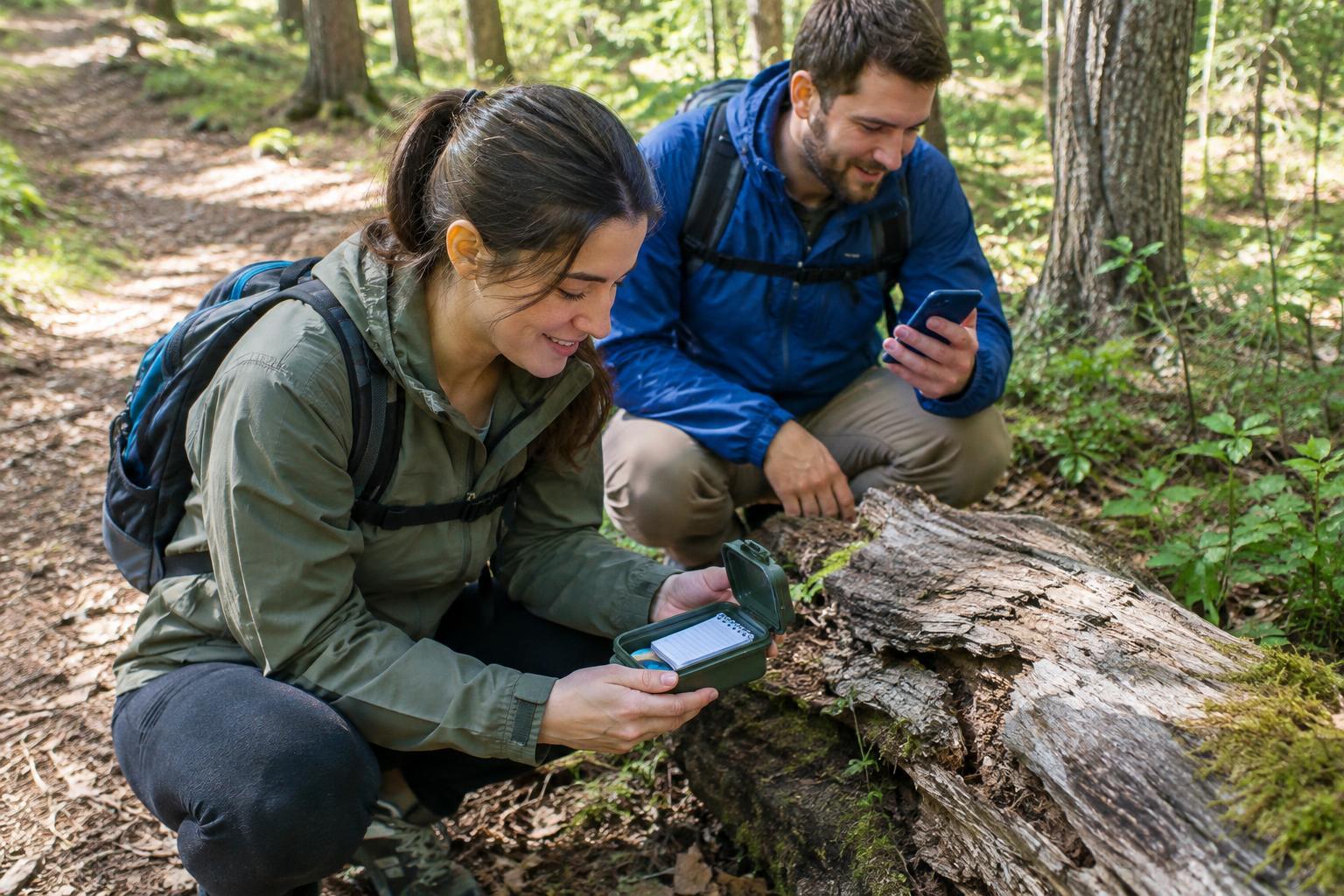
Geocaching is an outdoor activity in which people hide containers, publish their approximate locations on a geocaching platform and invite others to find them. A cache might be as small as a film canister or large enough to hold a notebook and a few trinkets. The essential item is a paper logbook or log sheet: finding the container and signing it is what usually makes a visit a find.
For a first outing, choose a traditional cache. Its published coordinates lead to the container itself, unlike puzzle or multi-stage caches that require extra steps. The pleasure is in noticing details you might otherwise pass on a walk, so there is no need to make your first search a long hike.
Choose an easy first cache
Install a geocaching app or use a geocaching website, create an account and look near a familiar park or public walking route. Read the full listing before leaving. Choose a traditional cache with a low difficulty and terrain rating, a description you understand and a location you can reach comfortably. Recent logs can help you judge whether other visitors have been able to find it, but even a well-maintained cache may occasionally be missing.
Check the listing for access notes, opening hours and any restrictions. A public-looking space is not necessarily open at all times, and a cache listing does not override signs or property rules. For your first attempt, daylight and a straightforward walking route are good choices. You can save the cache details or map for offline use if your app allows it, since reception may be uneven outdoors.
Pack lightly and search thoughtfully
Bring a charged phone, a pen, water and clothing suited to the walk. A small notebook can be useful if you want to remember where you searched, but you do not need specialist equipment. Let someone know your plan if you are going somewhere unfamiliar. Turn back if the ground, weather or route feels unsafe; a cache is never worth climbing a barrier or taking a risk.
At the site, use the coordinates to reach the general area rather than expecting your phone to point to the exact object. GPS readings can wander, particularly near buildings or dense trees. Pause, read the hint if there is one, and look for places a small container could be tucked away without disturbing plants or structures. Move gently, avoid drawing unnecessary attention to the hiding place and do not dig. If the search would require entering a closed area, damaging something or bothering other people, stop and reconsider the listing.
Sign the paper log and put everything back
When you find the container, open it carefully and sign the paper log with your geocaching name and the date. If the log is full or wet, make a note so you can mention it in your online entry. Do not throw away the old log or replace the container on your own unless the cache owner has asked for help through the platform.
Some larger caches contain small items for swapping. If you take one, leave an item of similar interest in return; avoid food, anything perishable or anything that does not belong in a shared container. A tagged trackable item is different from ordinary swap material: it is meant to travel between caches, so only take one if you intend to follow its instructions and record its movement. Close the container securely and return it to the same spot and position, keeping the hiding place intact for the next visitor.
Log your visit online, even if you came up empty
Back in the app or on the website, open the cache listing and select the appropriate log type. If you found the container and signed the paper log, choose Found It. Write a short note about your experience: what you enjoyed about the walk, whether the container and log were in good condition, and a thank-you to the person who maintains it. Avoid revealing the exact hiding spot or posting a photo that gives it away.
If you searched carefully but did not find the container, choose Did Not Find rather than Found It. That is a normal part of geocaching, and an honest log may help the owner notice a problem if several people report the same experience. Mention a wet log, damaged container or access concern plainly, without attempting a repair that might change the hide. Your first outing is a success whether you find the cache or simply learn how to search respectfully.