Start with the parts you can take apart
A reusable bottle is easy to overlook in the daily pile of dishes. Yet its lid, mouthpiece and seals can hold moisture even when the main container looks clean. A thorough wash does not require special equipment: mild dish soap, warm water, a bottle brush and a small brush for tight spaces will handle most designs.
Before washing, empty the bottle and remove any parts the maker intends you to remove. Depending on the design, that might include a straw, bite valve, flip spout or silicone gasket. Check the bottle’s care instructions if you are unsure how a piece comes out. Do not force a seal or pull apart a component that is not designed to detach; damage can make the bottle harder to clean or more likely to leak.
Wash the bottle and lid with soap
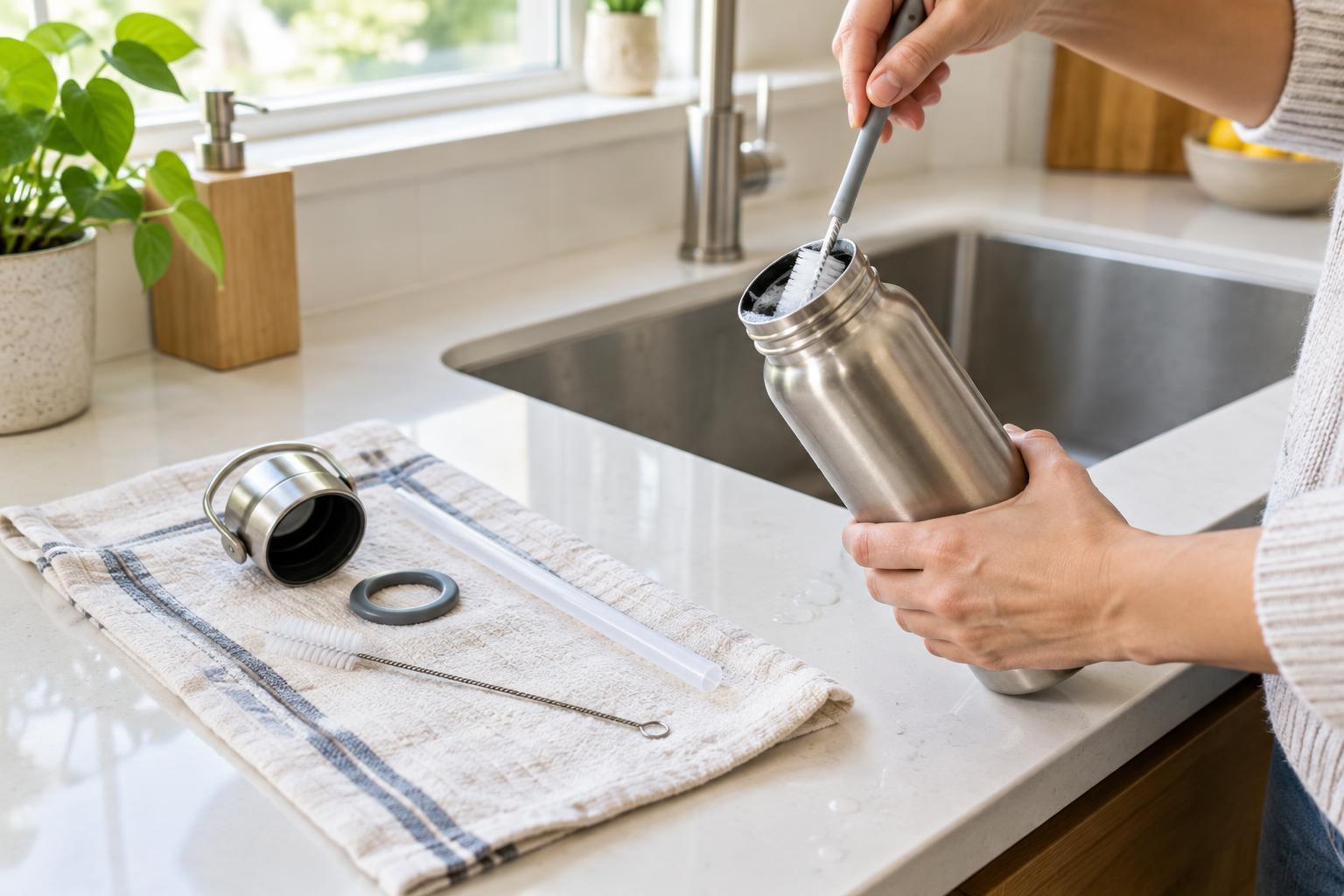
For a routine wash, add a little dish soap and warm water to the bottle. Scrub the inside with a bottle brush, reaching the base, shoulder and area just below the opening. Swishing soapy water around helps, but it may miss residue that a brush can lift. Clean the outside too, paying attention to the rim and any threads where the lid screws on.
Wash the lid separately. Use a small, soft brush to reach around the drinking opening, under a flip top and into grooves around the threads. Run a straw brush through any removable straw from end to end. Wash removable gaskets on both sides, taking care not to stretch them. Rinse every part well under clean running water until no soap remains.
If you have put anything other than water in the bottle, wash it soon after use rather than leaving it sealed overnight. Sweet drinks, flavored additions and smoothies can leave film in the bottle and its small parts. Even with plain water, a regular soap-and-water wash is more useful than repeatedly topping up an unwashed bottle.
Match the method to the bottle
Some bottles and lids are dishwasher-safe; others are not. Check the care instructions for each component rather than assuming the whole set can go in together. Heat may affect certain plastics, finishes or seals. If dishwasher use is allowed, place small parts where they will not fall through a rack or collect water.
Hand-washing is a reliable default when instructions are missing. Use a soft brush or sponge rather than abrasive pads that could scratch a finish. For an insulated bottle, avoid prolonged soaking if the maker advises against it, and do not put it through a dishwasher unless its instructions explicitly allow that. If a stain or lingering smell remains after washing, check the maker’s guidance before trying a stronger cleaning product. Never mix cleaning chemicals.
Dry completely before reassembling
Drying is part of the cleaning routine, not an optional extra. Shake out excess water, then leave the bottle open and place the lid and removable pieces separately on a clean drying rack or towel. Position a straw so air can move through it. Recesses in a cap and the channel beneath a gasket may take longer to dry than the bottle itself.
Once everything is dry, put the parts back together carefully. Check that any gasket sits flat in its groove so the lid seals properly. If the bottle is going into a cupboard, store it with the lid loose or off when practical. That allows air to circulate instead of trapping leftover moisture inside a closed container.
Make the routine easy to keep
The best cleaning plan is one you can repeat. Keep a bottle brush near the sink and choose a regular time to wash the bottle, such as after your last refill of the day. Set the lid and straw beside it so they do not get skipped. Before the next use, look for residue around the spout and check that the bottle smells fresh.
If you notice visible buildup, a persistent odor or a damaged part, take the bottle apart as directed and give each accessible surface a careful wash. Replace worn removable pieces when compatible replacements are available. A bottle with a simple shape and parts you can reach is often easier to maintain than one with lots of enclosed spaces. A few minutes of attention to the lid, seals and drying process can make an everyday bottle much more pleasant to use.