Set up before you slice
A simple snack can involve only a few cuts, but it still deserves a clear workspace. Move cups, wrappers and unused ingredients away from the cutting board. Give yourself enough room to stand comfortably without reaching across the blade. If you are preparing food with a friend, agree on one cutting spot rather than passing a knife back and forth over a crowded counter.
Place a sturdy cutting board on a level surface. If it slides, put a damp kitchen towel beneath it and check that it stays put before you begin. Keep a plate or bowl nearby for finished pieces and a separate spot for scraps. This small bit of organization helps you focus on the ingredient in front of you instead of moving loose pieces around with a knife.
Choose a knife you can control
Use a kitchen knife that suits both the food and your hand. A small paring knife can be convenient for trimming strawberries or cutting a soft snack into modest pieces. A larger kitchen knife may feel steadier for chopping a cucumber or slicing an apple on a board. Whichever you choose, hold it by the handle with a secure, comfortable grip; avoid using a knife that feels awkward or too heavy to control.
A reasonably sharp knife generally needs less force than a dull one. If a blade slips or struggles through ordinary ingredients, set it aside rather than pressing harder. Save sharpening for a time when you can give it your full attention, or ask someone familiar with the tool for help. Do not substitute a table knife for a task it cannot handle cleanly.
Keep the food stable and your fingers clear
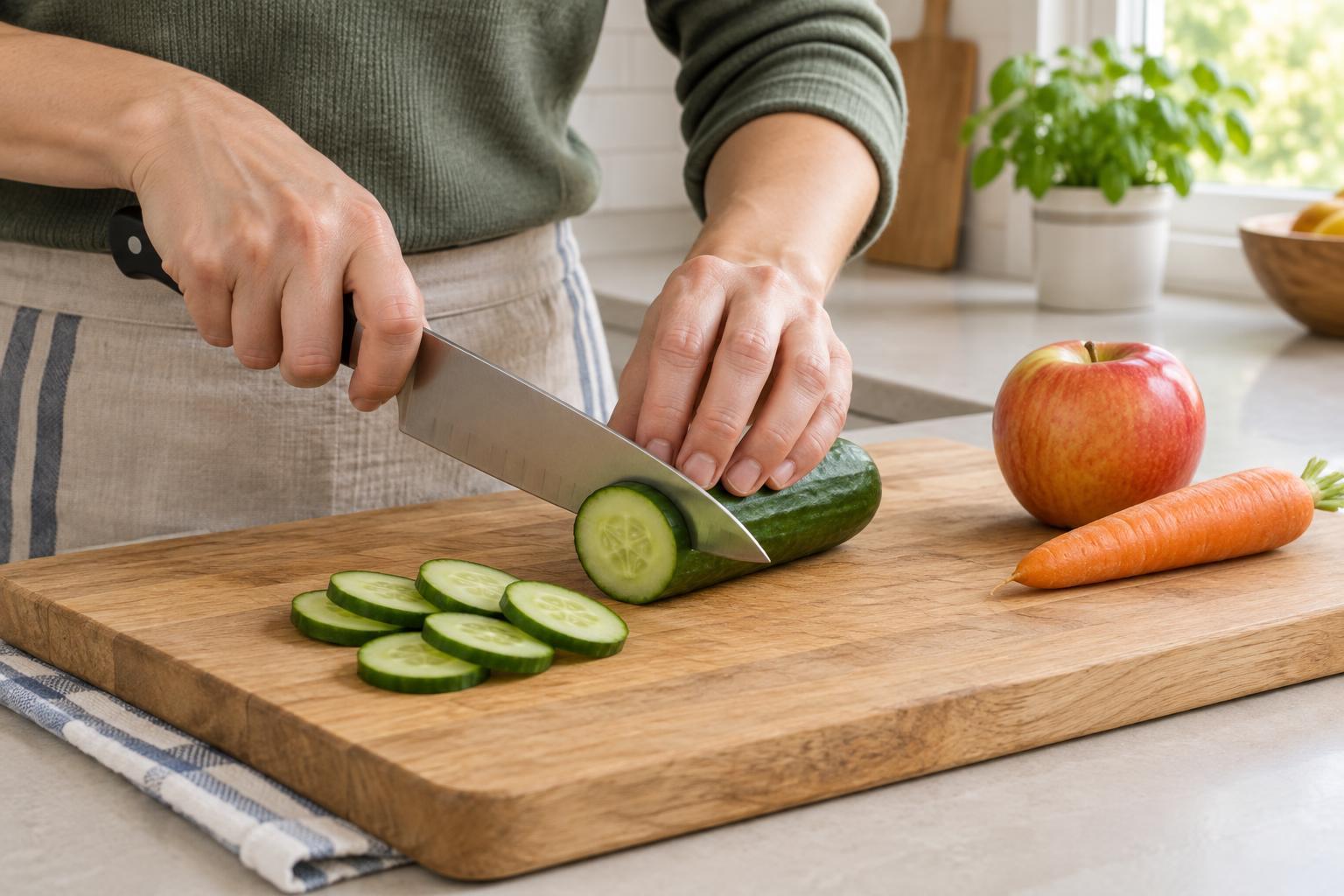
Before cutting round foods, look for a way to stop them rolling. For example, slice a cucumber lengthwise, then place the flat side on the board before making smaller pieces. Cut an apple into sections on the board instead of holding it in your palm. If an ingredient is too small to grip safely, leave a slightly larger end piece rather than chasing the last thin slice.
Use your non-cutting hand to steady the food, keeping its fingertips tucked back from the edge of the blade. Move slowly enough to see where the knife will land. You do not need to copy a fast chopping motion: deliberate cuts are well suited to snack preparation. If you need to reposition the ingredient, pause the knife first. When something sticks to the blade, set the knife down before removing it.
Make snack prep easier on yourself
Pick cuts that match the snack rather than aiming for perfect, identical pieces. Thick cucumber rounds work for dipping, while apple wedges are easy to share. For a small fruit plate, it may be simpler to serve some items whole and cut only what needs cutting. A vegetable peeler, kitchen scissors or another appropriate tool can sometimes handle a particular task more comfortably than a knife.
Stay attentive to what your hands are doing. Put the knife down if you need to answer the door, move a pan or clear the counter. Avoid cutting while walking, and carry a knife at your side with its point directed down when you must move it a short distance. Let others nearby know you are carrying it. If children or pets are around, keep the cutting area out of their reach.
Finish with a safe cleanup
Once the snack is ready, set the knife down where its blade is visible and away from the counter’s edge. Use your hands or a scraper to move food from the board; if you use the knife, turn the blade away from your hand and avoid dragging its cutting edge across the surface. Do not leave a loose knife hidden under peels, a towel or other dishes.
Wash the knife carefully, handling it by the grip and keeping your fingers away from the edge. Do not leave it submerged in a sink where someone might reach in without seeing it. Dry it and put it away in its usual secure spot. With a stable board, an unhurried pace and a clear place for the blade, preparing a quick snack can stay simple from the first cut to the last dish.