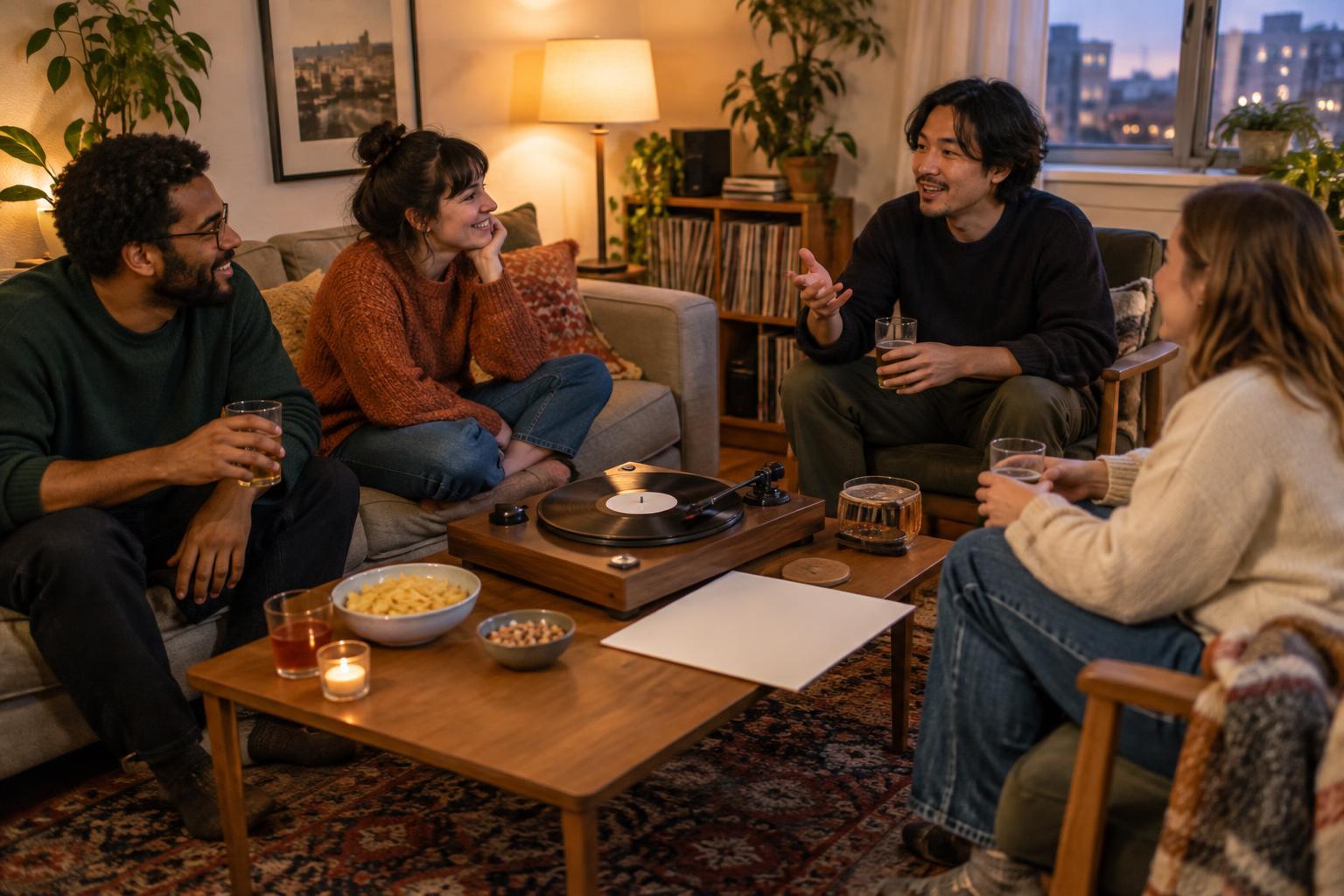
Start with one album and a simple invitation
An album listening party needs less planning than a dinner party, but a little structure helps. Choose one album as the main event rather than building a long playlist. A record with a clear beginning and end gives the evening a natural shape and makes it easier for guests to settle in. You can pick a shared favorite, an album most people have not heard, or one that suits the mood you want: lively, reflective, or somewhere in between.
Tell guests what to expect when you invite them. Mention the album, when you plan to press play, and whether you hope to listen closely or keep things casual. That small explanation removes the pressure to arrive with an expert opinion. If the album is especially long, consider choosing a side or a short stretch of tracks, then leaving the rest of the evening open.
Set up a room where people can listen comfortably
Use whatever speaker or playback setup you already have. The goal is clear, comfortable sound, not a demonstration of equipment. Test the volume from the seats farthest from and closest to the speaker. People should be able to hear details without feeling that they must raise their voices during a pause. Silence phone notifications if they are likely to interrupt, and check that the album is ready to play before guests arrive.
Arrange seats so everyone can see one another when it is time to talk. A few cushions or borrowed chairs can help; no one needs a perfect listening position. Put water and simple snacks within reach, but avoid food that requires constant preparation or noisy packaging. If your neighbors are nearby, plan for a moderate volume and an end time that works for your space.
Give the music room, then make room for talk
Decide on a listening rhythm before the album starts, and describe it in one sentence. You might listen to the first few tracks without conversation, pause halfway for a chat, then finish the record. For a more informal group, invite brief comments between songs while keeping conversation off the music itself. Either approach can work; what matters is that guests know they are allowed both to listen and to speak.
A pause is often more welcoming than asking everyone for a verdict the instant the final track ends. Let people refill a drink or stretch first. Then try an easy question: Which sound caught your attention? Did a song change your impression of the album? Would you play any track again? These prompts invite observations without requiring anyone to know the artist’s history or explain what a song “really” means.
Make participation optional, not a test
Music can carry personal memories, but guests should be free to share as much or as little as they like. Avoid going around the room demanding a review from each person. Someone who is quiet during the album may still be enjoying it, and someone who did not love the record can add to a good conversation. Treat differing reactions as openings for curiosity rather than arguments to win.
If you are hosting a mix of close friends and newer acquaintances, offer a low-pressure activity alongside the discussion. Put out paper for guests to jot down a favorite track, draw a quick impression, or suggest an album for another night. Nobody has to use it. The point is to give people another way into the gathering, especially if they would rather think for a moment before speaking.
End while the evening still feels easy
Once the main album and conversation are done, resist the urge to fill every remaining minute with more music. You could replay one track the group wants to hear again, switch to quiet background music, or simply keep talking. If guests suggest a second full album, check that everyone has the time and energy for it before pressing play.
A good listening party does not depend on unanimous praise or a perfect discussion. It succeeds when people have space to notice something, exchange a thought, and enjoy being together. Keep the setup simple enough that you can join them. At the end, thank guests for coming and leave any plans for a future session as an invitation, not an assignment.