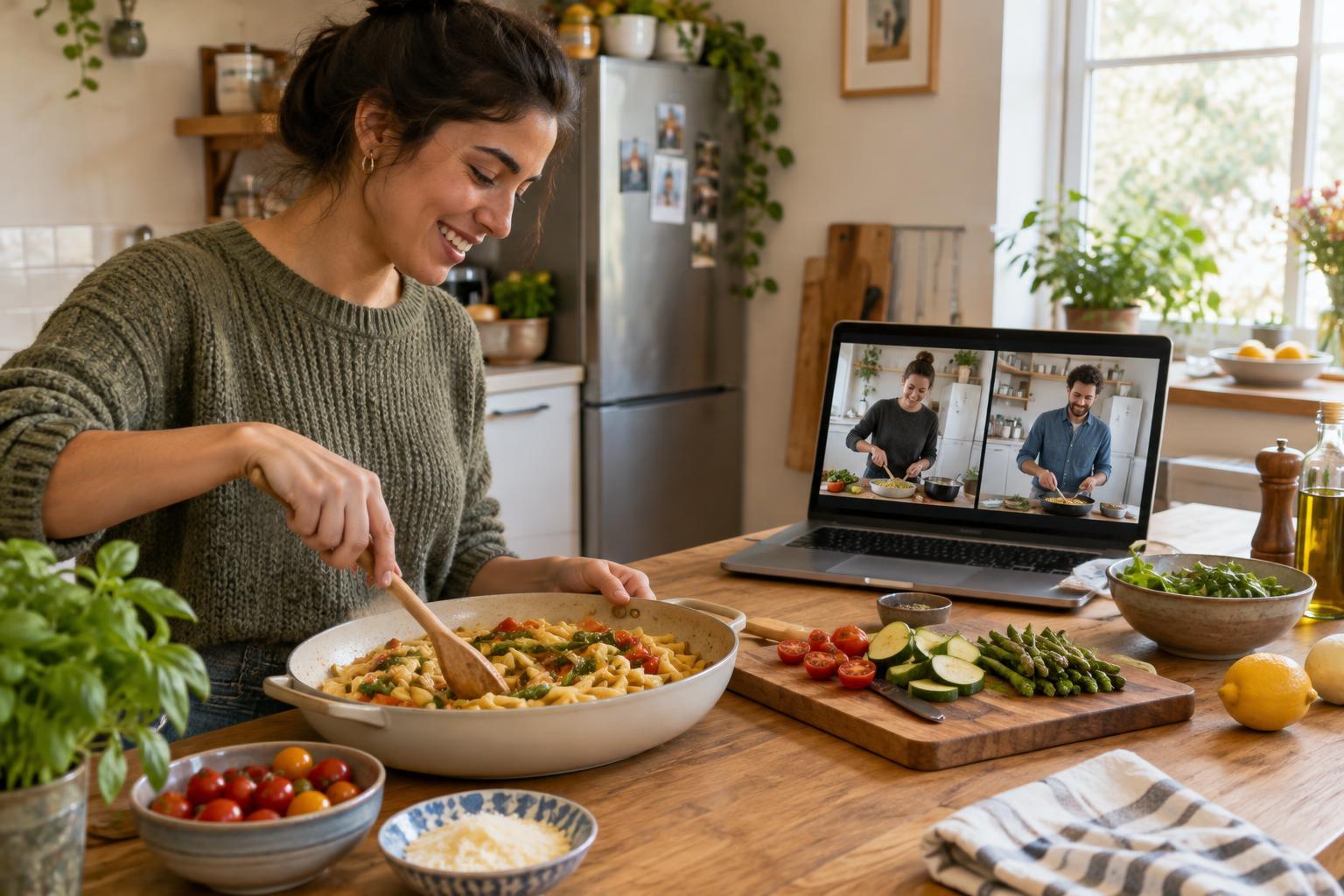
Start with the kind of evening you want
A cook-along works best when the point is spending time together, not producing identical plates. Before choosing a dish, ask your friends whether they would enjoy a hands-on cooking session, a mostly prepared meal with time to chat, or something in between. Pick a weekend time that leaves room to eat afterward without rushing off the call.
Keep the group small enough that everyone who wants to speak can be heard. You can invite one friend to host the call and keep an eye on the recipe, but nobody needs to play chef. If a guest would rather prepare their food ahead of time and join for the conversation, that still counts as taking part.
Choose a flexible dish, not a complicated challenge
Look for a meal with familiar steps, accessible ingredients, and pauses when people can talk. Tacos, grain bowls, flatbread pizzas, or a simple pasta dish give everyone a shared starting point while allowing for different toppings and fillings. A meal that depends on precise timing across several pans may be less relaxing when each person is also watching a screen.
Send the recipe or a short outline several days ahead. Include a shopping list, the equipment needed, and any ingredients that are easy to swap. Encourage friends to adjust for their own tastes, budgets, and dietary needs rather than buying something they will use only once. If someone has a very different kitchen setup, they can make a related version of the dish and still follow the same general pace.
Consider choosing one element for everyone to make together, such as a sauce or a set of toppings, and leaving the rest open. That creates a shared activity without requiring every kitchen to have the same stove, tools, or ingredients.
Set up the call and prep the space
Share the call details and an approximate schedule in advance: a few minutes to say hello, time to cook, and time to sit down with the finished food. Ask everyone to wash produce, clear a workspace, and gather tools before joining if they can. Small amounts of prep make it easier to enjoy the company once the call begins.
Put the device somewhere stable, away from water, heat, and the edge of the counter. A camera view of the whole kitchen is unnecessary; a comfortable spot where you can hear each other is enough. Headphones can make conversation easier, but keep cords clear of the work area. People should feel free to turn off their camera while handling a messy or attention-heavy step.
A short message beforehand can also answer practical questions: Are guests expected to eat on camera? Should they have their ingredients measured out? The easiest answer is usually to make these choices optional. Clear expectations help people arrive ready without making the evening feel like a class.
Cook together without trying to stay perfectly in sync
Begin with a quick walk-through of the dish so everyone knows which steps can happen independently. Then move through broad stages—prep, cooking, assembly—rather than waiting for every kitchen to finish each small task. If one person is ready early, they can set the table, tidy up, or simply chat while others catch up.
Build in natural check-ins. Ask what substitutions people chose or invite them to show a sauce or topping before moving on. Keep conversation light enough that nobody has to divide their attention between a detailed story and a sharp knife. If someone needs to focus on a hot pan or follow their own recipe, let them step away from the conversation.
Things may finish at different times, and that is fine. Someone using an oven might still be waiting while another person has started eating. Treat the schedule as a guide, not a deadline, and allow anyone whose food is ready to enjoy it while it is warm.
Make the meal the main event
Once most people have finished cooking, shift from instructions to dinner. Share what worked, what each person changed, and whether anyone would make the dish again. Avoid turning the conversation into a contest over whose plate looks best. The different versions are part of what makes cooking in separate kitchens interesting.
For an easy ending, ask everyone to suggest a dish or theme for a future weekend, without committing to another date on the spot. You might also keep a shared note of successful swaps so nobody has to remember them later. The best outcome is not a flawless recipe; it is a pleasant evening that feels simple enough to repeat.