Start with the goal, not the details
Opening a new game can feel like studying for a test, especially when the rulebook introduces unfamiliar names for cards, spaces, and actions. You do not need to memorize everything before anyone plays. Your first job is to understand what players are trying to do. Find the section that explains how the game ends and how a winner is determined. Then ask yourself: What am I trying to collect, build, complete, or avoid?
Read that goal alongside the broad description of play, if the booklet has one. A game about earning points over several rounds calls for different decisions than one where the first player to reach a destination wins. You may not yet know how to make those decisions, but the goal gives the other rules a purpose. If the game is cooperative, look for its shared win and loss conditions instead of assuming players compete.
Sort the pieces and follow setup in order
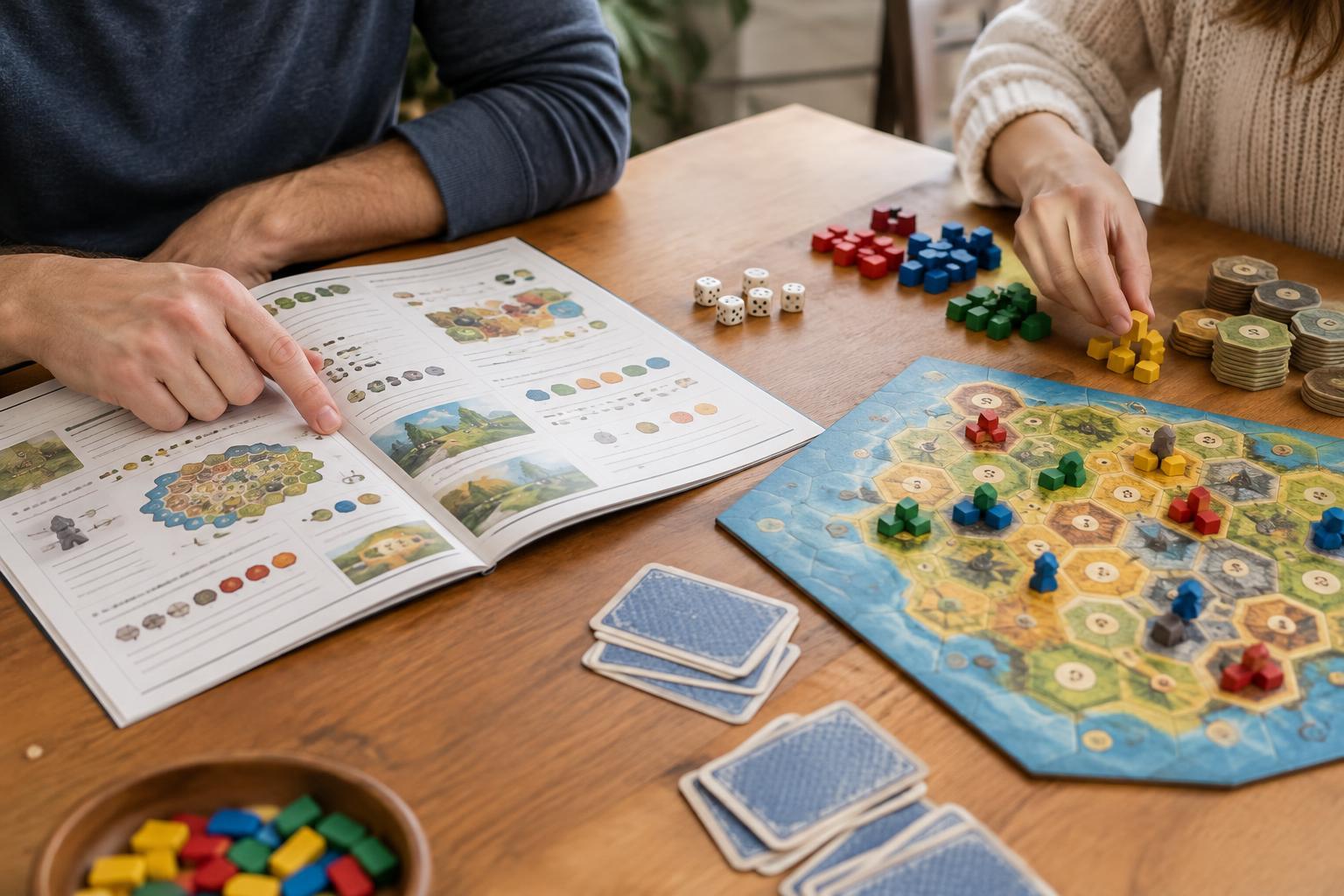
Next, check the component list and lay out what is in the box. Matching pieces to their names now makes later instructions much easier to follow. Some games include extra pieces for different player counts or optional modes, so do not assume every token belongs on the table. Keep unused pieces nearby until setup tells you what to do with them.
Follow the setup steps in sequence rather than arranging the table from a picture alone. Notice which decks are shuffled, which pieces each player receives, where shared supplies go, and whether the starting player has a special role. Player-count adjustments are easy to miss, so check for a separate note if your group is small or large. Before moving on, compare the table with the setup illustration if one is provided. A quick check now can prevent a confusing first round caused by a missing card or misplaced marker.
Build a simple map of a turn
Once the table is ready, find the section labeled turn, round, or sequence of play. Look for its main steps and put them into everyday language. For example: draw a card, take two actions, then check whether the round ends. If players have a reference card, place it where everyone can see it. The point is to understand the order of play, not every possible choice within it.
Pay particular attention to limits and timing. How many actions may a player take? Can they repeat an action? When do they refill their hand or score points? Does anything happen between players’ turns? These questions often matter more at the start than a long explanation of individual cards. If an action description uses a term you do not recognize, find its definition and return to the turn sequence. That is usually more useful than reading the rulebook straight through while losing track of the basic flow.
Separate essential rules from later exceptions
Rulebooks often include examples, special abilities, and unusual situations after the core rules. Read enough to recognize that these sections exist, but do not try to retain every exception before playing. Mark a page with a bookmark or note its heading so you can find it again. If the game has a glossary or index, treat it as a tool for resolving questions, not another chapter you must study first.
There are a few exceptions worth checking immediately. Read any rule that changes what players may say or show one another, especially in games with hidden information. Also check whether cards override general rules and whether choices can be undone. These details can affect the first turn in ways that are hard to reverse. When an example appears to conflict with a rule, reread the surrounding text rather than guessing from the example alone.
Run a short practice turn, then begin
Before the official first turn, walk through one sample turn using the pieces on the table. Let someone point to each step in the rulebook while another player carries it out. If the game allows several actions, try a common one rather than an elaborate combination. Then return the pieces to their starting positions. This small rehearsal reveals gaps in your understanding without making anyone feel that a learning mistake has spoiled the game.
If you are teaching others, explain the goal and the turn sequence first, then describe choices as they become relevant. Invite questions, but agree that it is fine to pause and check the rulebook instead of debating from memory. For an unfamiliar game, a slower opening round is normal. Keep the booklet within reach and look up edge cases when they actually arise. The aim is not to start with perfect recall; it is to give everyone enough shared understanding to make a meaningful first move.