Choose a space that leaves room for mistakes
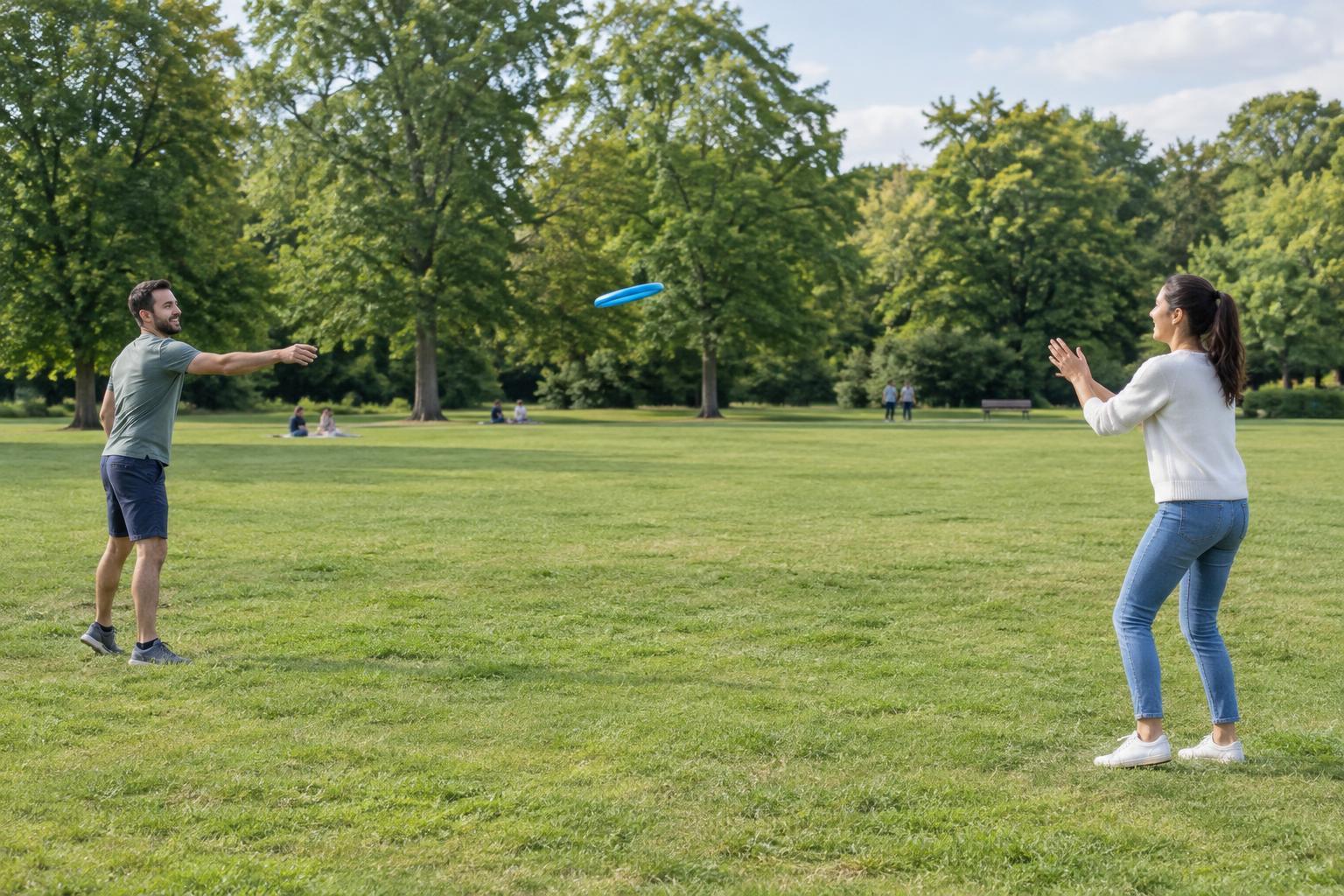
A casual disc toss works best in an open area where an off-target throw will not land among people, pets, traffic, or fragile plants. Look for level ground with enough space to stand well apart from other park users. If the grass is crowded, move to a quieter section or save the game for another time. Check any posted park rules before you begin.
You do not need a specialized disc. A general-purpose flying disc that feels comfortable in your hand is enough to start. Softer discs can be pleasant for short, relaxed throws, while a firmer disc may hold its shape better in flight. If you are playing with someone new to catching, begin close together. You can increase the distance once both of you can send the disc roughly where you intend.
Take a moment to notice the wind. A light breeze can change a disc’s path more than you expect, especially when you throw it high. Start with short, low throws so a gust is less likely to carry the disc into another group’s space.
Learn one throw and one catch
For a basic backhand throw, hold the disc across your body with your fingers curled under the rim and your thumb resting on top. Face your partner, bring the disc toward the opposite side of your body, then swing your arm across and release it toward them. A smooth motion is more useful than throwing hard. Try to keep the disc fairly level as it leaves your hand; a steep tilt often sends it curving away.
Ask your partner to stand still while you practice aiming at a comfortable catching height. After a few throws, switch roles. If the disc repeatedly rises or dives, adjust one thing at a time: your release angle, how high you aim, or how much force you use. That makes it easier to tell what helped.
To catch, watch the disc rather than guessing where it will end up. When it arrives around chest height, you can bring one hand above and one below it, closing them gently around the disc. Move your feet to get in line with an easy catch, but let a wild throw go rather than running toward a road, path, or another person. Picking up a missed disc is part of the game.
Turn practice into a low-pressure game
Once you can exchange a few throws, try counting consecutive catches. Set a modest target together, then start over whenever the disc touches the ground. The count gives you something to work toward without making either player’s mistakes a big deal. For a group, stand in a loose circle and pass the disc to different people, checking that the receiver is ready before each throw.
Another option is to place two bags or other visible markers on the grass as a wide target zone. Take turns trying to land the disc between them from a comfortable distance. Move the markers closer together only if everyone wants a greater challenge. Keep personal belongings out of walking routes, and remove your markers when you finish.
You can also alternate between a short throw and a longer one. This gives beginners a chance to practice reliable passes while still experimenting with distance. Agree that anyone can ask to move closer or take a break; a relaxed pace is often what makes a simple outing worth repeating.
Share the park and wrap up well
Pause whenever someone crosses your throwing area. Do not throw over a path, a picnic, or a game already in progress, even if you think the disc will clear it. If your disc lands near someone, walk over and retrieve it politely. Keeping throws predictable matters more than showing how far you can send one.
Comfort makes a difference, too. Wear shoes you can move in, bring drinking water if you expect to stay a while, and take breaks when your arm gets tired. If the ground is slippery or the wind makes the disc difficult to control, shorten your throws or call it a day. Before leaving, collect your gear and check the grass for anything you brought. The whole activity can be as simple as twenty enjoyable minutes of tossing and catching.