Choose foods that travel well
The simplest picnic menu is built around foods that can handle a short journey and a little jostling. Whole fruit, crackers, bread, nuts and shelf-stable spreads are convenient choices. Wash produce at home and dry it before packing; damp berries or sliced vegetables tend to soften more quickly. If you cut fruit or vegetables in advance, put them in clean, covered containers and keep them chilled.
Sandwiches, cheese, yogurt, cooked eggs and dips made with dairy or beans can make a picnic feel more like a meal, but they need more attention. Pack them in a cooler rather than leaving them in a tote bag while you travel or set up. If you would normally refrigerate an item at home, plan to keep it cold outdoors too. When cooler space is limited, choose fewer perishable dishes instead of trying to squeeze in everything.
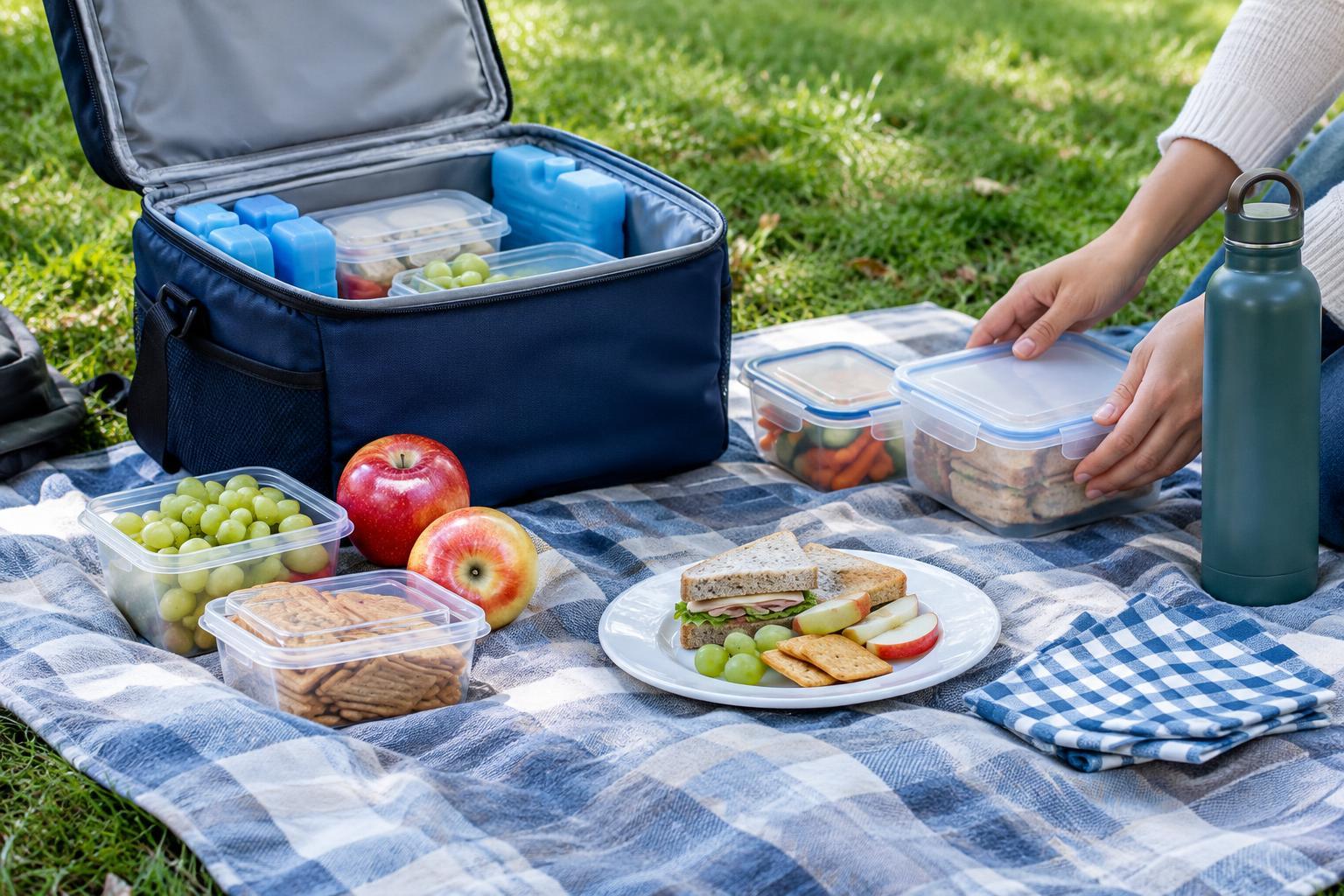
Think about how people will eat, not just what you will serve. Individual sandwiches, whole apples and snacks portioned into small containers mean fewer hands reaching into shared food. Keep sauces separate until serving so bread and crackers stay crisp.
Pack a cooler that can do its job
Chill perishable food before it goes into the cooler. A cooler slows warming; it does not quickly cool food that started out warm. Add plenty of frozen packs or ice, place food in sealed containers or leak-resistant bags, and fill empty spaces where you can. A fuller cooler generally holds its chill better than one with lots of warm air inside.
Put items you will need first near the top, and keep the lid closed between visits. If you have room for two coolers, use one for drinks and one for food: people can grab a drink without repeatedly opening the cooler that protects lunch. At the picnic spot, place the cooler in shade rather than in a sunny car or beside a warm grill.
Pack raw meat separately from ready-to-eat snacks if cooking is part of the outing. Keep it securely wrapped so juices cannot reach fruit, sandwiches or utensils. Bring separate tools and plates for raw and cooked food; a clean-looking surface is not necessarily safe for both.
Set up a clean serving spot
A clean blanket makes a picnic comfortable, but it is not a food-preparation surface. Set containers on a tray, table or other stable surface, and keep lids on until people are ready to eat. Bring hand sanitizer for situations without a sink, along with napkins and a bag for used packaging. Washing hands with soap and water is the better option when it is available, especially before handling food.
Serve a little at a time and leave the rest protected in the cooler. This keeps the main supply colder and makes it less likely that insects, dust or enthusiastic passersby will get into it. Give shared snacks a serving spoon or tongs, and avoid putting eaten-from plates back beside the food. If a dip or salad has been sitting out and you are unsure how long, do not mix it with the untouched portion.
Shade helps make eating more pleasant, but it does not replace refrigeration. A covered dish on a hot day can still warm up. Pay particular attention to perishable foods during a long outing, and pack them away promptly when the meal is over.
Plan portions and leftovers before you leave
A little portion planning prevents both waste and risky leftovers. Pack roughly what your group expects to eat, with shelf-stable extras for anyone who is still hungry. Small containers make it easier to bring out one batch at a time. If friends are contributing dishes, ask what needs chilling so you can reserve enough cooler space rather than discovering the problem at the picnic site.
Bring a spare bag for rubbish and a separate clean container or bag for food that can go home. Return untouched, properly chilled perishables to the cooler promptly. Food that has spent a prolonged period warm, has been handled repeatedly or may have been contaminated is better discarded. Smell and appearance alone cannot reliably tell you whether it is safe to eat.
Finally, make cleanup part of the plan. Collect scraps that could attract animals, check the grass for wrappers and take everything you brought with you. With a sensible menu, a well-packed cooler and simple serving habits, you can spend less time worrying about the snacks and more time enjoying the outing.