Start with a short route and one small goal
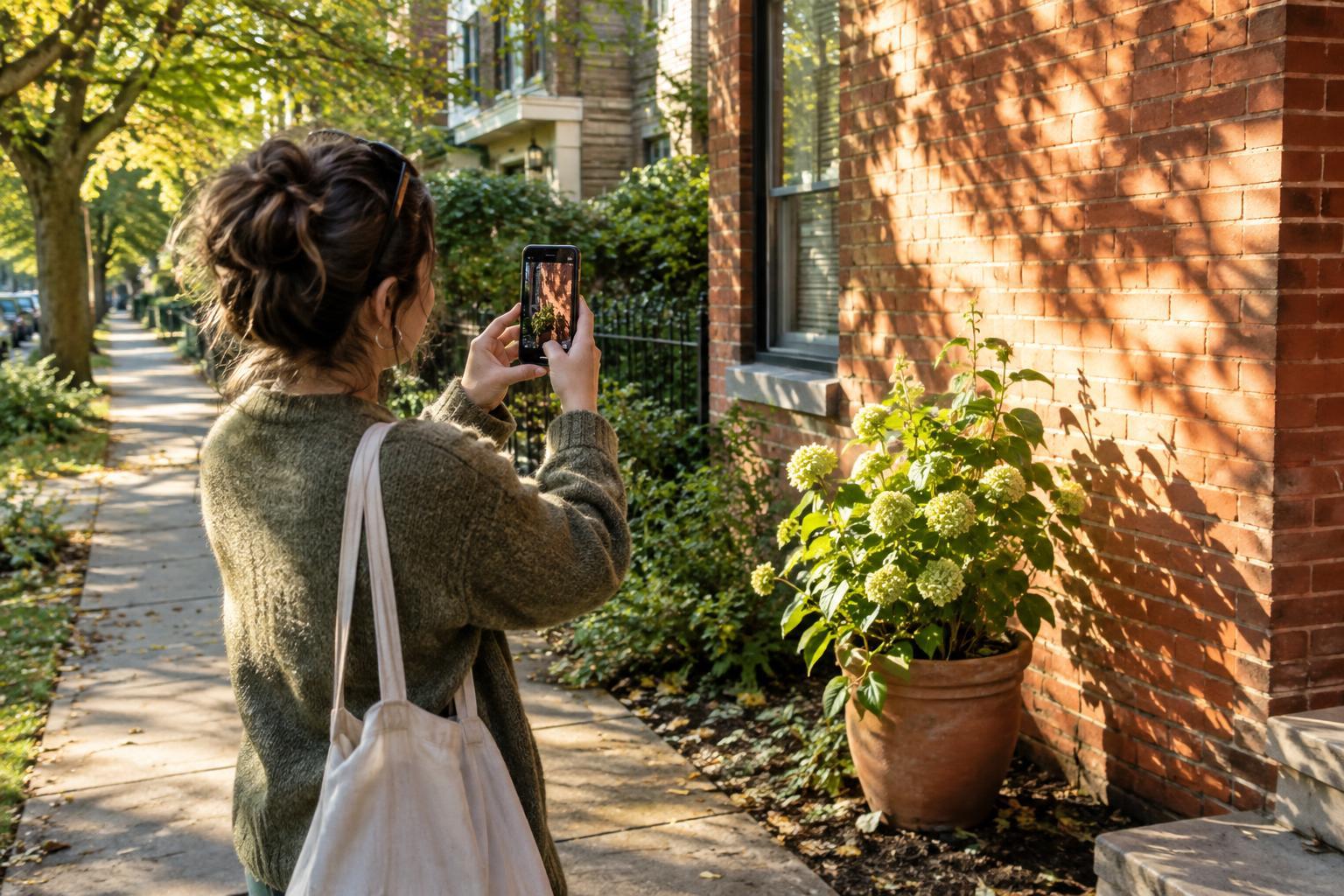
A photography walk gives an ordinary trip around the block a purpose. You do not need a special destination or a newer phone. Pick a familiar route that takes a comfortable amount of time, then give yourself a small goal: find five interesting textures, photograph three kinds of light, or make a set of pictures featuring one color. A narrow goal can help you notice details you might otherwise pass.
Before leaving, check that your phone has enough charge and storage for a few photos. Wipe the camera lens with a soft cloth if it looks smudged. Choose a route with places where you can pause without blocking a sidewalk or entrance. If you are going with a friend, agree on a loose turnaround point so the outing stays relaxed rather than becoming a race to find the perfect shot.
Use prompts instead of hunting for landmarks
Begin with subjects close at hand: the repeating lines of a fence, a patch of moss, shadows on a wall, or the contrast between an old surface and a new one. Try making one photo from a distance and another from a few steps closer. Changing where you stand often makes a bigger difference than changing camera settings.
For a more playful challenge, choose three prompts before you set out. You might look for a circle, a reflection, and something unexpectedly colorful. Or tell a tiny visual story with a beginning, middle, and end: a path leading toward a park, a detail found along the way, and the view from your stopping point. The prompts are there to keep you curious, not to limit what you can photograph.
Pay attention to the time of day without feeling obliged to wait for ideal light. Soft, overcast light can make colors and textures easier to see, while strong sunlight can create bold shadows. If a scene looks cluttered, move a little to one side and see whether a simpler background helps.
Keep the camera work simple
Hold your phone steady, tap the part of the screen you want to emphasize, and take a moment to check the edges of the frame. A stray bin or a cropped-off object may be easy to fix by shifting your position. Take a few variations rather than many nearly identical shots: one wide view for context, one closer view, and perhaps one from a lower or higher angle.
Use your phone’s zoom sparingly if distant subjects look soft or grainy; walking closer may work better when it is safe and permitted. Avoid stepping into a road, onto private property, or into a planted area just to improve a composition. A good photo is not worth disrupting a shared space.
Be considerate when people appear in a scene. You can often frame a photo around buildings, plants, or objects instead. If you want a recognizable portrait of someone, ask first, especially before sharing it. In busy places, put your phone down while walking and stop somewhere safe when you want to compose a shot.
Make a small collection you will enjoy revisiting
When you get home, choose five to ten photos that feel different from one another. Look for a mix of wide scenes, close details, colors, and shapes. You can make minor adjustments to brightness or crop a distracting edge, but you do not need to edit every image. Arrange your favorites in walking order to remember the outing, or group them by prompt to see how many ways you interpreted the same idea.
If you repeat the walk another day, try a new prompt or reverse your route. Familiar places can offer different views as light, weather, and your attention change. A shared album with a friend can also turn two short walks into a conversation about what each of you noticed.
If experimenting with your phone makes you curious about other tools, browse Technology · Accelerating Future for more technology reading. For general reading to enjoy between outings, visit News · Accelerating Future. The walk itself can remain simple: go outside, notice a few things, and bring back a small record of what caught your eye.